

A cold bathroom in January, a chilly garage workshop in February, a drafty bedroom you can’t seem to heat. Most homes have at least one spot where the central system just doesn’t reach, and that’s where a ceiling-mounted heating solution earns its keep. This roundup covers eight options that deliver warmth from above, ranging from infrared bathroom combos and quiet exhaust-fan heaters to radiant garage units and modern ceiling fans with integrated lights. Each pick below fits a different room, budget, and comfort need, so you can match the technology to the space instead of forcing a square peg into a round room.
The Choices Worth Comparing
JNDRO Wall-Mounted Space Heater 1500W with Remote
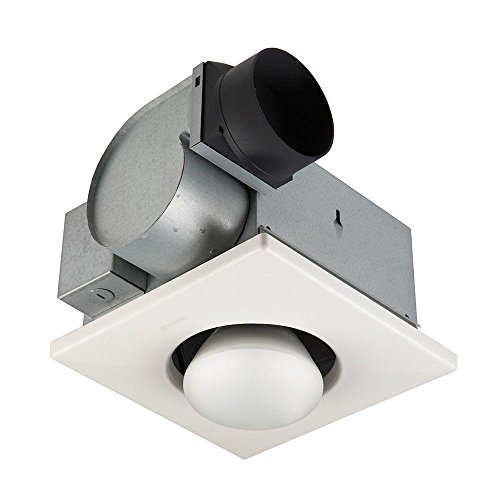
Broan-NuTone 162 Type IC Infrared Single-Bulb Ceiling Heater

Broan-Nutone 164 2-Bulb Infrared Type IC Ceiling Heater

Broan-NuTone BHFLED110 PowerHeat Bathroom Exhaust Fan, Heater, and LED

Shinic 2-Pack Ceiling Mounted Garage Radiant Heaters 1500W

Panasonic WhisperWarm Ceiling Mount Bathroom Exhaust Fan with Heater

Depuley 16″ Modern Low Profile Flush Mount Ceiling Fan with Light (Gold)

Depuley 19″ Modern Flush Mount Bladeless Ceiling Fan with LED (Grey)
A Breakdown Of The Leading Choices
The JNDRO wall-mounted heater is technically not a ceiling unit, but it earns the top spot because it solves the same problem from a different angle. It mounts high on a wall, tucks out of the way, and delivers a 1500W PTC (positive temperature coefficient) ceramic element that warms a bedroom or home office without crowding the floor. The included remote, LED display, and ECO thermostat mode make it easy to dial in a target temperature and let the unit self-regulate. In a 150-square-foot bedroom, you can expect it to take the chill off within a few minutes rather than minutes of running before any real warmth shows up.
Where it really shines is in rooms where you don’t want a hot-air stream blowing directly at you. The oscillation arc spans 60, 90, or 120 degrees, so you can spread warmth across a wide seating area or focus it on a desk. It also includes a 24-hour timer for set-and-forget overnight comfort, which is useful for parents who want the room warm at wake-up time without leaving the heater running all night.
Noteworthy Benefits
- Wall-mount design keeps the floor clear in tight bedrooms or studio spaces
- ECO mode trims power use once your target temperature is reached
- Three oscillation angles let you direct heat across a single person or a wide seating area
- 24-hour timer adds convenience for predictable morning routines
- Remote control means you rarely need to get up to change settings
Things To Consider
- Hardwired installation is required, so plan for an outlet near the mounting point or an electrician visit
- 1500W draws a heavy load, so it should sit on a dedicated 15-amp circuit rather than shared with other appliances
Key Specs
Who It Suits Best
Renters and homeowners who want effective supplemental heat in a bedroom, office, or small studio without losing floor space to a portable tower.
Consider Something Else When
The Broan-NuTone 162 suits you better if you specifically need heat coming from the ceiling, particularly in a small bathroom.
The Broan-NuTone 162 is the kind of heater you forget is there until you need it, which is exactly the point. The housing sits recessed in the ceiling, and only a clean white grille and the infrared bulb show in the room. The “Type IC” rating means it can be installed in direct contact with ceiling insulation, simplifying rough-in work for retrofits and remodels. For a small bathroom, it provides targeted infrared warmth the moment you step out of the shower, without forcing you to crank up the central thermostat for the whole house.
The integrated fan moves 70 cubic feet per minute (CFM), which is modest by modern standards but enough to push warm air down from the ceiling into a typical half-bath. At 4.0 sones, you’ll hear it, though not in a way that overwhelms conversation. The 250W infrared R40 or BR40 bulb (sold separately) keeps electrical draw low, so you can run it on a circuit that already handles lights and a vent fan without tripping anything.
Positive Takeaways
- Type IC housing installs in direct contact with insulation, simplifying ceiling retrofits
- Low-wattage 250W infrared bulb keeps operating cost low for short warm-ups
- Low-profile grille blends with most bathroom ceilings and stays out of sight
- Combined heater and fan reduces the need for two separate ceiling penetrations
Worth Noting
- Single-bulb output is best for small bathrooms, not large primary baths
- Infrared R40 or BR40 bulb is not included, so factor in a separate purchase
- Recessed install requires ceiling access and basic electrical work
Feature Snapshot
Right Fit For
Anyone remodeling a half-bath or guest bathroom who wants quiet infrared heat tucked neatly into the ceiling.
Look Elsewhere When
Step up to the Broan-Nutone 164 if your primary bath runs cold in winter and you want noticeably more heat output.
The Broan-Nutone 164 is essentially the 162’s stronger sibling, designed for bathrooms where a single 250W bulb leaves you wanting more. With two R40 or BR40 infrared sockets, you can run the unit at 500W total when full warmth is needed, or switch one bulb on for a milder boost on milder mornings. The 70 CFM fan and 4.0-sone noise profile match the 162, so swapping one for the other doesn’t change the sound of your bathroom. It’s a straightforward upgrade for larger primary baths, especially tiled ones that take longer to warm up.
What makes the 164 appealing is flexibility. The two-bulb design gives you a real two-stage heat option without adding a second ceiling box, and the recessed housing still qualifies as Type IC for insulation-contact installs. The trade-off is that bulbs are sold separately, and replacement infrared bulbs cost more than standard incandescents, so running both at full tilt year-round adds up on the electric bill.
Strengths Worth Knowing
- Two-bulb layout provides genuine high/low heat options from a single ceiling unit
- Same Type IC housing as the 162, simplifying insulation-contact retrofits
- 500W total output handles larger primary bathrooms where one bulb falls short
- Recessed grille keeps the ceiling line clean and unobtrusive
Trade Offs
- Two bulbs at once double the operating cost compared to the 162
- Infrared R40/BR40 bulbs are not included and must be sourced separately
- Still limited to infrared spot heating rather than whole-room comfort
Best Suited To
Homeowners with larger primary bathrooms that feel under-heated by a single-bulb infrared fixture on cold mornings.
Another Choice May Suit
Pick the Broan-NuTone BHFLED110 instead if you also want integrated LED lighting and stronger ventilation in the same ceiling box.
The BHFLED110 is the most complete ceiling-mounted package in this roundup, and the price reflects that. It combines a 110 CFM exhaust fan, a 1500W heater, and a dimmable LED light with adjustable color temperature, all controlled by independent switches so each function runs on its own. The galvanized steel housing adds durability, while the 2.0-sone rating puts it firmly in the “quiet bath fan” category. For a full bathroom remodel, this single fixture replaces three separate ceiling boxes, which simplifies wiring and finishes a clean look.
The 1500W heater delivers fast, convective warmth the moment you flip the switch, so stepping out of a shower into a warm room feels immediate rather than gradual. The LED light’s three color temperatures (2700K warm white, 3500K bright white, 5000K daylight) cover everything from a relaxing evening bath to task lighting for makeup or shaving. Owners commonly report that the dimming function works smoothly across the full range. In larger bathrooms over 100 square feet, the 110 CFM fan clears steam quickly, which is the part most people underestimate until they live with a weak vent.
Well-Handled Touches
- Triple-function design replaces separate fan, light, and heater boxes in one ceiling cutout
- 110 CFM moves more air than most residential bath fans, clearing steam faster in large rooms
- Adjustable LED color temperature covers warm, bright, and daylight needs
- Galvanized steel housing supports long-term reliability in humid bathroom environments
Honest Caveats
- Higher upfront cost than standalone heater or fan units, given the integrated design
- Requires a 20-amp dedicated circuit for the heater, so older bathrooms may need electrical work
Quick Facts
Made For
Homeowners doing a full bathroom remodel who want one ceiling box to handle ventilation, lighting, and heating without compromise.
Reach For A Different Pick When
Choose the Panasonic WhisperWarm if quieter operation and a slimmer profile matter more than maximum airflow and integrated LED color tuning.
The Shinic 2-pack is built for the spaces the rest of this list ignores: open garages, workshops, sheds, and patios where central heat is not an option. Each unit pairs a 1500W radiant quartz tube (which heats people and surfaces directly rather than the air) with a built-in halogen work light, so you get heat and task lighting from one ceiling box. The 90-degree adjustable bracket lets you aim warmth exactly where you stand, whether that’s a workbench, a car being warmed up, or a seating area on a chilly patio.
The two-pack format is the real story. Most radiant heaters ship singly, which leaves cold spots in larger garages. With two units, you can cover opposite ends of a two-car garage, or run one at 750W for milder days and both at 1500W for the deep-freeze mornings. The five-mode settings give you precise control over output without complex thermostats or apps. Compared to the bathroom-focused picks above, this one is unapologetically utilitarian, more concerned with heating you right now than with whisper-quiet fan curves.
Useful Strengths
- Radiant quartz tube delivers instant warmth without waiting for air to heat
- Built-in halogen work light doubles as a task lamp for projects
- Two-pack configuration covers larger garages without cold spots
- 90-degree adjustable bracket aims heat at workbenches or vehicles
- Five power modes let you scale from 750W to 1500W per unit
Points To Note
- Radiant heat is line-of-sight, so it warms you but not the air in the rest of the room
- Not designed for finished living spaces where aesthetics and quiet operation matter
- Hardwired installation required for permanent ceiling mounting
Who Will Love This
DIYers, home mechanics, and patio entertainers who need rugged, focused warmth in spaces where a finished ceiling heater would be overkill.
Swap It Out When
Pick the JNDRO wall-mounted heater instead if you want supplemental heat inside a finished bedroom or office, not an open workshop.
The Panasonic WhisperWarm sits in a category of its own when it comes to noise. Its DC/ECM motor (a brushless design that runs cooler and quieter than traditional AC motors) and Pick-A-Flow airflow selector let you choose 50, 80, or 110 CFM at install time, matching the fan to the bathroom size rather than oversizing it. A 1600W PTC ceramic heater handles the warming duties, and the slim housing fits where bulkier bath fan/heater combos won’t. In homes with shared walls, a baby sleeping down the hall, or a late-night shower routine, that quiet operation earns its place.
The Pick-A-Flow switch is a thoughtful touch most people overlook. During rough-in, your electrician sets the CFM to match the bathroom, and the unit runs at proper static pressure (the back-pressure the ductwork creates against the fan) without a noisy “too much fan for the space” roar. The slim 3-1/8-inch housing also fits tight ceiling joists, which is the kind of detail that matters in older homes with shallow framing.
The Practical Payoff
- DC/ECM motor runs noticeably quieter than standard AC bath fan motors
- Pick-A-Flow switch lets you set 50, 80, or 110 CFM to match room size
- 1600W PTC heater warms the bathroom faster than infrared bulb units
- Slim housing fits shallow ceiling joists in older homes
Some Limits To Know
- No integrated light, so you’ll need a separate ceiling fixture
- Premium pricing reflects the motor technology and brand reputation
Technical Highlights
Perfect Match For
Light sleepers and households with shared walls who want a bath heater that disappears into the background noise-wise.
Not Your Match When
The Broan-NuTone BHFLED110 fits you better if integrated dimmable LED lighting is a must-have, not a separate fixture.
The Depuley 16-inch fandelier is a bit of a different beast in this roundup, since it doesn’t actually heat the room. It earns its place because the article’s broader “ceiling fan heaters” search intent also surfaces shoppers who want a stylish ceiling fixture that circulates air, which helps the heating system work more efficiently. This one combines a quiet DC motor, transparent acrylic blades, and a sparkling crystal-accented light ring in a gold housing that reads as jewelry for the ceiling. App and remote control handle dimming, speed, and timer functions.
The low-profile flush mount design fits rooms with standard or low ceilings where a downrod fan would hang too close to head height. The reversible DC motor is a quiet operator, so this works well in bedrooms where a noisy fan would defeat the purpose. The trade-off is that 16 inches is compact, so it moves less air than a full 52-inch ceiling fan, which matters in rooms over 150 square feet.
What Helps Most
- Crystal-accented light ring adds a decorative focal point to bedrooms or dining areas
- Low-profile design fits flush against low ceilings without a downrod
- DC motor operates quietly enough for sleeping spaces
- App and remote control offer flexible speed and dimming adjustments
Details To Watch
- 16-inch blade span is best for small rooms under 150 square feet
- Gold finish is a specific design choice that may not match every decor
- No heating function, so it complements rather than replaces a heater
At A Glance
The Right Fit
Anyone styling a small bedroom, dining nook, or office who wants a decorative ceiling fan that also helps distribute heated air evenly.
Where Another Pick Suits Better
Choose the Depuley 19-inch bladeless model instead if you want a slightly larger fan with app-controlled memory functions and six speeds.
The 19-inch Depuley steps up from the gold 16-inch in three ways that matter: a larger blade span, a bladeless housing (safer for low ceilings and curious kids), and a memory function that recalls your last dimming and speed settings. The DC motor runs under 25 decibels at low speed, which is quieter than most refrigerators, so it earns its keep in nurseries and master bedrooms. Six speed settings and reversible airflow make it a year-round tool, not just a summer fixture.
App control handles dimming from 0 to 100%, color temperature from 3000K to 6500K, and 1-hour or 2-hour timers. The bladeless design relies on a hidden impeller to push air, so the visible face stays clean and modern. In rooms where you want a fixture that disappears visually during the day and runs almost silently at night, this one delivers. The grey finish is more neutral than the gold sibling, which makes it easier to blend into most decor styles.
Strong Points
- Bladeless design is safer for low ceilings and children’s rooms
- Six speeds plus reversible airflow support year-round use
- Memory function recalls your last dimming and speed preferences
- Sub-25 dB operation at low speed barely registers in a quiet room
- App control covers dimming, color temperature, and timers
Soft Spots
- Bladeless fans tend to move less air than traditional bladed fans at the same size
- 19-inch span still works best in small to mid-size rooms, not great rooms
Key Attributes
Whose Shelf It Belongs On
Parents outfitting a nursery or kids’ room, and smart-home enthusiasts who want app-level control over a low-profile fixture.
Skip It When
The Depuley 16-inch gold model fits better if you want a more decorative statement piece and don’t need the extra speed options.
What To Weigh Before Choosing a Ceiling-Mounted Heater
Heating technology drives the biggest difference in how each fixture feels. Infrared bulbs, like those in the Broan-NuTone 162 and 164, warm people and surfaces directly the moment you switch them on, which is great for a quick post-shower warm-up but doesn’t raise the air temperature across a whole bathroom. PTC ceramic heaters, used in the JNDRO and Panasonic WhisperWarm, push warm air out through a fan, so the whole room reaches a comfortable temperature rather than just the spot below the grille. Radiant quartz tubes, found in the Shinic garage units, work like sunlight and are best for line-of-sight warmth in open spaces.
Electrical capacity matters more than most shoppers expect. A 1500W or 1600W heater draws close to the limit of a standard 15-amp household circuit, so most bathroom and wall-mounted units want a dedicated line. Older homes with 15-amp bathroom circuits shared with lights and outlets may need an electrician to run a new 20-amp line, which adds to the project cost. Checking your existing wiring before you buy prevents a frustrating “this trips every time I run the hair dryer” discovery.
Sizing and CFM (cubic feet per minute) ratings tell you how well a fan clears moisture and how much air a heater pushes into the room. A small powder room under 50 square feet works fine with 50 to 70 CFM, but a primary bath over 100 square feet wants 110 CFM or more to clear steam from a long shower. Pick-A-Flow switches on units like the WhisperWarm let your electrician set the airflow at install time, which is a useful feature when you’re not sure of the exact room size at the point of purchase.
Finally, noise and finish matter more in living spaces than utility areas. A 4.0-sone bathroom fan sounds fine over a running shower, but a 2.0-sone unit feels more comfortable in a powder room used for hand-washing and conversation. In bedrooms and offices, a quiet DC motor and a finish that matches the existing fixtures will determine whether the heater blends in or becomes an eyesore you notice every time you walk in the room.
Key Considerations Across These Picks
Pitfalls Shoppers Hit
The most common mistake is choosing a bathroom infrared heater for a large primary bath and expecting the whole room to feel warm. A single 250W bulb covers a small half-bath, but a tiled primary bath over 80 square feet needs either two bulbs (like the 164) or a forced-air heater (like the WhisperWarm) to feel comfortable. The second common slip is forgetting to check the existing electrical circuit, which leads to nuisance tripping when the heater shares a line with a hair dryer or other high-draw appliance.
Why Top Tier Costs More
Higher-end units like the Broan-NuTone BHFLED110 and Panasonic WhisperWarm carry a noticeable price premium, and the money goes into three things: a quieter and more efficient motor, better housing materials that resist humidity over years of use, and integrated features that replace separate fixtures. The BHFLED110’s three-function design eliminates the need for a separate fan, light, and heater, so on a full remodel the combined cost can actually come out lower than buying three separate units and wiring each one. The WhisperWarm’s DC motor and Pick-A-Flow switch add upfront cost but reduce long-term noise complaints and let you right-size the airflow without swapping the whole fixture.
Frequently Asked Questions
Do ceiling fan heaters require professional installation?
Most recessed and ceiling-mounted units with heaters need hardwired electrical work, so an electrician is usually the safer route, particularly for 1500W or higher models that want a dedicated 20-amp circuit. Plug-in wall-mounted units like the JNDRO still require mounting but use a standard outlet. When in doubt, a licensed electrician can confirm your existing circuit can handle the load before you commit to a specific model.
Can a ceiling heater replace my central heating system?
No, these units are designed for supplemental comfort in specific rooms, not whole-home heating. They shine in bathrooms, bedrooms, offices, and workshops where the central system falls short. For whole-home heating, a properly sized furnace, boiler, or heat pump remains the right solution.
Are infrared ceiling heaters expensive to run?
Infrared units like the Broan-NuTone 162 and 164 are actually among the more efficient options for short, targeted use, because the bulbs use only 250W to 500W total. The cost stays low because you typically run them for 10 to 20 minutes at a time rather than for hours, which is how forced-air central systems usually operate. For longer warm-ups, the 1500W ceramic units cost more per hour but heat the whole room, so the right choice depends on your usage pattern.
What’s the difference between CFM and sones?
CFM (cubic feet per minute) measures how much air a fan moves, while sones measure how loud that fan sounds. A higher CFM rating clears steam faster, while a lower sone rating means quieter operation. In bathrooms, you want enough CFM to clear moisture and low enough sones to stay comfortable, which is why the Panasonic WhisperWarm’s 2.0-sone rating and 50 to 110 CFM range work well across room sizes.
Can I install a ceiling fan heater in a room with low ceilings?
Low-profile and flush-mount designs like the Depuley fandeliers and the Panasonic WhisperWarm are built specifically for shallow ceiling cavities. Traditional bath fan/heater combos may need 6 inches or more of clearance above the ceiling, while slim models fit in 3 to 4 inches. Always check the housing depth in the spec sheet before buying, especially in older homes with shallow joist cavities.
