

A good bedroom fan does more than move air. It creates a steady white-noise rhythm that helps you fall asleep faster, masks hallway clatter or snoring partners, and keeps the room from feeling stuffy at 3 a.m. The trick is finding one that pushes enough air to matter without sounding like a small airplane on the nightstand.
This roundup focuses on bedroom fans for sleeping across three form factors: compact desktop units for nightstands, wall-mounted options for tight rooms, and taller tower fans for whole-room coverage. Each pick here trades on quiet operation, useful controls, and a profile that doesn’t dominate your sleep space. The mix covers different budgets, room sizes, and feature priorities, so you can match the fan to your actual sleep setup rather than the other way around.
The Picks In Brief

Coolhill 100-Speed Quiet Rechargeable Desk Fan

Coolhill Cordless Wall Mounted Fan (White)

DREO Smart Bedroom Fan (85 ft Airflow)

DREO Smart Bedroom Desk Fan (12″)

IRIS USA WOOZOO Desk Fan (Black)
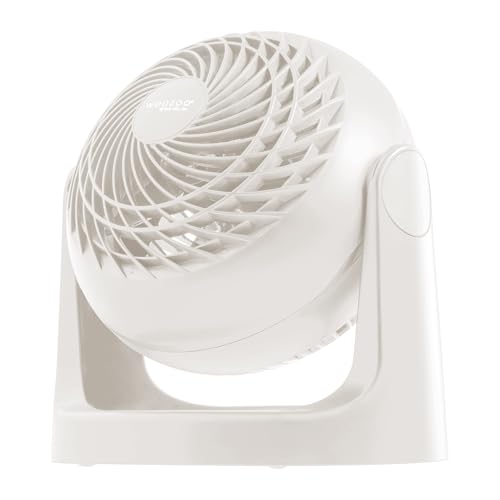
IRIS USA WOOZOO Desk Fan (White)

DREO Smart Tower Fan, 40″-45″ Adjustable
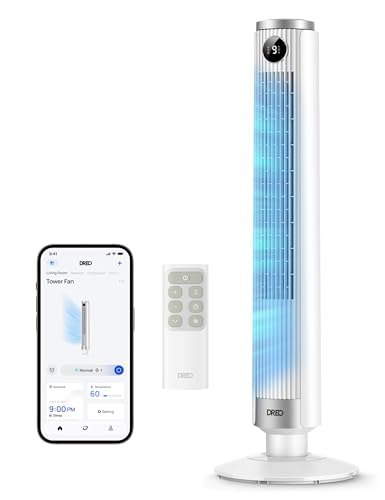
DREO Smart Tower Fan with 4 Modes
More Details On Our Top Picks
The Coolhill 100-Speed desk fan lands on the nightstand without crowding it. Its 1-to-100 speed range, controlled through a small digital display, gives you unusually fine tuning for a fan this small. You can creep from a barely-there breeze at level 5 up to a room-filling push at level 80, which matters most when one partner wants airflow and the other wants silence.
Because it runs on a built-in battery and recharges through USB-C, you can pull it off the nightstand and use it on the kitchen counter, the bathroom shelf, or a desk without hunting for an outlet. Short taps jump between preset levels (1, 20, 40, 60, 80, 100), and a long press ramps smoothly for those who want to dial in a specific feel.
Bright Spots
- 100 discrete speed steps let you find a near-silent setting without jumping from “off” to “too loud”
- USB-C charging and a cordless body mean the fan moves with you from bedroom to home office to kitchen
- Numeric display stays readable in the dark, so you don’t have to guess which speed you left it on
- Compact footprint fits on most nightstands next to a lamp and phone charger
Worth Noting
- No oscillation, so the air cone stays narrow, which can feel one-sided in wider beds
- Battery life at higher speeds is shorter than the lower-speed runtime, so heavy nightly users may need a top-up charge mid-week
Who It Suits Best
Light sleepers in small-to-medium bedrooms who want exact airflow control and the freedom to move the fan around the house without rewiring a plug.
Look Elsewhere When
The Coolhill Cordless Wall Mounted Fan makes more sense for tight rooms where you need to reclaim the nightstand surface entirely.
Bunk beds, narrow galley bedrooms, and dorm bunks have a recurring problem: nowhere to put a fan. The Coolhill Cordless Wall Mounted Fan solves it by giving you a 2-in-1 form factor that mounts to the wall or sits on a desk, with a 120° tilt range to aim the air where it needs to go. In a tight space, that’s a meaningful upgrade over a fan that hogs the only flat surface you have.
The 100-speed control and digital readout carry over from the desk model, so you get the same fine-grained adjustment. A 4000mAh built-in battery keeps the fan running through the night without anchoring it to a wall outlet, which matters if your room’s wiring is limited or you move between rentals.
What Helps Most
- Wall-mount option frees up nightstand and counter space in cramped rooms
- 120° tilt lets you redirect airflow without moving the base, useful for bunk beds and shared rooms
- 100 speed settings and a digital display let you tune airflow down to near-silent
- Cordless design simplifies installation in rooms without nearby outlets
Trade Offs
- Wall installation requires basic tools and a bit of planning, so it isn’t as grab-and-go as a pure desk fan
- At higher speeds, the narrow blade design is audible enough that very sensitive sleepers may still need the lowest setting
Feature Snapshot
Made For
People in small bedrooms, dorms, or bunk setups who need airflow but cannot spare the surface area for a traditional desk fan.
Consider Something Else When
The Coolhill 100-Speed Quiet Rechargeable Desk Fan is a better fit when you want a simpler grab-and-go unit that stays on the nightstand.
Most 12-inch desk fans barely push air past the foot of the bed. The DREO Smart Bedroom Fan aims to break that pattern with a long-throw design rated to move air up to 85 feet, which makes it a better fit for larger bedrooms where a small desk unit would leave the far side of the room still. Compare that to the WOOZOO options later in this list, which are built more for personal-zone cooling than whole-room reach.
Nine speed settings, an 8/12-hour timer, and app and voice control let you tailor the fan to a sleep schedule without getting out of bed. The 20 dB claim on the lowest setting is genuinely useful for light sleepers, though real-world perception of noise varies by room acoustics and ear sensitivity.
Well-Handled Touches
- Long-throw airflow covers larger bedrooms where smaller desk fans fall short
- 20 dB low-speed operation is quiet enough to use through the night without masking other sounds
- App and voice control fit households that already run on smart-home routines
- 8 and 12-hour timers align with full sleep cycles, so the fan can shut off on its own
Points To Note
- Smarter than the simpler desk fans on this list, so setup and pairing take longer out of the box
- Higher speeds produce a stronger rush of air that some sleepers may find too aggressive for direct bedside use
Best Suited To
Shoppers in medium to large bedrooms who want one fan to handle the whole room and prefer app-driven controls over manual buttons.
Not Your Match When
The DREO Smart Tower Fan is worth a look when you want the same smart features in a taller, floor-standing form factor.
The 90°+90° oscillation is the headline feature here, sweeping both vertically and horizontally so the fan covers more of the room than a fixed-direction unit. In a shared bedroom, that means both sleepers get airflow without aiming the fan or arguing over which way it points. The 7-inch blade sits inside a 12-inch frame, balancing throw distance with a relatively quiet operation at low speeds.
For shoppers who want smart features but don’t necessarily need the longer 85 ft throw of the similar model above, this DREO delivers app, voice, and timer functionality in a more compact profile. Expect a slightly smaller footprint, which matters in tighter bedrooms or apartments where floor and shelf space are at a premium.
Good Reasons To Consider
- Combined horizontal and vertical oscillation spreads air across more of the room
- Smart controls make it easy to schedule wind-down routines before sleep
- Lower-speed noise floor is gentle enough for most light sleepers
- Compact 12-inch body fits on dressers and shelves where larger fans won’t
Some Limits To Know
- Shorter throw than the larger DREO model, so very large bedrooms may need to keep it closer to the bed
- App-dependent features may feel like overkill for shoppers who just want a basic on/off fan
Feature Snapshot
Perfect Match For
Couples or roommates sharing a bedroom who want oscillation, app control, and a quiet baseline in a single unit.
Skip It When
The IRIS USA WOOZOO Desk Fan is a cleaner pick for shoppers who want a no-app, plug-and-play experience.
The WOOZOO takes a different approach than most of this roundup. Instead of a wide speed range, it offers three settings, with a low setting rated around 30 dB that is genuinely close to a soft whisper. The 360° vertical tilt is the real trick: you can point it straight up to bounce air off the ceiling, or angle it across the room, without moving the base.
At full power, the WOOZOO pushes air up to 52 feet, which is more reach than most compact desk fans. For a bedroom, that means you can place it on a dresser and still feel the airflow from across a king-size bed.
Practical Pluses
- Low setting at around 30 dB is quiet enough for genuinely noise-sensitive sleepers
- 360° vertical tilt lets you aim air up, down, or anywhere in between
- Three-speed design keeps operation simple, no apps or modes to learn
- 52 ft maximum reach covers most bedroom sizes from a dresser or shelf
Where It May Fall Short
- Only three speed settings, so fine-tuning between “off” and “low” isn’t an option
- No oscillation, so the air cone stays focused rather than sweeping the room
Who Will Love This
Light sleepers and dorm residents who want a quiet, simple fan with strong reach and don’t need smart features or dozens of speeds.
A Better Fit Elsewhere
The Coolhill 100-Speed Quiet Rechargeable Desk Fan makes more sense when you want finer control between whisper-quiet and full power.
The white WOOZOO is the same fan as the black version, but in a finish that blends into lighter bedrooms, nurseries, and minimalist decor. If you have a bright room with white or natural wood furniture, the white body looks less like a piece of black plastic sitting on your dresser. The 52 ft throw, 360° tilt, and three-speed simplicity all carry over unchanged.
For shoppers prioritizing aesthetics alongside performance, this version is a sensible pick without paying a premium for the looks alone. You get the same 30 dB low setting, the same 157 sq ft coverage area, and the same straightforward controls.
The Upside
- White finish suits light-colored bedrooms, nurseries, and Scandinavian decor
- 52 ft throw covers most bedroom layouts from a single placement point
- Three-speed operation keeps things simple for guests, kids, or anyone who hates menus
- Low setting is quiet enough for most light sleepers
Possible Compromises
- No remote or app control, so adjusting speed means getting up or reaching over
- Same limited three-step speed range, no fine-tuning between settings
Right Fit For
Shoppers who want a quiet, effective fan that doesn’t visually dominate a light-colored or minimalist bedroom.
Swap It Out When
The DREO Smart Bedroom Desk Fan is the better pick for anyone who wants app control and oscillation in a compact form factor.
Tower fans pull double duty in homes where the bedroom and living room share a single cooling solution. The DREO Smart Tower Fan adjusts from 40 to 45 inches, which means you can shorten it for a low nightstand or extend it for a taller living-room setting. The 90° oscillation and 28 ft/s velocity move enough air to keep a moderately sized bedroom comfortable through the night.
The DC motor is the quiet-rotation claim worth noting: DC motors (a brushless design that uses direct current) generally run cooler and quieter than older AC motors, which suits a bedroom environment. App and voice control round out a feature set that feels modern without being overcomplicated.
Positive Takeaways
- Adjustable height lets one fan serve both bedroom and living-room needs
- DC motor tends to run quieter and more efficiently than traditional AC motors
- 90° oscillation covers a wide arc without requiring manual redirection
- 9 speeds and 4 modes give meaningful control without overwhelming buttons
Practical Considerations
- Tower format takes up floor space, so it isn’t ideal for very tight bedrooms
- Plastic tower body can collect dust on the intake grille, so periodic cleaning matters for airflow
Feature Snapshot
Built With In Mind
Shoppers who want one floor fan to handle a bedroom and a nearby living area, with the height flexibility to match.
Reach For A Different Pick When
The Coolhill 100-Speed Quiet Rechargeable Desk Fan is a better fit for tight nightstand setups where a tower fan would crowd the room.
Where the previous DREO tower fan covers the basics with quiet efficiency, this sibling adds four operating modes (Normal, Natural, Sleep, and Auto) on top of the same adjustable height and 12-hour timer. The Sleep mode in particular is the kind of feature that earns its place in a bedroom: it cycles speeds and patterns to mimic natural breezes rather than running flat, which some sleepers find more restful than constant airflow.
For smart-home households, the app and voice control integration matches the rest of the DREO lineup on this list. The 28 ft/s velocity and 90° oscillation handle whole-bedroom circulation, while the DC motor keeps the noise floor low enough for most sleepers.
Points In Its Favor
- Four operating modes, including a Sleep mode designed to vary airflow through the night
- 12-hour timer covers long sleepers and shift workers without manual shutoff
- Same adjustable 40 to 45 inch height as the related DREO tower model
- App and voice control fit homes that already run on a smart ecosystem
Where It Is Less Suited
- Mode variety can feel like overkill if you only ever run the fan on one setting
- Smart features require initial app setup, which adds friction for non-smart-home users
Whose Shelf It Belongs On
Smart-home sleepers who want modes beyond simple speed control, especially those who appreciate variable airflow patterns over constant fan noise.
Where Another Pick Suits Better
The IRIS USA WOOZOO Desk Fan is a cleaner choice for shoppers who want a quiet, no-app fan with a much smaller footprint.
What Matters Most Before Choosing a Bedroom Fan for Sleep
Noise Floor and Sleep Sensitivity
The single most important number on any bedroom fan is its lowest-speed noise rating, measured in decibels (dB). Anything around 30 dB is roughly the sound of a quiet whisper, while 40 dB and up becomes noticeable in a silent room. Light sleepers benefit from fans that hold a steady 30 dB or below at their lowest setting, even if that means accepting less raw airflow.
Airflow Reach vs. Room Size
A small desk fan throws air a few feet, which is enough for a personal sleep zone but falls short in larger bedrooms. Long-throw fans (50 ft and beyond) cover a whole room from a dresser or shelf placement. Match the reach to the room: small bedrooms and dorm rooms do well with 5 to 15 ft of throw, while master bedrooms benefit from 30 ft or more.
Power Source and Placement Flexibility
Corded fans offer unlimited runtime but tie you to outlets, which can be limiting in older homes or rooms with few wall sockets. Rechargeable and cordless fans free you to place the unit anywhere, though battery life varies with speed. Wall-mounted options reclaim surface area entirely, which matters in tight quarters like bunk beds or studio apartments.
Controls and Smart Features
Simple three-speed fans are easy for anyone to operate, while fans with 50 to 100 speed steps let you fine-tune between barely-on and full power. App and voice control make sense in smart-home households, but add setup friction for everyone else. Timers (8 or 12 hour) align with full sleep cycles, so the fan can shut off automatically.
Key Considerations Across These Picks
Where Shoppers Go Wrong
One common slip-up is buying a fan based on maximum airflow without checking the lowest-speed noise floor. A 950 CFM (cubic feet per minute, a measure of how much air the fan moves) fan sounds great on paper, but if its quietest setting is still 45 dB, light sleepers will not rest well. The other frequent miss is underestimating placement. Fans need a stable surface or a solid wall mount, and bedrooms with limited flat space (small nightstands, no dressers) call for wall-mounted or compact form factors over larger desk units.
What Separates Premium From Basic
The jump from a basic desk fan to a premium tower or smart fan usually buys three things: better motor technology (DC over AC), wider speed ranges for finer control, and meaningful smart-home integration. For sleep specifically, the most valuable premium feature tends to be a Sleep or Natural mode that varies airflow rather than running flat, since constant noise can become its own kind of disruption over a full night.
Frequently Asked Questions
What decibel level is best for a bedroom fan?
Most sleepers do well with fans rated at 30 dB or below on their lowest setting, since that is roughly the level of a quiet whisper. Anything 25 to 30 dB is considered whisper-quiet, while fans above 40 dB tend to feel intrusive in a silent room.
How many speed settings do I really need?
Three speeds cover most basic needs, but 9 to 100 steps help when one partner wants more airflow than the other. A wider speed range also makes it easier to find a setting that masks noise without becoming its own distraction.
Are tower fans or desk fans better for sleeping?
Tower fans take up floor space but cover more room through oscillation, while desk fans fit on a nightstand and stay out of the way. For personal-zone cooling in a small bedroom, a desk fan is usually enough. For whole-room circulation in larger spaces, a tower fan pulls ahead.
Do rechargeable bedroom fans hold a charge overnight?
Most rechargeable fans in this roundup run for several nights on a single charge at low speeds, though runtime drops at higher settings. Heavy nightly users on medium or high speeds may need to top up the battery once or twice a week.
Is oscillation important for a sleep fan?
Oscillation spreads air across more of the room, which helps in shared bedrooms and larger spaces. For a single sleeper in a small room, a fixed-direction fan aimed at the bed can work just as well and may be quieter, since oscillation motors add a small amount of mechanical noise.
