

A good audio visual cabinet does more than hold your gear. It keeps receivers cool, hides cable chaos, and turns a tangle of boxes into a room you actually want to sit in. Whether you’re running a two-channel listening setup, a home theater, or a small studio, the right stand changes how your space feels. This roundup covers eight options across different sizes, materials, and price points, so you can find the one that fits your room and your gear without overbuying.
The Picks In Brief

Armocity AV Media Stand Small Entertainment Center

Armocity AV Media Stand Small Entertainment Center
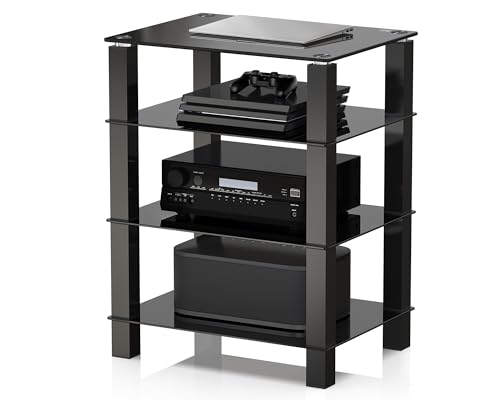
FITUEYES 4-Tier Media Stand with Tempered Glass Shelves
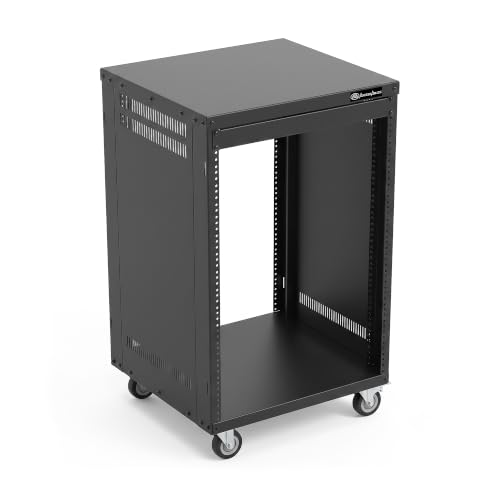
AxcessAbles 16U AV Case with Wheels, 19-Inch Rack
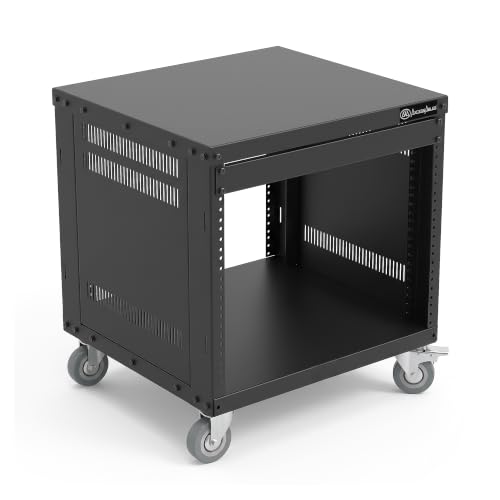
AxcessAbles 8U 19-Inch Homelab Server Rack with Wheels

HOMCOM Media Cabinet 4-Tier Stereo Cabinet, Rustic Brown

HOMCOM Media Cabinet 4-Tier Stereo Cabinet, Black

HOMCOM Media Cabinet 4-Tier Stereo Cabinet, Distressed White
Inside Each Recommended Option
The Armocity AV Media Stand fits the kind of setup most people actually live with: a mid-size TV, a soundbar, a console or two, and a sub tucked somewhere nearby. The open-frame layout keeps the heat off your gear, which matters more than people realize once a receiver starts running warm during a long movie night. Shelf boards around 23.6 inches wide give you room for full-size components without cramping cables in the back.
For most living rooms, this hits a sweet spot between size and capability. The build leans toward utility rather than flash, so it disappears into the room rather than competing with it. You can also use the same stand as a hallway console or entryway table once your gear finds a home.
What Helps Most
- Open-back shelves let cables drop straight down without threading through tight grommets
- Adjustable tiers accommodate a turntable, a CD player, or a tall gaming console without wobble
- Wide shelf boards fit a full-size AV receiver without overhang
- Airflow-friendly design keeps hot-running equipment cooler during long sessions
- Neutral look blends with most existing furniture
Worth Noting
- Particle-board construction means you’ll want to avoid dragging it across hard floors, since edges can chip
- Open shelves collect dust, so plan on a microfiber wipe every couple of weeks
Whose Shelf It Belongs On
Renters and first-time setup owners in small-to-medium living rooms who want a no-fuss, open-air stand for everyday gear.
Look Elsewhere When
Anyone planning to load it with heavy rackmount gear should reach for the AxcessAbles 16U AV Case with Wheels instead, since the metal frame handles weight far more confidently.
The second Armocity entry on the list shares the same open-frame DNA as pick 1, with a four-tier adjustable layout that gives beginners a real starting point. It suits anyone treating their first receiver or turntable like a long-term investment rather than a passing hobby. The 23.6-inch shelf width is wide enough for a turntable on one level and an amp on the next, with room left for cable management in the back.
Compared to the FITUEYES glass stand later in this list, this one trades visual drama for everyday practicality. You won’t get the same “show off your gear” effect, but you’ll spend less and get a more forgiving surface for households with kids or pets.
Where It Excels
- Adjustable shelves adapt as your gear collection grows from two pieces to five
- Open-back layout keeps HDMI and power cables easy to manage
- Lightweight frame makes it manageable to move during a room refresh
- Budget-friendly entry point for first-time setup owners
Trade Offs
- The finish can show scuffs at the corners if bumped during moves
- Maximum weight per shelf is modest, so a stack of vinyl and a power amp may push the limits
- Assembly requires patience since the included hardware isn’t always pre-sorted
Made For
Beginners and renters who want an adjustable, low-commitment stand that grows with a starter system.
Swap It Out When
Anyone prioritizing visual flair over budget should consider the FITUEYES 4-Tier Media Stand with Tempered Glass Shelves instead, since the glass-and-steel frame reads as much more deliberate in a modern room.
The FITUEYES stand earns its place when the cabinet itself is part of the room’s design. Reinforced tempered glass shelves rest on a steel frame, giving a clean, low-profile look that suits modern apartments and minimalist listening spaces. At roughly 23.6 inches wide, 17.9 inches deep, and 30.3 inches tall, it tucks neatly into corners or the gap beside a sofa.
For most apartments, the glass surfaces let gear feel displayed rather than hidden, which works beautifully for a single turntable and amp setup. The trade-off is fingerprints and dust, which show up faster on glass than on wood-grain finishes like the HOMCOM options further down.
Points In Its Favor
- Tempered glass feels substantial and resists flexing under component weight
- Steel frame adds rigidity that lighter open-shelf stands can lack
- Corner-friendly footprint suits awkward floor plans
- Open design lets remote signals reach components without obstruction
Soft Spots
- Glass shows dust and smudges, so a quick microfiber wipe is part of routine care
- Not ideal in kid-heavy rooms, since the corners are harder than the rounded HOMCOM edges
- Lightweight gear looks great on it, but very heavy amps can highlight any tiny frame flex at full load
Feature Snapshot
Right Fit For
Style-conscious listeners in modern apartments who want a deliberate-looking stand for a focused two-channel setup.
A Better Fit Elsewhere
Anyone needing enclosed storage for dust-prone gear should consider the HOMCOM Media Cabinet 4-Tier Stereo Cabinet in Black, since its glass doors keep dust off components between sessions.
The AxcessAbles 16U case steps out of the living room and into a small studio or pro audio setup. Built to standard 19-inch rack dimensions, it accepts power amplifiers, networking gear, DJ controllers, and server hardware without adapter shelves. A “U” (rack unit) equals 1.75 inches of vertical space, so 16U gives you roughly 28 inches of usable rack height for components.
For most home studios, the rolling casters turn the cabinet into mobile infrastructure, so you can reconfigure a room without unplugging every piece. Side panels install optionally, giving you a choice between full enclosure for protection or open-frame for maximum airflow during long sessions.
Features That Help
- Standard 19-inch rack width accepts most pro audio and IT gear directly
- Locking caster wheels hold position once parked
- Optional side panels let you choose between open airflow and dust protection
- Removable casters add weight capacity when static positioning is preferred
Honest Caveats
- Metal construction is heavy, so loading it fully means planning floor placement first
- Industrial look won’t blend with a soft living room aesthetic
Quick Facts
Best Suited To
Home studio owners and pros running rackmount gear who need studio-grade durability over living room looks.
Where Another Pick Suits Better
Anyone building a relaxed home theater around a soundbar and a game console should look at the Armocity AV Media Stand instead, since a rack cabinet in a living room tends to read as overkill.
The 8U AxcessAbles rack shrinks the same rack-mount format into a footprint that fits a closet, basement corner, or small studio. With a 550-pound capacity and a textured matte black finish, it carries a serious gear load without looking like a server closet. The open front and back design keeps air moving through hot equipment like switches and amplifiers.
For most home labs, removable side panels make the rack easier to wire since you can reach in from the side during setup. Compared to the larger 16U case earlier, this one trades vertical space for a tighter footprint that won’t dominate a spare bedroom.
Where It Delivers
- 550-pound capacity handles dense gear stacks without flex
- Removable side panels simplify cable routing during initial setup
- Locking casters keep it stationary once positioned
- Compatible with both 5mm and 6mm rack screws out of the box
Practical Considerations
- 8U limits you to roughly 14 inches of vertical gear space, so a tall amp may not fit
- Open frame leaves gear exposed to dust in garage or basement installations
Key Product Details
Who Should Grab It
Home lab builders and small studio owners who need genuine rack capacity in a closet-sized footprint.
Not Your Match When
Anyone setting up a relaxed living room media center should look at the HOMCOM Media Cabinet 4-Tier Stereo Cabinet in Rustic Brown instead, since the rack’s industrial look fights most home decor.
The Rustic Brown HOMCOM shifts the conversation from “media stand” to “furniture piece.” Tempered glass doors protect your gear from dust while letting remote signals pass through, and the wood-grain finish adds warmth to a room that the glass-and-steel FITUEYES can’t deliver. Two three-level adjustable shelves inside give you room to reshape the interior as your collection evolves.
For most family rooms, this is the cabinet you choose when the TV isn’t the only thing on display. Books, vinyl, and family photos fit alongside the receiver, turning the cabinet into a multi-purpose focal point. Compared to the open Armocity options, the trade-off is reduced airflow, so heat-generating gear should leave a little breathing room on the shelves.
Practical Pluses
- Tempered glass doors keep dust off equipment between listening sessions
- Rustic brown finish pairs well with farmhouse, traditional, or transitional decor
- Adjustable inner shelves accommodate different component heights
- Enclosed design hides cable clutter behind closed doors
Points To Note
- Reduced airflow means running a hot receiver with the doors closed can shorten its life
- Heavier than open-frame stands, so wall placement near doorways needs planning
- Glass doors show fingerprints and need occasional cleaning
Who It Suits Best
Homeowners outfitting a cozy media room who want the cabinet to double as living room furniture, not just a tech perch.
Consider Something Else When
Anyone chasing a modern, airy look should consider the FITUEYES 4-Tier Media Stand with Tempered Glass Shelves instead, since the open glass frame reads as lighter and more contemporary.
The Black HOMCOM keeps the same tempered glass doors and adjustable inner shelves as its rustic sibling, but the matte black finish suits a darker, more contemporary space. For most people who keep their gear for years, the enclosed design pays off in less frequent dusting and a cleaner overall look in the room.
Compared to the open Armocity stands earlier in this list, this one trades cooling for tidiness. It’s a fair swap for owners who don’t run their system at full volume for hours on end, and who value the visual calm of hidden gear.
Everyday Perks
- Black finish hides smudges better than glass-only or wood-grain options
- Doors protect gear from curious pets and small hands
- Adjustable shelves accept taller receivers and stereo amps
- Multi-use design doubles as a sideboard or hallway console
Room For Improvement
- Closed doors restrict airflow around hot-running components, so leave a small gap during long sessions
- Assembly takes longer than the open-shelf Armocity stands
Built With In Mind
Owners who keep their gear for years and want a low-maintenance, dust-protected storage solution that blends into darker rooms.
Where Another Pick Suits Better
Anyone with heavy, heat-producing amps and open-back speakers may want the Armocity AV Media Stand Small Entertainment Center instead, since open shelves handle thermal load more gracefully.
The Distressed White HOMCOM rounds out the trio with a softer, more cottage-style finish. The same tempered glass doors and adjustable inner shelves carry over, so functionally it matches its HOMCOM siblings. Visually, it leans into a shabby-chic or coastal palette that the rustic brown and black options don’t reach.
For most bedrooms and sunlit living spaces, the white finish brightens the wall behind the TV rather than blending into it. The honest read is that white shows scuffs more readily than the other HOMCOM finishes, so households with kids should plan for the occasional touch-up.
Notable Gains
- Distressed white finish complements farmhouse, coastal, and shabby-chic interiors
- Glass doors preserve the look of a furniture piece rather than a tech perch
- Adjustable interior adapts to changing gear over time
A Few Limitations
- Light finish shows scuffs and fingerprints more easily than darker HOMCOM options
- Enclosed design limits airflow around hot gear, so a small ventilation gap is wise
Perfect Match For
Anyone decorating a sunlit bedroom or coastal-inspired living room who wants the cabinet to feel like a furniture piece first and an AV rack second.
Another Choice May Suit
Owners prioritizing gear-cooling over visual softness should reach for the open Armocity AV Media Stand instead, since the open frame keeps components cooler during long listening sessions.
What To Weigh Before Choosing Audio Visual Cabinets
Size, Footprint, And Where It Actually Goes
Start by measuring the wall space, not the gear list. A cabinet that’s too deep will push your TV forward and create awkward viewing angles, while one that’s too narrow won’t accept a full-size receiver. For most living rooms, a depth of 16 to 18 inches strikes a balance between component space and visual lightness. Corners deserve special attention: stands like the FITUEYES 4-Tier Media Stand with Tempered Glass Shelves are designed to tuck into a 90-degree angle without dominating the room.
Open Frame Versus Enclosed Doors
Open shelves breathe well, which matters for hot-running receivers and amplifiers. Closed cabinets hide dust and cable mess, but trap heat. For most people running a single mid-power receiver, an enclosed cabinet like the HOMCOM Media Cabinet 4-Tier Stereo Cabinet works fine as long as you crack the doors during long sessions. Studios and pros running rackmount gear almost always need open-frame solutions like the AxcessAbles 16U AV Case with Wheels.
Weight Capacity And Build Material
Particleboard stands handle lightweight sources and turntables well, but stack two amplifiers on a thin shelf and you’ll notice the sag. Solid steel frames and tempered glass, like the FITUEYES, hold their shape under heavier loads. For a home theater receiver, a turntable, and a sub amp, plan for at least 50 pounds of shelf capacity per tier, with margin to spare.
Style And How It Reads In The Room
The cabinet sits in your living space every day, so its finish matters as much as its function. Glass-and-steel reads modern and minimal, while wood-grain or distressed finishes lean warm and traditional. Match the cabinet to the room first, then the gear, and you’ll avoid the common trap of buying a great technical piece that fights the rest of your furniture.
Key Considerations Across These Picks
Mistakes Worth Dodging
One of the most common slip-ups is buying a cabinet based on the photo rather than the actual dimensions. A 17-inch-deep stand looks fine online until it arrives and pushes your TV six inches off the wall. Another trap is choosing an enclosed cabinet for high-heat gear without planning ventilation, which shortens component life over time. For most people, the smartest move is to measure twice, list every piece of gear by depth and weight, and check that the stand can breathe if it’s enclosed.
Where The Extra Money Goes
Spending more typically buys sturdier materials, better weight capacity, and a more deliberate finish. A premium pick like the FITUEYES trades basic particleboard for tempered glass and steel, which holds up to heavier gear and looks at home in a designed room. The honest case for upgrading is simple: a cabinet that lasts a decade and supports future gear pays for itself, while a cheap stand replaced twice in five years doesn’t save anything.
Frequently Asked Questions
How do I know if my gear will fit an audio visual cabinet?
Measure the width, depth, and height of every component, then add at least two inches of clearance on each side for cable connectors and airflow. Check the cabinet’s listed shelf dimensions and weight capacity against your heaviest single piece, usually a receiver or power amp.
Do I need an open or closed audio visual cabinet?
Open shelves handle heat better and let remote signals reach gear without obstruction, while closed cabinets protect against dust and hide cable clutter. For most living rooms with one or two components, a closed design works fine with a small ventilation gap during long sessions.
Can a small cabinet support a heavy AV receiver?
Only if the cabinet’s weight capacity and shelf material support it. Solid steel frames, tempered glass shelves, and reinforced wood handle 30 to 50 pounds per tier without flex. Particleboard shelves can work for lighter gear, but stack a heavy amp on one and you’ll notice sagging over time.
Are audio visual cabinets hard to assemble?
Most ship flat-packed with hardware and a manual, and typical assembly time runs 30 to 90 minutes depending on complexity. Open-frame stands like the Armocity options are quicker, while enclosed cabinets with doors and hinges take longer.
Where should I place an audio visual cabinet for the best sound?
Keep the cabinet away from direct sunlight, which fades finishes, and leave at least two inches behind it for cable airflow. For the best audio, position the cabinet so your speakers can sit on stable, vibration-resistant shelves rather than directly on the same surface as your amp.
