

Hot bedrooms, stuffy home offices, and kitchens that hold heat after dinner all have one thing in common: stale air that needs to move. Floor fans for cooling come in two broad flavors, slim tower fans that blend into a corner and high-velocity box or cradle fans that push serious air across a wider space. The picks below cover both styles, with options for light sleepers, workshop warriors, and anyone who just wants a room that breathes again.
How The Shortlist Stacks Up

PELONIS 30-Inch Oscillating Tower Fan with Remote

PELONIS 30 Inch Tower Fan, 3-Speeds, White

Vornado Model 80 High Velocity Box Fan, 20 Inch
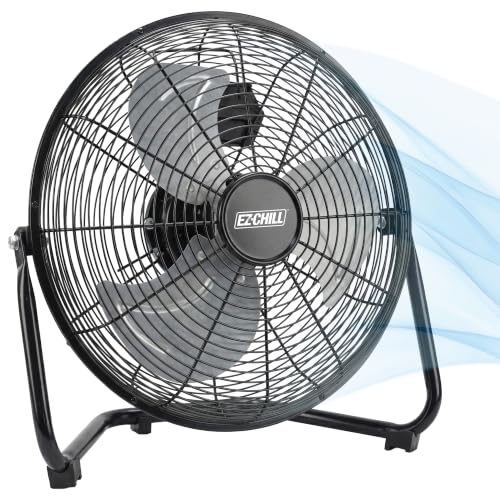
EZ-CHILL 12″ Cradle Floor Fan, All-Metal

Tornado 20 Inch High Velocity Metal Floor Fan

OmniBreeze 36-Inch Digital Tower Fan with Remote

DREO Omni-Directional Oscillating Pedestal Fan

PELONIS Omni-Directional Air Circulator Fan
The Strengths Of Each Pick
The 30-inch tower silhouette slides into tight bedroom corners without dominating the room, and the 37 dB rating puts it firmly in conversation-friendly territory. Three speed settings cover the range from a barely-there sleep breeze to a steady daytime push, while the included remote lets you adjust from bed without getting up.
For a household running a fan through the night, the 7-hour timer and oscillation handle the job quietly. Compared to the bulkier Tornado and Vornado picks further down, this PELONIS trades raw power for a footprint that disappears against the wall.
Points In Its Favor
- Rated at 37 dB, which sits close to a soft library hum, making it workable for restless sleepers
- Remote control and 7-hour auto-off timer keep nightly adjustments hands-free
- Slim tower body fits beside nightstands or in narrow gaps where a box fan would crowd the floor
- ETL certification signals the unit has passed independent electrical safety testing
Honest Caveats
- Three speeds mean fewer fine-tuned options than the OmniBreeze or DREO picks offer
- Tower fans tend to need occasional grille dusting to keep airflow consistent
Quick Facts
Who It Suits Best
Light sleepers, shift workers, and shared bedrooms where steady background airflow beats raw gust power.
Look Elsewhere When
You need serious workshop-grade airflow, where the Tornado 20 Inch High Velocity Metal Floor Fan is a better match.
This earlier-generation PELONIS shares the same 30-inch tower footprint and three-speed control layout as the first pick, but in a slightly trimmer 6.8-inch-deep frame. The white finish blends into rentals and dorm rooms where a louder visual footprint would feel out of place.
You skip the remote and timer found on the newer PELONIS up top, which keeps the controls simple but means more walks across the room for adjustments. For shoppers outfitting a small apartment or first workspace, that trade-off often feels reasonable.
The Good Stuff
- Slim 6.8″ depth tucks into narrow corners behind furniture or next to a desk
- Three-speed oscillation covers the cooling basics without a learning curve
- Lightweight enough to move between a bedroom and home office during the day
Worth Noting
- No remote control means manual button presses every time you want a change
- Lacks a programmable timer, so the fan runs until you remember to switch it off
- Tower-style fans generally need a wipe-down on the intake grille to keep air moving freely
Made For
Students, renters, and anyone building a first cooling setup on a tighter budget.
Consider Something Else When
You want a remote and built-in timer, where the PELONIS 30-Inch Oscillating Tower Fan with Remote earns the small step up.
Vornado takes a different approach from the slim towers above: a 20-inch box fan built to push a column of air across an entire room rather than just across a bed. The five-speed dial gives finer control than most three-speed tower fans, and the removable grille makes periodic deep cleaning far less of a chore.
Compared to the EZ-CHILL and Tornado metal fans, this Vornado runs quieter in real-world use. For living rooms, open-plan spaces, or a nursery where you want consistent air without a constant roar, that balance is hard to beat.
Benefits That Matter
- Five speeds let you dial in anything from a whisper to a strong breeze
- Removable grille simplifies dusting blades and keeping allergens from recirculating
- Built-in cord storage keeps the back panel tidy when the fan is between uses
- Ice White finish suits bright, modern interiors better than industrial black
Points To Note
- Larger 20-inch frame eats more floor space than a slim tower fan
- No remote or timer, so changes happen at the unit itself
- Top speeds are louder than tower alternatives, which may bother sensitive sleepers
Feature Snapshot
Right Fit For
Open living spaces, nurseries, and home offices where whole-room circulation matters more than bedside quietness.
A Better Fit Elsewhere
Bedroom-first shoppers will likely prefer the quieter PELONIS 30-Inch Oscillating Tower Fan with Remote.
Where the tower fans above aim for visual restraint, this EZ-CHILL is unapologetically utilitarian. The all-metal cradle and 180-degree tilt let you aim the 12-inch blade directly at a workbench, a sleeping pet, or a sweaty router setup, and the rubber feet keep it planted on slick surfaces.
For a small garage, dorm, or craft room, the compact 12-inch size is easier to reposition than the Vornado 20-inch box. It is louder than tower picks, but the airflow is more direct.
A Favorable Mix
- All-metal construction handles bumps and shop use better than plastic housings
- 180-degree tilt lets you redirect airflow upward, downward, or straight ahead
- Carry handle on top makes it easy to grab and move between rooms
- Rubber feet cut vibration noise and protect hardwood or laminate floors
Small Caveats
- Three-speed layout offers less fine-tuning than the Vornado’s five speeds
- High-velocity output is louder at top settings, which can bother desk neighbors
- No oscillation, so coverage depends on where you point it
Core Details
Best Suited To
Garages, craft rooms, and small offices where a compact, durable, directional fan beats a quiet tower.
Not Your Match When
You want remote-controlled whole-room coverage, where the Vornado Model 80 High Velocity Box Fan is the stronger call.
The Tornado is the most industrial pick in this lineup, built around an aluminum and powder-coated steel frame with a 20-inch blade. Its three-speed CFM ratings (4750, 4200, and 3800) tell the story: CFM (cubic feet per minute) is the standard way to measure how much air a fan moves, and these numbers are firmly in shop-fan territory.
For a workshop, a converted garage, or a large open living space that fights a stubborn AC, this fan earns its keep. It is louder than any of the tower or Vornado picks and feels at home in utilitarian spaces rather than quiet bedrooms.
Well-Handled Touches
- Aluminum and powder-coated steel housing resists rust in humid or semi-outdoor spaces
- Three CFM tiers (4750 / 4200 / 3800) let you scale output to the room
- 120-degree tilt covers wide workbench areas without repositioning
- 6-foot cord gives more placement freedom than shorter stock cords
Trade-Offs To Consider
- Industrial airflow output is louder than bedroom-oriented picks, often too much for a nursery
- 20-inch frame and metal body are heavier to move around than plastic alternatives
- No remote or timer, so all changes happen at the unit
Important Details
Who Will Love This
DIYers, garage gym users, and anyone cooling a large room where noise is a fair trade for serious airflow.
Swap It Out When
You mostly need bedside cooling, where the DREO Omni-Directional Oscillating Pedestal Fan suits a quieter household.
Standing 36 inches tall, the OmniBreeze is the tallest tower on this list and one of the most feature-loaded. Four operating modes (Normal, Natural, Sleep, Auto) and four speeds give you a wider range of behavior than the three-speed PELONIS towers, and the LED display plus remote handle the adjustments from across the room.
Auto mode adjusts fan speed based on the room temperature, while Sleep mode gradually steps down speed through the night. For a tech-friendly living room where the fan is shared between household members, those modes earn their keep.
Positive Points
- Four modes (Normal, Natural, Sleep, Auto) cover daytime, sleep, and hands-off use
- LED display makes the current setting easy to read from across the room
- Bladeless front panel reduces the risk of curious fingers finding the blades
- 36-inch height moves airflow above seated eye level in living rooms
A Few Limitations
- More modes mean a slightly steeper learning curve than the simpler PELONIS towers
- 36-inch height may feel oversized in tighter bedrooms or small dorms
- LED display brightness can bother light-sensitive sleepers unless turned down or off
Perfect Match For
Shared living rooms and family spaces where multiple people want different cooling settings throughout the day.
Reach For A Different Pick When
You need adjustable height for a tall user, where the DREO Omni-Directional Oscillating Pedestal Fan stretches higher.
The DREO is the most adjustable fan in this shortlist. An adjustable height range of 37 to 42 inches suits both desk-adjacent and standing use, and the combination of 120-degree horizontal and 100-degree vertical oscillation covers a large volume of room rather than a narrow column. A DC motor (the brushless, electronically controlled kind) keeps operation efficient, and the 20 dB rating on lower settings is genuinely quiet.
Nine speeds and three modes give finer control than any of the tower or box fans above. For a primary bedroom or a studio where one fan does all the work, that flexibility is the main draw.
Features That Help
- Adjustable height (37–42″) adapts to desk, bedside, or standing use in one fan
- 120° horizontal plus 100° vertical oscillation covers a wide room volume
- DC motor supports nine speeds and three modes with efficient power use
- 20 dB on low settings approaches the level of a quiet library for sensitive sleepers
Practical Considerations
- Larger feature set comes at a higher cost than simpler three-speed towers
- Pedestal base needs more floor footprint than a slim tower fan
- More controls can take a few nights to learn before they feel intuitive
Feature Card
Who Should Grab It
Studio dwellers and primary-bedroom shoppers who want one fan to handle sleep, work, and living-area cooling.
Where A Sibling Pick Shines
For a tighter budget, the PELONIS 30-Inch Oscillating Tower Fan with Remote handles bedside cooling with fewer features and a lower footprint.
This PELONIS rounds out the list as the softest option. A bionic butterfly-blade design produces a wide, low-velocity breeze rather than a focused gust, and the combination of 135-degree horizontal and 90-degree vertical oscillation means the air reaches you from multiple angles at once, with no single direct blast.
For households with children, elderly family members, or anyone who finds normal fans too aggressive, that gentler profile is the whole point. Compared to the DREO above, you trade speed count and height range for a kinder, more diffused breeze.
Useful Strengths
- Wide, low-velocity breeze avoids the direct blast that some sleepers find irritating
- 135° horizontal and 90° vertical oscillation covers the room without manual aiming
- Remote control keeps nighttime adjustments effortless from bed
- White finish blends into bedrooms, nurseries, and shared living spaces
Soft Spots
- Lower airflow velocity means slower relief on the hottest summer days
- Fewer speed options than the nine-speed DREO, so fine-tuning is more limited
Built With In Mind
Families with young children, elderly members, or light sleepers who want airflow without the direct blast of a traditional fan.
Skip It When
You need real CFM-style cooling in a workshop or large open room, where the Tornado 20 Inch High Velocity Metal Floor Fan handles the load.
What Matters Most Before Choosing Floor Fans For Cooling
Size, Footprint, and Where It Will Live
Measure the spot where the fan will sit before falling for a slick product photo. A 30-inch tower fan slots into a bedroom corner differently than a 20-inch box fan sits in the middle of a living room. For tight bedrooms, dorms, or small offices, a slim tower like the PELONIS PFT28A2BWW keeps floor space clear. For open living rooms and shared spaces, a 20-inch box fan like the Vornado Model 80 trades a bigger footprint for wider coverage.
Airflow Style: Tower vs. Box vs. Cradle
Tower fans push air in a vertical column, which is great for bedside use and quiet bedrooms. Box fans like the Vornado and Tornado throw air across a room in a wider arc, which suits workshops and open plans. Cradle fans like the EZ-CHILL focus a single targeted stream, which is ideal when you want to cool a workbench, a treadmill, or one specific corner.
Noise Level and Where It Runs
The PELONIS tower fans and the DREO pedestal fan post the quietest low-speed ratings, making them bedroom-friendly. The Tornado and EZ-CHILL are noticeably louder at top speed, which is fine in a garage or laundry room but worth considering if the fan lives near a home office or a sleeping child. CFM ratings matter too: a fan that moves more air per minute is generally louder, so balance airflow with the room’s tolerance for noise.
Extras That Actually Get Used
Remotes, timers, and multiple modes sound like fluff until you use them. A 7-hour timer is genuinely useful for falling asleep, and an auto-off feature saves a trip across the room. Remotes are most valuable on tall tower fans where the control panel sits above eye level. Pick the features you will actually use, not the longest spec list, and the right floor fan for cooling tends to reveal itself.
Key Considerations Across These Picks
Common Shopping Slip Ups
A frequent mistake is choosing a fan for its top-speed CFM without checking the noise rating. The Tornado and EZ-CHILL push serious air, but that output shows up as audible roar, which can be a problem in a nursery or a shared apartment wall. Another trap is ignoring oscillation. A fan that only points one way leaves half the room untouched, while a model with 90-degree or wider coverage spreads the air more evenly. Always check the room dimensions, the noise rating, and the oscillation range before adding to your cart.
When Paying More Pays Off
The higher-tier picks in this roundup, like the DREO pedestal fan and the OmniBreeze 36-inch tower, add finer speed increments, dual-axis oscillation, and quieter DC motors. Those features cost more, but they show up in everyday comfort: you can dial in exactly the right airflow, the fan runs quieter through the night, and the unit adapts to different parts of your routine. For a primary bedroom or a fan you will run hundreds of hours a season, that step up tends to pay for itself in better sleep and fewer mid-night adjustments. For a guest room or a workshop that runs occasionally, a simpler three-speed model is usually enough.
Frequently Asked Questions
How loud is too loud for a bedroom floor fan?
Anything under about 40 dB on low settings tends to disappear behind normal room noise, which is why the PELONIS tower fans and the DREO pedestal fan work well in bedrooms. Once you climb above 50 dB at top speed, the fan becomes noticeable during calls or quiet media.
Do tower fans cool as well as box fans?
They cool differently. Tower fans push air in a vertical column that suits bedside or desk use, while box fans like the Vornado Model 80 throw air across a wider arc. For personal cooling near a bed, towers are usually the better fit. For whole-room circulation, box fans generally win.
Is oscillation worth prioritizing?
For most people, yes. Oscillation spreads airflow across the room so you are not stuck in one cold spot. Tower fans with 90-degree or wider horizontal sweep, like the OmniBreeze and DREO, cover a noticeably larger area than fixed-direction models.
How long do floor fans typically last?
With basic care, a quality floor fan should run for several years of regular seasonal use. Tower fans occasionally need a wipedown on the intake grille, and box fans with removable grilles, like the Vornado Model 80, are easier to deep-clean when dust builds up on the blades.
Can a floor fan replace air conditioning?
For a single person in a small room, a strong high-velocity fan like the Tornado 20-inch can feel surprisingly effective. For larger spaces, multiple occupants, or very humid climates, a fan works best alongside an AC unit or a dehumidifier rather than as a standalone replacement.
