

A sweltering home office, a workshop that feels like a furnace, or a bedroom where the air just sits, these are the moments a good floor fan earns its keep. The right unit moves serious air without rattling the windows or hogging floor space, and the wrong one leaves you repositioning it every hour. This shortlist mixes compact personal fans, high-velocity workhorses, and quiet tower designs so you can match the airflow to the room, not the other way around.
How The Shortlist Stacks Up
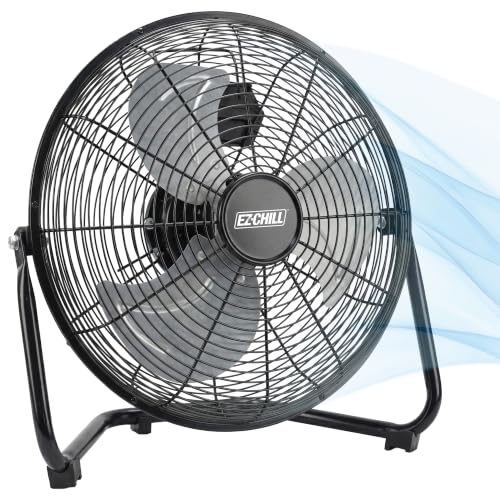
EZ-CHILL 12″ Cradle Floor Fan, 3-Speed High Velocity
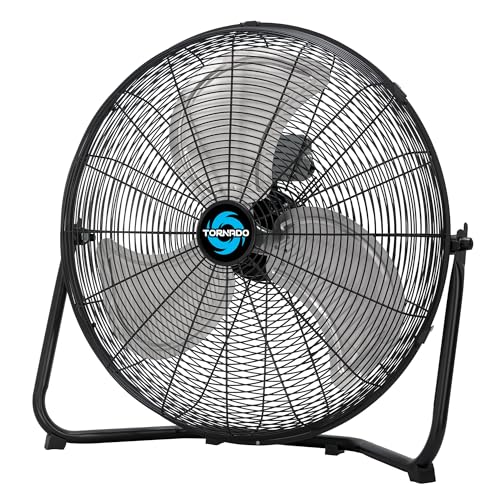
Tornado 20 Inch High Velocity Metal Floor Fan, 3-Speed

Mounto 1/2HP Air Mover Floor Drying Blower Fan, 2200 CFM

Air Mover Blower Fan, Industrial 1/3HP 1200CFM, 3 Speeds
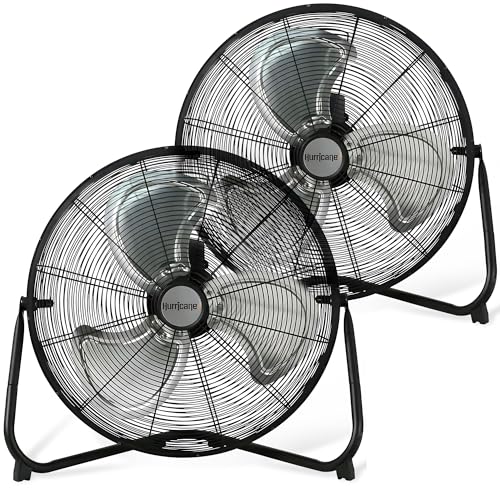
Hurricane Pro High Velocity Floor Fan, 20-Inch, 2 Pack

Amazon Basics 20″ High Velocity Industrial Floor Fan, 3-Speed

Levoit Tower Fan, 36-Inch Bladeless, 5 Speeds 4 Modes

Lasko Pivoting High Velocity Portable Utility Fan, 12-Inch
A Closer Look At Each Pick
The EZ-CHILL 12-inch cradle fan earns its spot by being small enough to live on a desk or beside a nightstand while still moving enough air to matter. The all-metal housing and rubber feet make it feel sturdier than its size suggests, and a built-in carry handle means you can shuttle it between the kitchen and the home office without fuss.
For apartment dwellers or anyone working with limited square footage, this is a sensible starter. You may find the airflow modest compared with the 20-inch picks later in this list, but in a tight room that restraint is a feature, not a flaw.
Where It Excels
- All-metal body that handles daily bumps better than plastic competitors
- 180-degree tilt for aiming airflow exactly where you need it
- Three speed settings cover everything from a desk breeze to a noticeable gust
- Compact 12-inch footprint fits under most tables and beside beds
- Carry handle and rubber feet make room-to-room moves painless
Things To Consider
- 12-inch blade sweeps a smaller area than the 20-inch industrial options
- All-metal construction adds a bit of weight versus plastic personal fans
Who It Suits Best
Anyone in a studio apartment, dorm, or small home office who wants dependable airflow without dedicating floor space to a tower-style unit.
Look Elsewhere When
The Tornado 20 Inch High Velocity Metal Floor Fan suits you better if you need to circulate air across a workshop or large open-plan living area.
The Tornado 20-inch is the kind of fan you buy when “a little breeze” is not the assignment. Aluminum blades paired with a powder-coated metal frame handle long summer days in a garage or shop, and the three speed settings reach up to 4750 CFM on high, which is real commercial-grade output.
Compared with the EZ-CHILL 12″ Cradle Floor Fan from earlier, this unit trades compactness for sheer reach. The 120-degree tilt and 6-foot cord let you aim a strong column of air across a wide bench or down a long room without dragging extension cords around.
What Helps Most
- Aluminum blades hold up to dust and shop debris better than plastic
- High CFM output makes it effective in spaces where a household fan would struggle
- 120-degree adjustable tilt covers a wide work zone from one position
- UL safety listing gives peace of mind for extended daily use
Worth Noting
- Larger 20-inch frame requires dedicated floor space
- Top speed produces noticeable noise, less suited to quiet bedrooms
- At full blast you may find the airflow almost too aggressive for casual living rooms
Made For
Workshop regulars, garage gym owners, and anyone cooling a large open space who values raw airflow over whisper-quiet operation.
Consider Something Else When
The Levoit Tower Fan suits you better if you need quiet overnight cooling in a bedroom rather than high-velocity output in a workspace.
The Mounto 1/2HP Air Mover is built for jobs a regular floor fan cannot touch. Burst pipes, basement leaks, freshly cleaned carpets, and refinished floors all benefit from a fan designed to push a focused sheet of air across a surface rather than just cool a person sitting nearby.
You can still use it for circulation in a pinch, but the 2200 CFM rating and 1/2HP motor place it firmly in drying-fan territory. The lightweight build keeps it portable enough to carry up basement stairs, which is where many moisture problems start.
Points In Its Favor
- 1/2HP motor delivers drying-focused airflow most household fans cannot match
- Two speed settings let you balance drying speed against noise level
- Lightweight shell makes transport between rooms and floors manageable
Trade Offs
- Directional design is less versatile for personal cooling than oscillating towers
- Larger footprint than a standard floor fan, so placement matters
- Owners commonly report a strong motor smell on first runs, which fades after break-in
Best Suited To
Homeowners dealing with recurring moisture issues, carpet cleaners, and anyone running restoration work after water incidents.
Not Your Match When
The EZ-CHILL 12″ Cradle Floor Fan makes more sense for everyday personal cooling in a small room where drying power is unnecessary.
BSMTEK’s air mover takes the basic drying-fan formula and adds genuine workshop flexibility. Four adjustable angles let you direct airflow horizontally, kick it up at a wall, or angle it under a cabinet, which matters when you are drying out a freshly detailed car or speeding up paint cure times.
You get three speed settings between 1200 and 1600 RPM, and a 15-foot cord that reaches across a two-car garage without an extension. The stackable shell is a quiet bonus for storage in tight utility closets.
The Case For It
- Four angle positions adapt to drying floors, walls, and vehicle interiors
- 15-foot cord reduces the need for outlet juggling in larger spaces
- Stackable housing simplifies storage between uses
- Three speed settings give finer control than typical two-speed air movers
Points To Keep In Mind
- Lower CFM than the Mounto 1/2HP Air Mover Floor Drying Blower Fan, so very wet jobs take longer
- Industrial styling may look out of place in a finished living area
Right Fit For
Auto detailers, hobbyist woodworkers, and homeowners who want a drying fan that doubles as serious air circulation.
A Better Fit Elsewhere
The Hurricane Pro High Velocity Floor Fan 2 Pack works better if you need cooling in two separate rooms rather than one concentrated drying station.
The Hurricane Pro 2 Pack solves a problem single fans often leave unsolved: cooling more than one room at once. Each 20-inch unit delivers 5300 CFM at 1450 RPM, which is serious airflow for a household-grade product, and the pair format means you can stage fans in adjacent spaces for cross-ventilation on still summer days.
Assembly is minimal, with a tube base and rubber feet that keep the units planted on hard floors. The adjustable tilt and three speeds mirror what the standalone Tornado and Amazon Basics fans offer, so the value here is really about getting two matched fans without shopping twice.
A Strong Showing
- Two matched fans cover a living room and bedroom simultaneously
- High CFM output handles open-plan layouts effectively
- Adjustable tilt on each unit supports custom airflow aiming
Minor Gripes
- Two units means twice the storage footprint when not in use
- Bulkier than tower fans, so apartment corners may feel crowded
- Both fans share the same loud top-end behavior common to high-velocity designs
Who Will Love This
Families or roommates in multi-room spaces who want matched airflow in bedrooms and shared areas from a single purchase.
Reach For A Different Pick When
The Levoit Tower Fan fits better if you need one quiet unit for a single bedroom rather than a louder matched pair for multiple rooms.
The Amazon Basics 20-inch floor fan leans into the basics in the best way. Metal housing, metal blades, three speeds, and a tilt head come together in a no-fuss package that feels familiar from the moment you unbox it. At 125 watts, it sits in a sensible middle ground between compact personal fans and the heaviest commercial units.
Where the Tornado 20 Inch High Velocity Metal Floor Fan pushes more aggressive airflow numbers, this one prioritizes accessibility. The ETL-listed safety compliance is reassuring for garages and shared workspaces, and the simple dial controls require no learning curve.
Notable Gains
- All-metal housing and blades resist damage in busy environments
- ETL-listed safety compliance suits commercial and home use
- Tilt head with three speeds covers the common airflow scenarios without complication
Honest Caveats
- Lower CFM than premium industrial options like the Tornado
- Basic dial controls lack remote or smart features
Perfect Match For
First-time floor fan shoppers, garage owners, and home gym users who want a dependable metal fan without paying for high-end output.
Swap It Out When
The Tornado 20 Inch High Velocity Metal Floor Fan suits you better if higher CFM is a priority for cooling a very large shop space.
The Levoit Tower Fan is the outlier on this list, and that is precisely why it earns a spot. Where the other picks lean into industrial muscle, this one prioritizes quiet. A 28dB floor on low speed is genuinely sleep-friendly, and the bladeless tower format is far easier to clean than a metal-bladed cradle fan.
The 90-degree oscillation, five speeds, and four modes give you more control than most floor fans. The built-in temperature sensor helps the fan ramp up or dial back based on room conditions, which is a thoughtful touch for overnight use in a nursery or master bedroom.
Useful Strengths
- Low 28dB operation is genuinely bedroom-appropriate, even for light sleepers
- Bladeless tower format is safer around children and easier to wipe clean
- Five speeds and four modes deliver more refinement than typical three-speed fans
- 12-hour timer supports all-night use without manual shutoff
Soft Spots
- Lower air volume than 20-inch industrial fans, so very large rooms take longer to cool
- Tower format takes up vertical space rather than a tight floor footprint
Who Should Grab It
Light sleepers, apartment dwellers, and parents looking for a bedroom fan that disappears into the background rather than dominating the room.
Where A Sibling Pick Shines
The Lasko Pivoting High Velocity Portable Utility Fan suits you better if you need portable high-velocity air for a job site rather than quiet overnight circulation.
The Lasko Pivoting Utility Fan closes out the list as a versatile mid-size option that bridges personal fans and the bigger industrial units. The 12-inch size is portable enough to grab by the handle and move to a basement, garage, or workshop, yet it pushes enough air to matter in those spaces.
Three speed settings and a pivoting head let you redirect airflow as projects shift, and two built-in grounded outlets turn the fan into a power source for other tools. That kind of utility-focused design is rare in household fans, and it explains why this model has a long track record with contractors and homeowners alike.
What Earns Its Place
- Compact 12-inch form factor with high-velocity output
- Pivoting head directs airflow exactly where projects need it
- Built-in grounded outlets add jobsite utility beyond simple cooling
- Carry handle supports frequent room-to-room moves
Small Caveats
- 12-inch size limits how much air it moves compared with 20-inch options
- Utility design language may look plain in a finished living space
- On its highest setting, noise level is more workshop than bedroom
Built With In Mind
Contractors, weekend DIYers, and homeowners who want one fan that can move from a basement to a garage without babying it.
Skip It When
The EZ-CHILL 12″ Cradle Floor Fan is a better everyday living-room fit if you do not need the pivoting utility head or the onboard outlets.
What Matters Most Before Choosing a Floor Fan
CFM, or cubic feet per minute, is the single most useful number on any floor fan spec sheet. It tells you how much air the unit moves per minute, and bigger numbers mean wider coverage. A 1000 CFM fan can keep a small bedroom comfortable, while a 4000+ CFM unit earns its keep in a garage or shop.
Blade size and tilt range matter just as much. A 20-inch blade sweeps more air per rotation than a 12-inch blade, but a wide tilt range lets you redirect a smaller fan with precision. For most bedrooms, a 12 to 16-inch fan with strong tilt is plenty. For workshops and open-plan spaces, 20-inch models justify the floor space.
Noise is the trade-off nobody wants to talk about. High-velocity fans move more air by spinning faster, and that speed shows up in the sound profile. If the fan lives in a bedroom, look for sub-30dB operation on low or a bladeless tower design. Workshop fans can be loud without complaint, but bedroom fans that hum all night will wear on you fast.
Build materials affect longevity more than people expect. All-metal housings and aluminum blades hold up to drops, dust, and daily repositioning far better than plastic. The trade-off is weight, so balance metal durability against how often you actually move the unit.
Key Considerations Across These Picks
Where Shoppers Go Wrong
Chasing CFM without checking noise ratings is the most common mistake. A 5000 CFM fan sounds impressive on paper, but it can be brutal in a room where you also watch TV or take calls. Match airflow ambition to the actual room, not the spec sheet high score.
Ignoring cord length is another quiet error. Fans often end up farther from outlets than expected, and a 6-foot cord on the wrong side of a room means dragging an extension cord across a walkway. Measure your typical placement spots before committing.
What The Higher Tier Buys
Premium floor fans tend to spend their extra budget on three things: quieter motors, longer-lasting components, and better-balanced blades. Quieter motors use more refined bearings and windings, which is why bedroom fans cost more per CFM than workshop fans. Better-balanced blades reduce vibration, which protects both the motor and your floor over years of daily use.
The upgrade is worth it when a fan runs for many hours per day or sits in a room where noise is unacceptable. For occasional garage use, a mid-tier pick delivers the airflow without overspending.
Frequently Asked Questions
How big should a floor fan be for a bedroom?
A 12 to 16-inch fan usually covers a standard bedroom well. Larger 20-inch models can overpower small rooms and tend to run louder, which disrupts sleep.
Is higher CFM always better for a floor fan?
Higher CFM means more air movement, but it usually means more noise too. Match CFM to the room size, and prioritize lower noise ratings for bedrooms and offices.
Can a floor fan replace air conditioning?
In mild conditions with low humidity, a good floor fan can make a room feel several degrees cooler by improving air circulation. In extreme heat, it works best as a supplement to AC rather than a replacement.
How long do floor fans typically last?
Metal-bladed, well-maintained floor fans often run for many years, especially in indoor environments. Lighter plastic units may show wear sooner, particularly in dusty workshops or garages.
Are bladeless tower fans better than traditional fans?
Bladeless towers are easier to clean, safer around children, and typically quieter. Traditional fans usually deliver stronger airflow per dollar and handle workshop conditions more reliably.
