

Important paperwork, passports, and family records need more than a kitchen drawer. A well-chosen safe brings fire resistance, pry protection, and quick access together, so the things you’d hate to lose stay put through everyday mishaps and the unexpected. Homeowners balancing clutter and security, renters who can’t bolt into studs, and small-business owners storing contracts will all find a fit here. Eight options line up below, ranging from compact lockboxes you can tuck into a closet to larger cabinets ready for binders and backup drives.
An Overview Of The Picks
FOWORE 3.5 Cuft Home Safes with Fireproof Waterproof Bag

Mitlvge 9.84″ Tall Small Safe Box with Removable Shelf

DAYI 2.0 Cu. Ft. Home Safes with Fireproof Bag

FOWORE 5.0 Cuft Fire Proof Safe for Home Documents
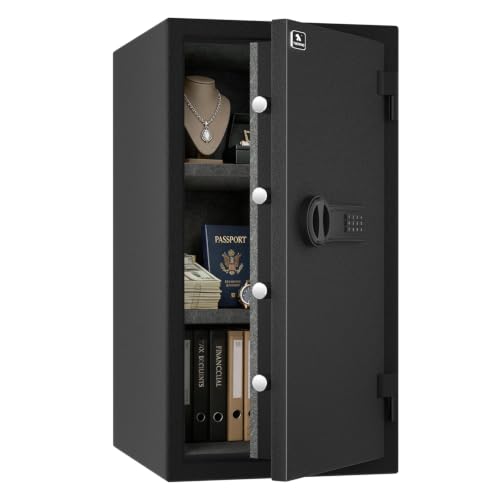
TIGERKING 3.47 Cu Ft Fireproof Safe for Home Office

Aprxuvot 1.3 Cuft Small Fire Proof Safe for Home Documents
Pockrif 5.5 Cu Ft Fingerprint Safe for Home Office
Homirxan 3.4 Cu Ft Home Safe Fireproof Waterproof
A Closer Look At Each Pick

The FOWORE 3.5 cubic foot model is the kind of cabinet safe that disappears into a closet corner and still swallows a stack of binders, a laptop charger, and a folder of passports without complaint. At roughly 19.7 inches tall, it stands as a slim-but-deep tower rather than a wide hunk on the floor, which matters in homes where wall space is a luxury.
It ships with a fireproof and waterproof pouch for the most fragile items, and a digital lock with backup keys for the day the batteries die. The tradeoff for the generous interior is footprint: you’ll want to measure your closet depth first, and the weight means this is a two-person lift for upper-floor placement.
Everyday Perks
- 3.5 cubic feet handles years of tax returns, insurance policies, and a tablet without crowding.
- Included fireproof and waterproof pouch protects the truly irreplaceable items inside the safe itself.
- Backup key override saves you from being locked out after a dead battery.
- Vertical 19.7-inch footprint tucks behind hanging clothes or beside a dresser.
Worth Noting
- Heavier than smaller options, so plan a permanent spot before delivery rather than rearranging later.
- Digital keypad batteries need annual checks, commonly reported as the most-overlooked maintenance step.
- No biometric entry, so anyone reaching the keypad gets the same three-second window you do.
Who It Suits Best
Families and homeowners who want one safe to cover both everyday documents and a few heirlooms will find the capacity and the included pouch hard to beat for the size.
Where Another Pick Suits Better
Studio dwellers working with a narrow closet shelf should look at the Mitlvge 9.84″ Tall Small Safe Box, which trades cubic feet for a footprint that actually disappears into a wardrobe.
Where the FOWORE stands tall, the Mitlvge 9.84-inch safe box practically apologizes for taking up shelf space. Roughly 0.9 cubic feet of interior with a removable shelf means passports and small electronics on top, a folded stack of birth certificates below. It reads as the dorm-room favorite, but renters and small-condo dwellers will appreciate the same low profile.
The trade-off for that footprint is fire and water resistance, which the listing frames as a feature, not a tested certification. That distinction matters for anyone choosing between this and a UL-rated pick later in the lineup.
Good Reasons To Consider
- Removable shelf lets you reconfigure for a tablet, a stack of cash, or a single tall object.
- At under ten inches tall, it fits inside wardrobes, drawers, and bedside cabinets.
- Light enough to relocate between rooms without rearranging the whole closet.
Trade Offs
- The 0.9 cubic foot interior quickly runs out of room for file folders or laptops.
- Without a third-party fire rating, you may want to add an internal fire pouch for critical documents.
- Owners commonly report that the digital lock’s audible beep is helpful, but quieter mode would be welcome in a shared bedroom.
Best Suited To
First-time safe owners in apartments, dorms, and rental homes who want basic document and medication storage without drilling into a wall.
Skip It When
Households with a decade of paper files should look at the FOWORE 5.0 Cuft Fire Proof Safe for Home Documents, which handles binders and folders without a fight.
The DAYI 2.0 cubic foot safe box feels built for the homeowner who treats security as the primary job and convenience as a bonus. One-piece bending construction, a pry-resistant door, and four 1.2-inch live-locking bolts (the round steel posts that slide into the frame when the door closes) make the case before you even get to the keypad. A fireproof pouch ships with the unit for the items that demand the highest protection.
It’s heavier and more rigid than the smaller Mitlvge, which is the point. For most living rooms, two cubic feet covers a household’s worth of paperwork, two small cameras, and a jewelry tray. Just confirm the exterior dimensions against your chosen alcove first.
What Stands Out
- Four solid locking bolts resist prying better than the two-bar setups on most entry-level safes.
- One-piece body construction reduces seam-related weak points that pry bars can target.
- Included fireproof bag gives you layered protection for birth certificates and deeds.
- 2.0 cubic feet is enough for hanging file folders if you stand them upright.
Honest Caveats
- The safe is heavy; you may want a hand cart to position it without scratching floors.
- Bolting hardware is sometimes listed in the box, sometimes not, so check before installation day.
- The digital keypad’s response can feel slower than premium options during early use.
Right Fit For
Homeowners in ground-floor properties or shared buildings where pry resistance matters more than absolute fire ratings will find DAYI’s build reassuring.
Look Elsewhere When
Anyone prioritizing fire endurance over break-in resistance should consider the FOWORE 5.0 Cuft Fire Proof Safe, rated for 35 minutes at 1700°F.
The headline number here is the fire rating: 35 minutes at 1700°F, which is the kind of endurance that turns a house fire from a total document loss into a recoverable inconvenience. Five cubic feet of interior space, with internal dimensions near 14 by 11.6 by 22 inches, holds hanging folders, photo albums, and a stack of small electronics comfortably. Triple-layer fireproof construction is the main reason this safe outweighs several competitors in the same size class.
Where the smaller Mitlvge forces you to be selective, this FOWORE lets you stop curating. The trade is weight and floor space; this is a closet-floor safe, not a shelf-top one. It will be the heaviest pick in the room, and you’ll feel it during delivery.
Everyday Wins
- 35-minute fire endurance at 1700°F is among the longer ratings in this size and price band.
- 5.0 cubic feet swallows file boxes, photo albums, and a small laptop at the same time.
- Triple-layer fireproof construction aims to keep interior temperatures survivable for paper and electronics.
- Backup key access prevents a dead keypad from locking you out of important records.
A Few Limitations
- Expect two adults and a dolly for placement; this is not a piece you’ll shuffle around weekly.
- Fire rating is manufacturer-stated rather than UL-tested, so weigh the spec against the TIGERKING pick below if third-party verification matters most.
- Larger footprint rules out tight under-stair or hallway closets.
Key Specs
Perfect Match For
Paper-heavy households, genealogists, and anyone in wildfire- or heating-fire-prone regions who rates fire endurance above all else.
Not Your Match When
Shoppers who want a third-party certified fire rating should look at the TIGERKING 3.47 Cu Ft Fireproof Safe, which lists UL 72 testing.
TIGERKING leans on the one phrase that matters in the fire-safety conversation: UL 72 standard. That’s the Underwriters Laboratories test method that simulates how a safe holds up when a room reaches 1700°F over 30 minutes. For shoppers who want third-party verification rather than a manufacturer claim, that line alone reshapes the comparison. The 3.47 cubic foot interior sits between the compact Mitlvge and the roomy FOWORE 5.0, landing in a usable middle.
Heavier steel and a heavier price make this the “office-grade home” option. You trade a lighter delivery and a smaller footprint for a documented fire spec and a sturdier door. A small-business owner running client contracts through a home office will recognize the logic immediately.
Points In Its Favor
- UL 72 standard provides independently tested fire endurance, which is rarer than it sounds at this size.
- 30-minute fire resistance at 1700°F is the spec that protects passports, deeds, and cash during a typical house fire.
- 3.47 cubic feet is the practical sweet spot for a four-drawer file folder’s worth of records.
- Heavier-gauge steel door helps the safe feel planted rather than tinny.
Practical Considerations
- Premium positioning means a higher entry cost than the FOWORE 5.0 by some margin.
- Weight and rigidity call for a permanent spot; this is a “place once” piece, not a movable one.
- UL 72 ratings come in time and temperature tiers, so check the exact spec sheet for your documents’ heat sensitivity.
Technical Highlights
Whose Shelf It Belongs On
Home-office workers, freelance professionals, and homeowners who want a fire spec backed by a third party rather than a brand claim.
Swap It Out When
Shoppers on tighter budgets can get a similar fire-resistant message from the FOWORE 5.0 Cuft model, with the trade-off being manufacturer-stated rather than UL-tested endurance.
The Aprxuvot 1.3 cubic foot safe box is built for the bedroom, not the basement. It pairs a small footprint with a removable shelf, a combination lock, and a smart alert system that chirps when the door or keypad takes a hit. At this size, the comparison with the earlier Mitlvge is direct: similar volume, but Aprxuvot adds a tamper-alert feature that renters with shared buildings tend to value.
Fire and water resistance show up in the marketing copy rather than a UL spec, similar to the Mitlvge. The real differentiator is the alert system, which adds a layer of noise to anyone trying to walk off with a small safe.
A Few Highlights
- Smart alert system chirps after repeated incorrect entries, which deters casual grab-and-go theft.
- Removable shelf adapts to passports on one level and a small jewelry tray below.
- Compact 1.3 cubic foot size fits under most nightstands and inside wardrobe drawers.
Where It Is Less Suited
- 1.3 cubic feet is too tight for a full set of file folders or a laptop.
- Combination lock entry is slower than fingerprint models if you open the safe many times a day.
- Fire and water claims are manufacturer-stated; plan a fire pouch for irreplaceable items.
Built With In Mind
Renters, roommates, and apartment dwellers who want a bedside safe that responds to tampering without rewiring a wall.
Reach For A Different Pick When
Frequent-access households who hate punching in codes should look at the Pockrif 5.5 Cu Ft Fingerprint Safe, which trades tamper alerts for biometric speed.
The Pockrif 5.5 cubic foot safe is the largest in this lineup by volume, and it earns that space by making access the easiest part. A fingerprint reader sits where you’d expect a turn handle, and the internal dimensions (about 12.9 by 11.4 by 24.8 inches) hold stacked banker’s boxes, multiple cameras, and a stack of legal-size folders. The trade-off between the FOWORE 5.0 and this one is convenience versus fire rating: Pockrif is bigger and faster, FOWORE is fire-rated longer.
Biometric sensors are wonderful when your print reads cleanly and maddening when it doesn’t. Wet hands, lotion, and small cuts can all cause a re-scan, so plan for a backup PIN or key in your daily routine.
Notable Upsides
- Fingerprint entry takes a fraction of the time of punching in a code multiple times a day.
- 5.5 cubic feet is the largest interior in this list, so growth room is built in.
- Internal dimensions accommodate legal-size folders flat, not just letter.
- Solid steel body gives the door real weight when you swing it open.
Factors To Consider
- Fingerprint sensors need clean, dry hands to read reliably; carry a backup PIN habit.
- Larger size means a longer search for a permanent spot in older homes.
- Biometric readers consume more battery than keypads, so quarterly battery swaps are wise.
The Right Fit
Busy households, jewelry wearers, and home-office pros who open their safe multiple times a day and want speed over fire endurance.
Another Choice May Suit
Anyone whose priority is fire protection for paper records should consider the TIGERKING 3.47 Cu Ft model, which lists a UL 72 fire rating.
The Homirxan 3.4 cubic foot safe slots into the same practical middle as the TIGERKING, with a slightly different feature set. A digital keypad sits on top of a key lock, and an alarm system chirps after unauthorized attempts. Where the FOWORE 5.0 shouts about fire endurance, this one talks about layered security: a code, a key, and an audible warning if someone tries to force the issue.
It’s the sort of safe that handles mixed households: documents, medications, a few small valuables, and a backup drive, all in one place. The main practical concern is the same one that follows most alarm-equipped models: false alerts during the first few weeks, while everyone learns the right code cadence.
The Helpful Details
- Digital keypad plus physical key gives you two ways in, which is reassuring during dead-battery moments.
- Alarm system adds a noise deterrent that simple keypad safes lack.
- 3.4 cubic feet handles typical home paperwork plus a handful of valuables without crowding.
Points To Keep In Mind
- Alarm sensitivity can trigger false alerts in the first weeks; expect a calibration period.
- Fireproof and waterproof claims are listed as features, not third-party test results.
- Backup key storage is a small chore you need to solve before the safe is useful in a real lockout.
Who Should Grab It
Households that want one safe handling documents, medications, and small valuables, with audible warning on top of a keypad.
Consider Something Else When
Paper-archiving households that value a documented fire spec above all should look at the TIGERKING 3.47 Cu Ft model with its UL 72 rating.
Matching The Right Safe To Your Documents
The first decision is the size of the life you’re trying to protect. A studio dweller with a passport, a small jewelry box, and a folder of insurance policies will find 1 to 1.5 cubic feet plenty, while a family of four with two decades of tax returns, photo archives, and a backup drive needs at least 3.5 to 5 cubic feet. Going one size up is almost always the better call; you will add more to that safe in the next two years, and the cost gap between adjacent sizes is usually modest.
Fire resistance is the second axis, and it pays to know the language. A “fireproof” safe without a third-party rating is a manufacturer promise, often informed by internal testing. The UL 72 standard is the most cited independent benchmark and tracks how a safe holds up at 1700°F for a stated time. The 30-minute window is the entry point, and 35 to 60 minutes is a meaningful upgrade for paper and digital media. UL 72 is one of several standards used in the category, and your insurer may have a preference; check policy language if a discount depends on a specific certification.
Lock type matters more than most people expect. Digital keypads are convenient, but batteries die, and codes get forgotten. Biometric (fingerprint) locks are fast but read inconsistently with wet or dry skin. A dual-entry system (code plus key, or code plus fingerprint) is the most forgiving for daily use. The mechanical override key should live somewhere you trust but that an intruder won’t find quickly: a lockbox at a neighbor’s house, a sealed envelope at work, or a fire-rated lockbox at a related address.
Mounting and placement round out the decision. Wall safes need studs, floor safes need concrete or weight, and shelf safes need depth. Most home document safes are designed to be bolted down or weighted in place. If you rent, choose a model that you can secure with a cable through a heavy piece of furniture instead of drilling into the landlord’s hardwood.
Practical Tradeoffs Worth Knowing
Common Shopping Slip Ups
Many shoppers fixate on fire rating and ignore pry resistance, then end up with a thin-walled unit that an attacker can pop in seconds. A live-locking bolt count of three or more and a steel gauge that feels solid in the hand go a long way. The honest read is that no consumer safe stops a determined thief with tools and time, so the goal is to look harder to crack than the next safe in the room.
Another common miss is forgetting to measure the door on the way to the closet. A safe that fits the interior dimensions of your shelf may still need a wider opening than your doorframe allows. Measure the actual route, including turns, before ordering a heavier model.
Where The Extra Money Goes
Stepping up to a UL-rated safe buys independent verification, thicker steel, and usually a more refined locking mechanism. For paper archives and irreplaceable documents, that tier earns its keep; for everyday valuables that you could replace, the manufacturer-rated tier is often good enough. The upgrade payoff shows up most clearly after a real event, when the difference between a paper claim and a tested spec becomes a settled insurance question rather than a debate.
Frequently Asked Questions
What size safe do I need for home documents?
A household of two with mostly flat paperwork usually fits in 1.5 to 2.5 cubic feet, while families with hanging file folders and backup drives should target 3.5 to 5 cubic feet. Always measure your largest folder or binder before choosing a capacity.
Are fireproof home safes actually fireproof?
Fireproof safes rated to UL 72 standards have been independently tested to withstand 1700°F heat for a stated time, usually 30 to 60 minutes. Manufacturer-stated ratings without a third-party test are common but should be weighed as marketing claims rather than verified performance.
Where should I place a home safe for documents?
Ground-floor closets, inside bedroom wardrobes, and bolted-down positions in home offices are all common choices. The best spot balances fire risk, accessibility for you, and difficulty for a thief to remove the unit whole.
Should I bolt my safe to the floor or wall?
Bolting is strongly recommended for any safe under 100 pounds, since a thief can carry off an unanchored unit and crack it elsewhere. Rental dwellers can use a security cable through a heavy piece of furniture if drilling into the floor is not allowed.
How often should I test my safe’s lock and batteries?
Digital and biometric locks should be tested every three to six months, with batteries replaced annually or whenever the unit signals low power. A twice-yearly fire drill to confirm you can find the backup key in under a minute is a useful habit.
