

A home safe solves a quietly stressful problem: where exactly do passports, social security cards, spare keys, and that envelope of cash actually live? A drawer says “obvious,” a sock drawer says “really obvious,” and a fireproof bag tucked under the bed covers fire but not sticky fingers. A dedicated safe gives you one fixed place for the things that would cost you a week of phone calls to replace, and the eight options below cover very different footprints, capacities, and access styles so you can match the safe to your living situation, not the other way around.
A Quick View Of The Lineup
FOWORE 2.8 Cuft Safe Box with Fireproof Bag

Mitlvge 9.84″ Tall Small Safe with Shelf

DAYI 2.0 Cu. Ft. Safe Box with Fireproof Bag

FOWORE 3.3 Cuft Large Home Safe with Alarm

TIGERKING Biometric Fireproof Safe
Pockrif 5.5 Cuft Fingerprint Fireproof Safe

Psisuvry 1.2 Cuft Small Fire Safe Box
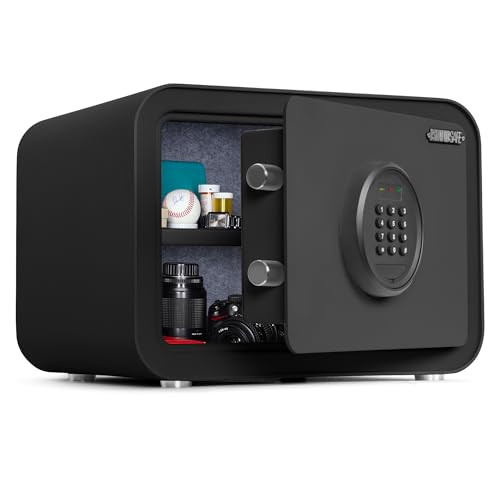
ISLANDSAFE 1.0 Cu.ft Matte Digital Safe
Why These Options Stand Out
The FOWORE 2.8 cubic foot cabinet safe measures roughly 13.78″ deep by 12.20″ wide by 16.54″ tall, which lands it in that sweet middle ground between a “fits a passport” locker and a full document archive. You can slide it onto a closet shelf, tuck it beside a dresser, or bolt it to a wall, and the included fireproof bag handles the paper-thin items that need heat protection but not steel walls.
For most households, the size is the story. It’s large enough to swallow a stack of file folders plus a jewelry box, yet narrow enough to disappear behind a row of coats. If you’ve been eyeing compact options like the Mitlvge but worry they’ll run out of room within a year, this is the next step up that still feels manageable.
A Few Strong Suits
- The 2.8 cu ft interior fits a week’s worth of paperwork, medications, and a few small electronics without crowding.
- Steel construction with a pry-resistant door gives you a real barrier rather than a thin lockbox shell.
- The included fireproof bag adds a second layer for items like passports and birth certificates.
- At 16.54″ tall, the unit slides behind standard closet doors and beneath most shelving.
- Floor or shelf placement both work, so you can adapt it to wherever your home has a quiet corner.
Things To Consider
- You may find the weight cumbersome if you plan to move it between rooms often.
- Anchoring hardware is not always included, so you might need to source bolts separately for wall mounting.
Feature Snapshot
Who It Suits Best
Families and homeowners with a closet or office nook who want a balanced, roomy safe without committing to a full-size cabinet.
Consider Something Else When
The Psisuvry 1.2 Cuft Small Fire Safe Box makes more sense in tight studio apartments where the FOWORE’s 16.54″ height simply won’t fit.
The Mitlvge small safe is built for disappearing. At 0.9 cubic feet with a 13.78″ by 9.85″ by 9.85″ footprint, it slides into a wardrobe, a deep drawer, or a closet corner where a guest would never think to look. The removable shelf lets you split the interior into a documents layer and a smaller-items tray.
You give up the bulk of the FOWORE 2.8 Cuft Safe Box, and you trade capacity for stealth. For renters and apartment dwellers who can’t bolt a safe to a wall, that trade is usually the right one. The smaller scale also means you can move it during a lease change without needing a second pair of hands.
Practical Advantages
- The 9.85″ cube footprint tucks into drawers and on top of dressers without looking oversized.
- A removable shelf adds flexibility for stacking passports on one side, watches on the other.
- It’s light enough to reposition during cleaning or a move.
- At 0.9 cu ft, you get real safe function without dedicating closet space to a metal box.
Trade Offs
- The compact interior won’t hold a laptop, a stack of file folders, or bulkier valuables.
- Smaller safes of this type are easier to physically carry off, so anchoring still matters in shared spaces.
- The keypad sits on a smaller door, which can make the buttons feel tight for larger hands.
Right Fit For
Renters, students, and apartment residents who need a low-profile safe for cards, small documents, and a few pieces of jewelry.
Look Elsewhere When
The Pockrif 5.5 Cuft Fingerprint Fireproof Safe is the better match if you have a dedicated home office and want a full document-archive capacity.
The DAYI safe leans hard into the security side of the trade-off. Its 2.0 cu ft body is built around a one-piece bent steel shell and a pry-resistant door locked by four 1.2-inch live-locking bolts, the kind of mechanical layout that resists a quick shoulder shove. The laser-cut seams keep the door sitting flush against the frame, which is what you actually need to make a pry attack frustrating.
Compared to the FOWORE 2.8 Cuft Safe Box, this one is more about structural protection and less about cubic inches. If you live in a ground-floor unit with windows that open onto the yard, that balance starts to feel less like a luxury and more like a baseline. The included fireproof bag handles the paper-thin items that want heat protection too.
The Value In It
- Four live-locking bolts add real resistance against forced entry attempts.
- The one-piece bending and laser-cut seams reduce weak spots at the door edge.
- The 2.0 cu ft interior is roomy enough for documents, drives, and a small jewelry case.
- Compatible with anchoring hardware for floor or wall mounting, depending on your space.
Worth Noting
- The 2.0 cu ft is generous but won’t swallow a laptop in a padded sleeve.
- Bolt-style doors can be tight on humidity, so owners in coastal climates often find the bolts need a light cleaning every few months.
Spec Overview
Made For
Homeowners who prioritize the lock-and-hinge side of safety and don’t need extra height for binders or laptops.
A Better Fit Elsewhere
The FOWORE 3.3 Cuft Large Home Safe with Alarm suits you better if the 2.0 cu ft here feels tight and you want a smart alarm system in the same package.
The FOWORE 3.3 cu ft safe jumps to a roomier 19.68″ by 13.78″ by 12.2″ body, which is the first cabinet in this lineup that genuinely fits a laptop and a stack of A4 folders at the same time. Owners of small home offices tend to realize within a month that “I’ll just put the laptop in occasionally” becomes “the laptop lives here.” Plan for that.
The digital keypad runs the lock, and the smart alarm layer is what gives this safe its security personality. Compare that to the DAYI’s bolt-focused design, and the difference shows up in daily feel: the FOWORE is more about audible deterrence, the DAYI is more about mechanical stubbornness. Pick based on which kind of threat worries you more.
Everyday Advantages
- The 3.3 cu ft capacity holds a laptop, file folders, and a small box of valuables without a stacking puzzle.
- Smart alarm system adds an audible response to tampering attempts.
- Includes a water-resistant fireproof storage bag for documents.
- Exterior footprint is still narrow enough to slide beside a dresser or under a counter.
Points To Keep In Mind
- Alarm-equipped safes need battery checks every few months, which is a small maintenance habit you don’t have with a basic bolt lock.
- The taller body can feel oversized in a hallway closet, depending on shelf height.
Best Suited To
Home-office workers, small business owners, and anyone storing a laptop alongside paperwork who wants both size and an alarm layer.
Not Your Match When
The ISLANDSAFE 1.0 Cuft Matte Digital Safe is a quieter fit if the FOWORE 3.3 cu ft feels like overkill and you want something that hides in a closet corner.
The TIGERKING biometric safe is the first entry in this lineup that combines a documented fire rating with fingerprint access, and that pairing changes who the safe is actually for. It’s tested to the UL 72 standard (a US benchmark for fire endurance on safes) and built to handle 1700°F (about 927°C) for up to 30 minutes, which is the kind of rating you read twice if you keep original documents or irreplaceable family records inside.
Biometric access, where the lock reads your fingerprint instead of a code, adds everyday speed. You press a thumb, the door pops, you grab what you need. The trade is that biometric readers need a backup method, and you’ll want to register at least two fingers so a paper cut doesn’t lock you out. Compared to the FOWORE 3.3 Cuft, this one is built less for volume and more for what happens to a safe in the worst twenty minutes of a house fire.
Features That Help
- 30-minute fire protection at 1700°F gives your documents a real chance during a structure fire.
- Biometric fingerprint access means you don’t have to memorize a code or fumble with a key in the dark.
- The fingerprint reader lets you register multiple users, so a partner or trusted family member can open it too.
- Solid construction supports wall or floor anchoring for theft resistance.
Honest Caveats
- You may find the fire rating a bit of overkill if you only store items that could be replaced at the DMV.
- Biometric readers can be picky with damp or recently washed fingers, so a backup key stays useful.
- Premium fire-rated safes tend to weigh more than basic lockboxes, so choose a permanent spot before delivery.
Key Product Details
Who Will Love This
Anyone storing passports, insurance papers, or family records who wants real fire protection plus the speed of fingerprint access.
Skip It When
The DAYI 2.0 Cu. Ft. Safe Box makes more sense if fire protection isn’t a priority and you’d rather spend on a beefier bolt system instead.
The Pockrif 5.5 cu ft safe is the largest body in this roundup, with an interior measuring 12.9″ by 11.4″ by 24.8″. That extra height matters if you’re storing hanging file folders, multiple binders, or a small firebox of media. It also moves the safe firmly into home-office territory rather than bedroom-closet territory.
Solid steel construction pairs with fingerprint access, so the unit trades the TIGERKING’s fire-rating documentation for sheer volume and a fingerprint reader. Depending on your priority, one trade is more meaningful than the other. If you have years of tax records to keep, that 24.8″ interior height is the spec that earns its place. The trade is that the safe becomes a piece of furniture, so you want to plan its corner before delivery.
What Stands Out
- The 5.5 cu ft interior is the largest capacity in this lineup, with room for file folders and binders.
- Solid steel body and door for long-term durability.
- Fingerprint access adds speed over a traditional keypad for daily use.
- Interior height supports hanging file folders without bending them.
Some Limits To Know
- At 24.8″ tall, this safe needs a dedicated spot in a closet, office, or basement.
- Large steel safes are heavy enough that moving them later is a real chore, so plan placement first.
- Fingerprint access still needs a backup method, and you’ll want a spare key stored elsewhere.
Perfect Match For
Home offices and long-time homeowners who want a true document-archive capacity and need to file folders, not envelopes.
Another Choice May Suit
The TIGERKING Biometric Fireproof Safe is the better fit if you’d trade cubic feet for a documented fire rating.
The Psisuvry 1.2 cu ft safe is the entry point in this roundup, and the goal is clear: a small, approachable safe that doesn’t ask you to learn a fingerprint reader or a smart alarm. You get a digital keypad, a removable shelf, and a set of spare keys, which is the trio most first-time safe owners actually want.
For a studio apartment, a dorm, or a parent’s nightstand, that simplicity is the whole point. Compared to the Mitlvge 9.84″ small safe, this one offers a slightly larger interior and a clear “fire safe” angle for the documents that benefit from heat protection. It’s a small safe, but the design language is closer to a real fire-resistant document box than a thin lockbox.
What It Does Well
- The 1.2 cu ft interior fits jewelry, ID documents, and a small cash envelope without crowding.
- Digital keypad with spare keys covers users who don’t want fingerprint or biometric access.
- Removable shelf adapts to taller items like a wallet or small camera.
- Compact form factor tucks into drawers, wardrobes, and bedside tables.
Room For Improvement
- The smaller interior won’t hold a laptop or a stack of file folders, so this is a documents-and-jewelry safe, not an archive.
- Entry-level safes are easier to carry off than larger cabinets, so anchoring matters more.
Built With In Mind
First-time safe owners, students, and parents who want a simple, approachable box for IDs, cash, and a few valuables.
Swap It Out When
The FOWORE 2.8 Cuft Safe Box with Fireproof Bag is the natural upgrade once you outgrow the 1.2 cu ft interior.
The ISLANDSAFE 1.0 cu ft digital safe is the only entry in this lineup built around a matte finish that resists fingerprints and reflections. That detail sounds small until you picture a glossy black safe sitting in a closet, catching a flashlight beam from a hallway door. The matte surface is what lets the unit sit in the open without announcing itself.
Capacity lands at 1.0 cu ft, which is the smallest of the small safes, and the access is a digital keypad rather than biometric. Compared to the Psisuvry 1.2 cu ft, you’re trading a small amount of interior room for a finish that blends into a dark closet. For shared spaces where aesthetics matter, that trade often feels right.
Positive Points
- Matte finish reduces light reflection and resists fingerprint smudges, helping the unit blend into dark closets.
- Steel body and door panel offer solid construction for the size class.
- Keypad access keeps the operation simple for first-time users.
- 1.0 cu ft interior fits IDs, a small jewelry roll, and a stack of cards.
Small Caveats
- At 1.0 cu ft, this is one of the smaller interiors in the roundup, so storage planning matters.
- Matte finishes can scuff against rough shelving over time, so adding a small felt pad helps in tight closets.
Whose Shelf It Belongs On
Anyone who keeps a safe in a shared or visible space and wants a unit that disappears rather than draws attention.
Reach For A Different Pick When
The FOWORE 2.8 Cuft Safe Box with Fireproof Bag is the better choice if you need more room and the matte finish isn’t a deciding factor.
What To Weigh Before Picking A Home Safe
Choosing a home safe comes down to a handful of honest trade-offs. The size, the locking mechanism, and the heat rating each push the price and the weight in a different direction.
Capacity And Footprint
Capacity is the easiest spec to misjudge, because it always looks bigger in photos than in a real closet. Measure the spot you have in mind first, then subtract about an inch of clearance for door swing and ventilation. A 1.0 to 1.2 cu ft unit fits a few envelopes and a small jewelry box, a 2.0 to 3.3 cu ft cabinet handles a stack of folders and a laptop, and anything above 5 cu ft is closer to a small filing cabinet than a closet accessory. For most apartments, the 2.0 to 3.3 cu ft range hits the sweet spot between usable space and discreet placement.
Locking Mechanism And Daily Use
A digital keypad is the everyday standard and works well for households that don’t mind entering a code. Biometric readers add fingerprint access for faster daily use, but they still need a backup method, and the reader can be picky with damp or dry skin. A simple key lock removes batteries from the equation entirely, which is a quiet win for long-term storage. For first-time safe owners, a keypad with a backup key is the lowest-friction option.
Fire And Water Resistance
Fire ratings on consumer safes range from “no rating at all” to independent certifications like UL 72, which is a US benchmark for fire endurance. Higher ratings mean more protection but more weight, and a heavier safe needs a permanent spot in a closet or office. Water resistance usually comes from an included bag rather than the safe body, and that bag is the right home for paper documents, while the safe itself handles the bulkier items.
Anchoring And Placement
Even a heavy safe is easier to steal than a permanently installed cabinet, so most home safes are designed to bolt to a floor or wall. Confirm the safe ships with the right hardware for your surface, and have a drill ready. A safe you never anchor is a portable safe, and that may or may not match what you need.
What To Watch For And When To Pay More
Pitfalls Shoppers Hit
The most common mistake is buying a safe that’s too small, then realizing the laptop, the file folders, and the fireproof bag can’t all fit at once. Measure twice, and picture the safe loaded with real items, not empty. Another trap is assuming every “fire safe” carries a documented fire rating, when many simply include a fireproof bag without certifying the cabinet itself. If fire protection matters, look for the certification language in the product details, not just in the marketing name.
Where The Extra Money Goes
A higher-tier safe usually earns the price difference through thicker steel, more locking bolts, a documented fire rating, or biometric access. The honest read is that you should pay up when the safe protects items that can’t be replaced, like passports, original birth certificates, or irreplaceable family records. For replaceable items like a spare set of car keys or a small amount of cash, a basic keypad cabinet is enough. The middle of this roundup, in the 2.0 to 3.3 cu ft range, is where most households find the best balance of security, capacity, and price.
Frequently Asked Questions
How big of a home safe do most people actually need?
For most households, a 2.0 to 3.3 cu ft safe is the practical sweet spot. It fits a stack of file folders, a laptop, and a small box of valuables without taking up a full closet corner. Smaller 1.0 to 1.2 cu ft units work for cards and jewelry, while anything above 5 cu ft is closer to a document archive than a household safe.
Are biometric safes reliable enough for daily use?
Biometric readers are fast and convenient once they’re set up, but they still need a backup method for the occasional missed read. Most owners register two or more fingerprints and keep a spare key in a separate location as a fallback.
Does a home safe need a fire rating?
A fire rating matters most for paper documents, passports, and media that can’t be replaced. Items like spare cash, spare keys, or a backup hard drive are easier to recover, so a basic lockbox is fine for those.
Where should a home safe be installed?
A safe works best in a climate-stable, low-traffic spot like a closet floor, a basement shelf, or a home-office corner. The spot should be dry, easy to anchor, and out of sight from the main living area.
How do you maintain a home safe over time?
Most safes need very little beyond occasional battery changes for the keypad or biometric reader, and a light wipe of the door bolts every few months in humid climates. Avoid stacking heavy items against the door, and keep the spare key in a separate, memorable spot.
