

A home safe solves a problem most people only think about after something goes missing. Birth certificates, passports, a few hundred dollars in cash, a small firearm, spare keys, hard drives, the kind of paperwork that can’t be replaced. The right safe gives you a single, private spot that’s tougher to get into than a sock drawer or a kitchen cabinet, and a few of these options even stand up to a house fire for a short window. This list rounds up eight solid cabinet-style safes for home use in 2026, ranging from a compact lockbox you can tuck into a closet to a full-size floor model that swallows laptops and document folders. Capacity, locking style, and fire rating matter most, so the picks below lean on those differentiators rather than chasing premium branding.
The Lineup, Simplified
FOWORE 2.8 Cuft Home Safe with Fireproof Bag
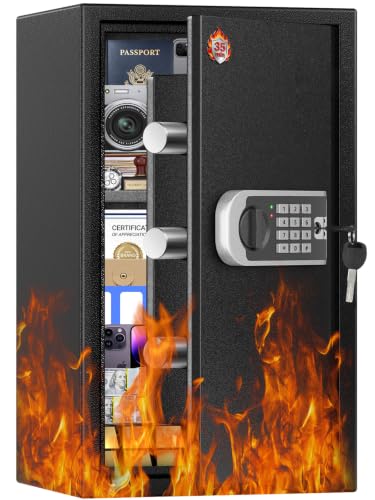
FOWORE 3.6 Cu Ft 35-Min Fireproof Safe

Mitlvge 0.9 Cuft Small Safe with Shelf

DAYI 2.0 Cu Ft Safe with Fireproof Bag

FOWORE 3.3 Cuft Digital Safe with Alarm
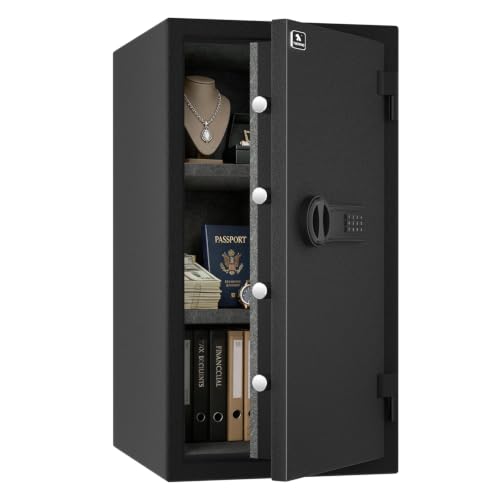
TIGERKING 3.47 Cu Ft Fireproof Safe
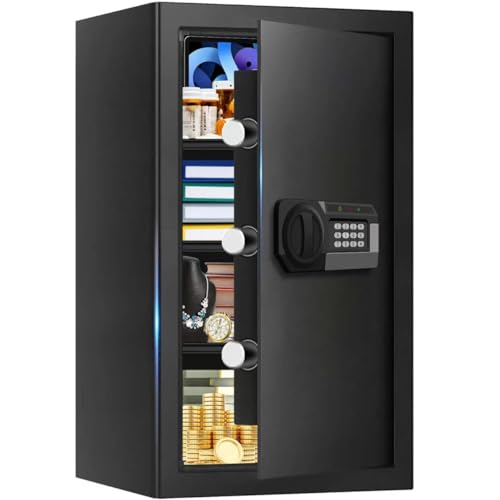
Aprxuvot 5.2 Cuft Fire and Waterproof Safe

Aprxuvot 1.3 Cuft Fire and Waterproof Safe
More On The Choices That Made The List

The FOWORE 2.8 cubic foot safe lands in a comfortable middle ground. It stands about 16.5 inches tall with a roughly 12 by 14 inch footprint, which means it slides into a closet floor or fits on a low cabinet without dominating the room. For a household that wants one place for passports, a small handgun, a stack of birth certificates, and a few spare credit cards, the interior swallows all of that without forcing you to Tetris your belongings.
Compared to the smaller picks coming up later, this one gives you breathing room for a binder or a shoebox-sized stack of paperwork. The included fireproof bag is a nice touch for digital media and documents that need a second layer of protection during the few minutes it takes to react to a fire.
A Strong Showing
- 2.8 cu ft capacity handles documents, jewelry, and small electronics comfortably.
- Floor-friendly dimensions at roughly 16.5 inches tall for easy closet placement.
- Fireproof bag included for a second line of defense on critical papers.
- Digital keypad access with a manual override key as a backup.
Things To Consider
- Fire protection is limited to the included bag rather than the safe body itself.
- Smaller capacity than the 3.6 and 5.2 cu ft options if you plan to store laptops.
At A Glance
Who It Suits Best
Renters and small-home dwellers who want a balanced, mid-size cabinet safe without a massive footprint.
Skip It When
You need a true fire-rated body rather than just a bag; the FOWORE 3.6 Cu Ft 35-Min Fireproof Safe is the upgrade path.
Fire is the disaster most home safes undersell, and this FOWORE model leans into that head-on. The 3.6 cubic foot cabinet is rated to hold up to 35 minutes of heat exposure, which is a meaningful window for firefighters to reach a single-family home. Anti-pry locking bolts and a precision-engineered external hinge add the kind of mechanical resistance that matters when someone is forcing the door from the outside with a pry bar.
You trade some extra weight for that protection, and you also give up the softer residential look in favor of an obviously industrial cabinet. For households with irreplaceable paper records, the trade is easy to justify.
The Case For It
- 35-minute fire rating is a real, documented time window for the safe body.
- Anti-pry locking bolts plus external hinge construction add physical resistance.
- 3.6 cu ft capacity fits folders, photo albums, and small electronics.
- Digital lock with backup key access for redundancy.
Points To Note
- Heavier than a basic cabinet safe, so plan a permanent location before loading it.
- Fire ratings apply to paper; digital media can still suffer at lower temperatures.
Best Suited To
Homeowners in fire-prone regions who store original deeds, insurance papers, and family records.
Consider Something Else When
You want a lighter everyday safe for a rental; the FOWORE 2.8 Cuft Home Safe is easier to move.
The Mitlvge small safe is essentially a 10-inch cube of steel with a digital lock, and that is the entire appeal. At about 0.9 cubic feet, it slips into a drawer, a nightstand cubby, or a wardrobe shelf without advertising itself as a safe. Students, apartment renters, and anyone who wants to hide a small stash of valuables from casual guests will appreciate the disappear-into-the-room footprint.
The removable shelf is a smart touch for a unit this size, letting you split a stack of passports from jewelry or a small camera. Where it loses ground to the FOWORE 2.8 Cuft Home Safe earlier in this list is plain volume. If you have a binder’s worth of paperwork, this is too small.
What Stands Out
- Under 10 inches tall, so it disappears in closets and bedside drawers.
- Removable shelf for separating documents from small valuables.
- Light enough to relocate between rooms when needed.
- Digital lock keeps access quick for daily-use items.
A Few Limitations
- 0.9 cu ft limits you to small documents, jewelry, and a few drives.
- Smaller body means thinner steel than the heavier floor safes.
Right Fit For
Studio and dorm dwellers who want concealment over capacity.
Look Elsewhere When
You store full-size folders or a laptop; the Aprxuvot 5.2 Cuft Fire and Waterproof Safe is the roomier pick.
DAYI puts its energy into the door and the locking hardware rather than chasing the largest interior. One-piece bending and laser-cut construction give the body a tighter seam profile, while four 1.2-inch live-locking bolts anchor the door into the frame. For someone who is paranoid about the door popping under a pry attack, that hardware is the feature that matters most.
At 2.0 cubic feet, capacity lands between the Mitlvge compact safe and the FOWORE mid-size options. The included fireproof bag covers documents and small drives, mirroring what the FOWORE 2.8 Cuft Home Safe already brings to the table.
Everyday Advantages
- Four 1.2-inch locking bolts add serious pry resistance for the size class.
- One-piece bent body construction reduces weak seams on the door edges.
- Fireproof bag included for paper and media.
- Mid-size capacity works for a home office setup.
Honest Caveats
- Fire protection comes from the bag rather than the safe body itself.
- Heavier than other 2 cu ft options, so choose the spot carefully before loading.
Spec Overview
Who Should Grab It
Home office users who want serious door hardware in a cabinet that still fits under a desk.
Not Your Match When
You need a real fire-rated body; the FOWORE 3.6 Cu Ft 35-Min Fireproof Safe brings that to the same footprint family.
The FOWORE 3.3 cubic foot model adds a smart alarm system to the standard digital lock, and that small addition changes the daily feel of the safe. Force the door, enter the wrong code three times, or tilt the unit, and the alarm kicks in. For an entry-level home safe in 2026, that little extra deterrent is what separates a quiet lockbox from a proper security cabinet.
Capacity is comfortable for A4 folders, a laptop, and a stack of cash, and the included water-resistant fireproof bag handles the documents that matter most. Compared to the DAYI 2.0 Cu Ft Safe with Fireproof Bag, you give up some door rigidity for roomier storage and the alarm feature.
Practical Pluses
- Smart alarm responds to tampering, wrong codes, and tilting events.
- 3.3 cu ft fits A4 documents, a small laptop, and personal valuables.
- Water-resistant fireproof bag included.
- Digital keypad with override key for backup access.
Trade Offs
- Alarm adds electronic complexity that may need battery checks over time.
- Fire protection still relies on the bag rather than the safe body.
Made For
Families storing important documents who want a tamper-triggered alarm as a deterrent.
Reach For A Different Pick When
You need heavier steel and a longer fire rating; the TIGERKING 3.47 Cu Ft Fireproof Safe is the closer match.
TIGERKING is the only entry on this list that leans into a tested fire standard, claiming a UL 72 rating and a 30-minute window at extreme heat. The body is heavier steel than the average cabinet safe, and the door carries more substantial bolts. You feel the difference the moment you unbox it, and that heft is what most people are paying a premium for in this category.
The 3.47 cubic foot interior handles a small laptop, document folders, and a stack of jewelry boxes. For home office users who want a fire-rated body plus a true cabinet-sized interior, this lands in a useful middle ground between the FOWORE 3.3 Cuft Digital Safe and the larger Aprxuvot 5.2 Cuft model.
Noteworthy Benefits
- Tested to a recognized fire-protection standard rather than just a bag-level claim.
- Heavier steel body feels substantial next to lighter competitors.
- 3.47 cu ft interior fits a small laptop and full folders.
- Digital lock plus manual key override for redundancy.
Possible Compromises
- Heavier than most cabinet safes, so plan a permanent spot.
- Premium positioning means a higher spend for the fire-rated body.
Feature Snapshot
Perfect Match For
Home office owners who want a fire-rated cabinet that still fits under a desk or in a closet corner.
A Better Fit Elsewhere
Budget-focused shoppers who mainly need a lockbox should look at the Aprxuvot 1.3 Cuft Fire and Waterproof Safe.
The Aprxuvot 5.2 cubic foot safe is the largest in this lineup and the one you buy when you need a single place for everything important in the house. The exterior runs about 24 inches tall, which is still small enough to disappear against a wall in a closet or a home office nook. Inside, removable shelves make the space configurable for binders, laptops, and small electronics stacked together.
It also leans into water resistance, which is the underrated half of disaster prep. A sprinkler mishap or a small leak from above can destroy paper as effectively as a fire, and a waterproof rating on the body addresses that. Compared to the FOWORE 3.3 Cuft Digital Safe, you trade alarm features for capacity and water protection.
Why It Works Well
- 5.2 cu ft swallows laptops, binders, and stacked valuables.
- Removable shelves adapt the interior to different item sizes.
- Fire and water protection on the safe body, not just an accessory bag.
- Alarm system and mute function for code entry without noise.
Practical Considerations
- Larger footprint demands a planned permanent location.
- Heavier overall, so two people may be needed for setup.
Quick Facts
Whose Shelf It Belongs On
Owners with a closet corner or office nook to spare who want one safe for the whole household’s paperwork.
Where A Sibling Pick Shines
Tighter spaces call for the Aprxuvot 1.3 Cuft Fire and Waterproof Safe, which keeps the same brand promise at a fraction of the size.
The Aprxuvot 1.3 cubic foot safe is the compact end of the brand’s lineup and a sensible match for an apartment or a small home office. At roughly 1.3 cubic feet, it tucks into a drawer, a wardrobe shelf, or a nightstand cubby with room to spare. The removable shelf is a small but useful touch that lets you split a stack of passports from a jewelry tray.
It borrows the same fire and waterproof protection as the larger Aprxuvot 5.2 Cuft model, just on a smaller body. Compared to the Mitlvge 0.9 Cuft Small Safe earlier in this list, you get a small bump in capacity and the brand promise of water resistance, at a slightly larger footprint.
Practical Advantages
- 1.3 cu ft is enough for documents, jewelry, and a small drive stash.
- Removable shelf adds interior flexibility for a compact safe.
- Fire and waterproof construction, even at this size.
- Smart alert system adds a tampering signal.
Things To Weigh
- Smaller body means thinner steel than the floor safes above it.
- Limited room for laptops or full-size binders.
Who Will Love This
Apartment dwellers and travelers who want a small, fire-resistant safe to hide documents in shared spaces.
Swap It Out When
You store full folders or a laptop; the FOWORE 2.8 Cuft Home Safe is the better mid-size step up.
What Matters Most When Picking A Home Safe
Capacity comes first, and that is more nuanced than picking the biggest box. Measure the items you actually plan to store, then add about 30 percent headroom for future growth, because a safe that fits today perfectly will feel cramped the moment a new document box joins the collection. For a single person storing passports and a small handgun, 0.9 to 1.3 cubic feet is usually enough. Couples and families with binders, laptops, and photo albums should look at 2.5 cubic feet and up.
Locking style is the second decision. Digital keypads are the most common in 2026 and let you reset codes without a locksmith. Biometric locks add fingerprint speed but cost more and require occasional sensor cleaning. Combination dials are old-school reliable and never need batteries, but they are slower for daily access. Whichever you pick, plan for the backup key, because every electronic lock eventually dies or forgets a code.
Fire and water protection deserve separate consideration, since most safes do well in one and not the other. A fire-rated body matters if you keep original paper documents, while water resistance matters more for ground-floor apartments, basements, or homes with sprinkler systems. The Aprxuvot 5.2 Cuft and the TIGERKING 3.47 Cu Ft are the clearest examples of body-level fire ratings in this list. The smaller picks lean on fireproof bags, which are useful but not the same as a tested safe body.
What Real Use Looks Like Day To Day
Think about access frequency before you buy. A safe you open three times a day should sit in a reachable spot with a quiet keypad. A safe you open twice a year can hide in a closet and tolerate a slower dial. Most people in this category land somewhere in the middle, which is why digital locks dominate the list.
Consider mounting as well. The smaller picks are easy to drop into a drawer, but a 38-pound safe needs a shelf rated for the weight and ideally a wall or floor anchor. Anchoring matters more than most people expect, because a thief who cannot crack the lock will try to carry the whole unit away. A safe bolted to a wall is dramatically harder to steal than the same safe sitting loose.
Key Considerations Across These Picks
Common Shopping Slip Ups
The biggest mistake is buying by capacity alone and ignoring weight. A 5.2 cubic foot safe that is too heavy to anchor properly becomes a portable target, which defeats the point. Match the weight to the spot you have in mind, and pick a smaller unit if the only option is a flimsy closet shelf.
The next slip up is trusting a fireproof bag as if it were a fire-rated body. A bag protects paper for a short window, but it does not turn a thin-steel cabinet into a fireproof fortress. For paper records, look for a body-level rating, like the TIGERKING 3.47 Cu Ft or the FOWORE 3.6 Cu Ft 35-Min Fireproof Safe.
When Paying More Pays Off
A higher-tier safe earns its price in three places. First, thicker steel on the door and body, which resists pry attacks far better than entry-level cabinets. Second, body-level fire and water ratings, which protect paper and media when the included bag would not. Third, longer bolt throws and heavier hinges, which translate into the door actually staying shut when someone is trying to force it.
For most households, the upgrade is worth it if you keep original documents, irreplaceable media, or a small firearm on the property. If you only need a lockbox for spare keys and a little cash, the compact end of this list is plenty, and the extra spend on a premium model is hard to justify.
Frequently Asked Questions
How big should a home safe be?
Most households do well with 2 to 3.5 cubic feet. That size swallows document folders, a small laptop, and personal valuables without demanding a closet corner. A single person storing just a few items can get by with under 1.5 cubic feet, while a household with binders and electronics should lean toward 4 cubic feet or more.
Are fireproof bags enough to protect documents?
For short incidents and quick access, yes. A fireproof bag gives paper and media a few minutes of extra heat resistance, which covers most small home events. For full house fires, look for a safe with a body-level fire rating, like the TIGERKING 3.47 Cu Ft, since a bag alone will not survive prolonged heat.
Where should a home safe be installed?
Pick a dry, interior location with a stable floor or shelf and some concealment. Closet floors, office corners, and behind furniture all work well. Avoid exterior walls, basements prone to flooding, and anywhere a thief could pry the safe loose without effort.
Can a small safe actually deter a thief?
Smaller safes deter opportunistic theft more than targeted burglary. A casual visitor is not going to pry a bolted cabinet off a closet shelf, but a determined intruder with tools and time can defeat almost any consumer safe. Treat the safe as a delay mechanism rather than an absolute barrier.
Do digital safe locks need battery replacement?
Yes, most digital locks run on AA batteries and need a swap every 12 to 24 months depending on use. Pick a safe that gives clear low-battery warnings, and store the backup key somewhere separate from the safe itself. That way, a dead battery never locks you out at midnight.
