

Hard water can leave scale around fixtures, make laundry feel less fresh, and put extra strain on water-using appliances. Water filtration addresses particles, odor, and selected contaminants, while a softener targets hardness minerals such as calcium and magnesium. Your home’s water report, plumbing layout, household size, and whether you need whole-home treatment or drinking-water filtration should guide your choice.
A Snapshot Of The Selections
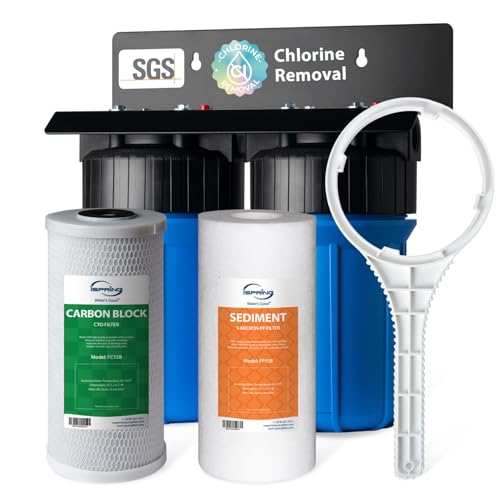
iSpring WGB21B Whole House Filtration System, 50000 Gallons

iSpring WGB21B-DS Anti-Scale Whole House Filter System
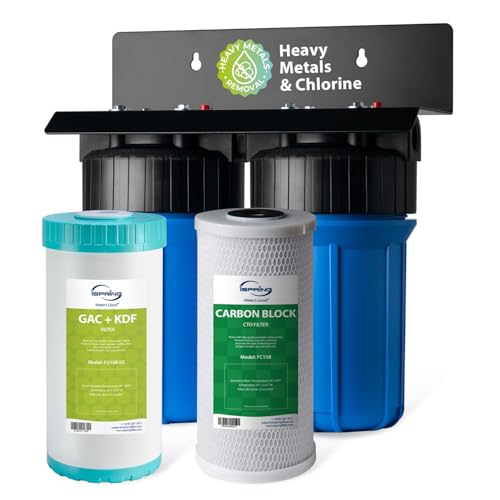
iSpring WGB21B-KS Heavy Metals Whole House Filter System
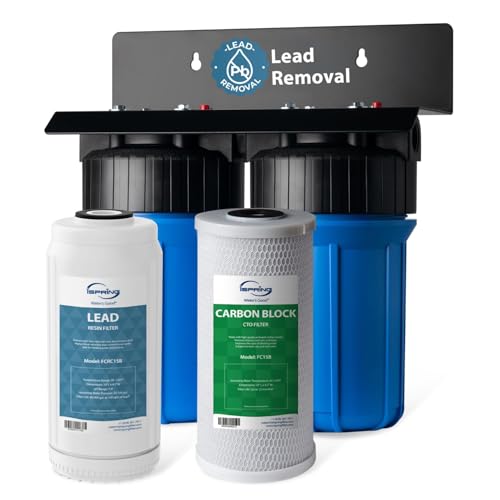
iSpring WGB21B-PB Lead & Chloramine Filter System

iSpring WGB21BM Iron & Manganese Filter System

iSpring RCC7P 75 GPD Reverse Osmosis System

Frizzlife PX600 600GPD Tankless RO Water Filter

Aquasure Harmony Series 48,000 Grains Water Softener
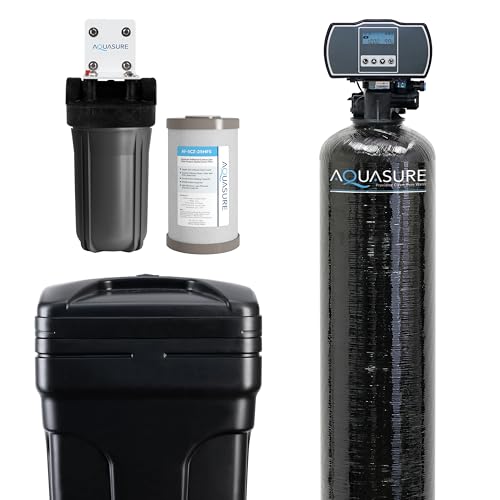
Aquasure Harmony Series 50,000 Grains Water Softener

Aquasure 32,000 Grains Softener and 75 GPD RO Bundle
What Each Pick Brings To The Table
You get a straightforward whole-home setup with a sediment cartridge followed by a CTO carbon filter. CTO means carbon block filtration, a dense carbon format intended to improve water taste and odor while reducing chlorine.
For a home with visible grit, rusty-looking particles, or noticeable chlorine at every tap, this layout makes practical sense. You may find it especially approachable where your priority is broad everyday filtration rather than hardness reduction.
Advantages To Know
- The 5-micron sediment stage catches fine dirt, sand, silt, rust, and scale particles before they reach fixtures.
- Coconut-shell carbon supports more pleasant-tasting water for cooking and filling reusable bottles.
- Two stages keep the service approach easier to understand than a larger multi-canister assembly.
- The stated 50,000-gallon capacity suits long-term whole-home planning.
Things To Consider
- You will still need a separate softener where calcium and magnesium hardness drive scale formation.
- Cartridge changes require room beneath the housings, and you may find a shutoff-and-drain setup makes service cleaner.
Feature Snapshot
Who It Suits Best
You benefit most in a household using municipally supplied water with sediment, chlorine taste, or odor concerns across multiple fixtures.
Where Another Pick Suits Better
iSpring WGB21B-DS Anti-Scale Whole House Filter System suits you better where scale control matters more than sediment-first filtration.
Scale is the focus here, which separates this iSpring design from the WGB21B’s sediment-first arrangement. You get a carbon block stage paired with an anti-scale polyphosphate filter intended to condition minerals before they settle inside plumbing.
That can suit you in a home where kettles, showerheads, and appliance connections show recurring mineral buildup. The honest read is that it is a filter-and-conditioning approach, not a salt-based softener that removes hardness minerals.
Features That Help
- The carbon stage addresses chlorine-related taste and odor concerns at household taps.
- The anti-scale stage focuses on limiting mineral deposits around water-using equipment.
- You avoid the salt storage and regeneration routine associated with conventional softeners.
Worth Noting
- You may still see hardness effects in very hard water because minerals remain present.
- Filter servicing means monitoring both cartridges rather than treating the unit as a fit-and-forget installation.
- Homes with well-water iron issues need a more targeted option.
Made For
You get the strongest fit in a municipal-water home where moderate scale control and carbon filtration are your main priorities.
Consider Something Else When
Aquasure Harmony Series 48,000 Grains Water Softener suits you more where your household needs traditional whole-home hardness treatment.
Where your water report raises questions about lead, mercury, or other metals, this is the more focused iSpring route. Its first CTO carbon block works alongside a second cartridge combining KDF media, a copper-zinc filtration medium, with granular activated carbon.
Compared with the WGB21B-DS Anti-Scale Whole House Filter System, you trade scale conditioning for contaminant-focused media. You may value that shift in an older home with a known water-quality concern, though a current local report remains the sensible starting point.
Where It Excels
- KDF and granular carbon give you broader media coverage than a basic sediment-and-carbon pairing.
- The carbon block stage also supports clearer water with reduced chlorine taste and odor.
- A whole-home placement extends treatment beyond one drinking-water faucet.
- You get a logical choice for water reports that specifically identify metal concerns.
- The two-housing format remains less complex than a large tank-based system.
Trade Offs
- You need clearance and a properly supported mounting location for cartridge replacement.
Core Details
Right Fit For
You suit this system when your household water information points toward heavy-metal reduction alongside everyday carbon filtration.
Not Your Match When
iSpring WGB21BM Iron & Manganese Filter System serves you better where staining metals, rather than lead or mercury concerns, dominate.
Chloramine is a disinfectant combination used by some municipal systems, and it can be more persistent than standard chlorine. This model pairs a CTO carbon filter with a dedicated lead-reduction cartridge, giving you more specific targeting than the standard WGB21B.
Your strongest case for it is a city-water home where the local utility uses chloramine and you want whole-home treatment. For most homes, that specificity is valuable only after you confirm your utility’s treatment method and your plumbing concern.
Practical Advantages
- The first carbon stage supports improved taste and odor at kitchen and bathroom taps.
- The second cartridge is designed around lead reduction rather than general sediment capture.
- You get whole-home coverage without adding a separate under-sink unit for every faucet.
Minor Gripes
- You do not get a dedicated scale-control stage, so hard-water deposits may continue.
- Cartridge replacement calls for a basin or towels below the housings because residual water can drain out.
Best Suited To
You benefit most in a municipally supplied home using chloramine where lead-focused filtration is part of your water plan.
Look Elsewhere When
iSpring WGB21B-KS Heavy Metals Whole House Filter System fits you more closely where your report identifies a broader heavy-metal concern.
Orange marks around sinks, metallic-tasting water, and dark residue can point you toward iron or manganese concerns. The WGB21BM gives you a carbon block first stage and a second filter designed specifically for those two minerals.
Unlike the WGB21B-KS Heavy Metals Whole House Filter System, this layout puts iron and manganese front and center. You may find that specialization useful for a well-water household, provided your incoming concentrations fall within the stated filter range.
Strengths Worth Knowing
- The iron-and-manganese cartridge is built to lower iron from up to 3.0 ppm to 0.01 ppm.
- It is also rated to lower manganese from up to 1.0 ppm to 0.01 ppm.
- The 10 x 4.5-inch filter format offers substantial surface area for whole-home flow.
- One-inch ports support installation on larger residential plumbing lines.
- The carbon stage helps address taste, odor, cloudiness, and chlorine before specialty filtration.
- You gain a more targeted option for protecting fixtures from staining minerals.
Room For Improvement
- Very high iron levels can overwhelm cartridge-based treatment, so your water results matter.
- You need to plan periodic cartridge changes, especially where sediment loads are heavy.
- Hardness minerals remain a separate issue from iron and manganese.
Who Will Love This
You get the clearest fit in a well-water home dealing with iron or manganese staining within the listed concentration range.
A Better Fit Elsewhere
Aquasure Harmony Series 50,000 Grains Water Softener suits you more where household-wide hardness, not staining metals, drives your concern.
Rather than treating every fixture, the RCC7P concentrates on drinking and cooking water beneath your sink. Reverse osmosis, often shortened to RO, uses pressure to move water through a fine membrane while separating many dissolved substances.
Its electric booster pump is the important feature here because low or changing inlet pressure can slow an RO system. Compared with the whole-house iSpring models above, you get more focused drinking-water filtration but not shower, laundry, or appliance coverage.
The Value In It
- The booster pump supports steadier operation in homes with pressure fluctuations.
- Five filtration stages give you layered treatment before water reaches the dedicated faucet.
- The 75 GPD output rating supports regular family drinking and cooking use.
- The top-mounted faucet design can make sink-deck installation more manageable.
Points To Note
- You need under-sink space for the equipment, tubing, and storage tank.
- RO systems send some water to drain, which is a practical trade-off for membrane filtration.
- You will need to replace prefilters and the membrane on their scheduled service cycles.
- The electric pump requires a nearby power source.
Quick Facts
Built With In Mind
You suit this system when your priority is dedicated kitchen drinking water and your home has inconsistent water pressure.
Skip It When
Frizzlife PX600 600GPD Tankless RO Water Filter fits you better where you want a tankless layout and higher listed daily output.
A tankless RO system can open up useful cabinet room, particularly beneath a crowded kitchen sink. The PX600 pairs an 11-stage filtration design with a 600 GPD production rating, aimed at households that fill bottles, pots, and pitchers often.
Compared with the iSpring RCC7P 75 GPD Reverse Osmosis System, you give up the traditional storage tank in favor of a slimmer form. In a busy kitchen, that higher listed flow can feel more convenient, though it still needs electricity and a drain connection.
The Case For It
- The tankless format preserves under-sink room for bins, cookware, or cleaning supplies.
- A 600 GPD rating suits frequent water filling without waiting for a tank to refill.
- The stated 2:1 pure-to-drain ratio can reduce wastewater compared with less efficient RO layouts.
- The 0.0001-micron membrane precision targets very fine dissolved material.
- Eleven stages provide an extensive treatment sequence in a compact layout.
Softer Spots
- You need to leave enough cabinet access for filter changes and tube connections.
- The higher-output design is more capability than a low-demand one-person kitchen may need.
The Right Fit
You benefit most in an active kitchen where cabinet space and fast listed RO production both matter.
Another Choice May Suit
iSpring RCC7P 75 GPD Reverse Osmosis System suits you more where a storage-tank RO layout and booster pump match your plumbing setup.
A true softener changes the conversation from filtration to hardness treatment. This Aquasure model is rated at 48,000 grains, with grains describing the unit’s stated hardness-treatment capacity before regeneration.
Its digital metered control head initiates regeneration according to water use rather than a fixed calendar alone. You may appreciate that in a three- or four-bathroom household where demand changes between quiet weekdays and full-house weekends.
Notable Gains
- The 48,000-grain capacity is sized by the manufacturer for homes with three to four bathrooms.
- Metered regeneration responds to actual household demand rather than running on a rigid interval.
- You can reduce hard-water scale around faucets, shower glass, and water-using appliances.
Small Caveats
- You need space for both the mineral tank and brine tank, plus access to a drain.
- Salt loading and occasional brine-tank cleaning become part of your household maintenance routine.
- You still need separate drinking-water filtration for dissolved contaminants outside hardness minerals.
Technical Sheet
Whose Shelf It Belongs On
You get a strong match in a medium-to-large household with recurring hard-water scale and three to four bathrooms.
Reach For A Different Pick When
Aquasure 32,000 Grains Softener and 75 GPD RO Bundle suits you more where your smaller home also needs dedicated drinking-water filtration.
Higher household demand calls for capacity that does not feel undersized after a few busy days. The Harmony 50,000-grain model raises the stated treatment capacity slightly above the 48,000-grain version and includes a pre-filter.
The automatic digital metered head bases backwashing on use, which can make sense for a household with up to five people. Nothing flashy, but the pre-filter is a meaningful addition where sediment could otherwise reach the main softener system.
Everyday Wins
- The 50,000-grain rating provides added stated capacity for regular family water use.
- The included pre-filter adds an initial barrier for incoming sediment.
- Automatic metering can reduce unnecessary regeneration during lower-use periods.
- You get whole-home soft water for showers, laundry, and water-using appliances.
Areas To Watch
- You will need to replenish salt and keep the brine tank clear of buildup.
Who Should Grab It
You fit this model well in a three- to four-bathroom household with up to five people and ongoing hard-water deposits.
Where A Sibling Pick Shines
Aquasure Harmony Series 48,000 Grains Water Softener is a better match for you in a similar home with slightly lighter water use.
This bundle takes a two-part route: whole-home softening for hardness and a separate 75 GPD RO system for your drinking-water tap. That combination is useful because a softener handles calcium and magnesium, while RO focuses on water used for drinking and cooking.
Compared with the larger Harmony softeners, the 32,000-grain capacity is aimed at one- to three-bathroom homes. You may find the bundled approach easier to plan around than choosing a softener and under-sink system separately.
Useful Touches
- You receive hardness treatment for the home plus a dedicated RO drinking-water system.
- The 32,000-grain softener capacity fits smaller households more closely than the 48,000- and 50,000-grain options.
- The automatic digital metered control head responds to water usage.
- The 75 GPD RO component supports regular drinking and cooking water demand.
- You can address scale at fixtures without relying on the RO unit for every tap.
Honest Caveats
- You need space for the softener tanks as well as under-sink room for the RO components.
- Maintenance covers salt, softener upkeep, RO filters, and the RO membrane rather than one service task.
Feature Rundown
Perfect Match For
You benefit most in a smaller one- to three-bathroom home that needs both hard-water treatment and filtered kitchen drinking water.
Swap It Out When
Aquasure Harmony Series 50,000 Grains Water Softener fits you better where a larger household needs more whole-home softening capacity.
Choosing Water Treatment for Your Home’s Actual Needs
Start With Your Water Source
Your municipal water report can show treatment methods, while private well water often needs a current laboratory analysis for iron, manganese, hardness, and sediment. You get better results by matching media to a known concern instead of choosing only by filter stage count. Chloramine, iron, heavy metals, sediment, and hardness call for different approaches.
Separate Softening From Filtration
A softener uses ion exchange to trade hardness minerals for sodium or potassium ions. Carbon filtration focuses on taste, odor, and chlorine-related concerns, while RO is generally reserved for a dedicated drinking-water line. Your home may need one method, or a combined setup such as the Aquasure bundle.
Match Capacity to Household Demand
Grain capacity matters for a softener because more bathrooms, people, and water hardness create faster demand. A 32,000-grain system suits smaller homes, while 48,000- and 50,000-grain options better suit larger household use. Oversizing can take up unnecessary space, while undersizing can mean more frequent regeneration.
Plan for Installation and Service
Whole-house systems sit on the main incoming line and need shutoffs, mounting support, and clearance below the filter housings. Softeners also need a drain and salt access, while under-sink RO systems need cabinet space, a drain connection, and power for pump-driven designs. You should account for replacement cartridges, salt, and membrane service before choosing.
Details That Keep Ownership Smooth
Common Shopping Slip Ups
You can avoid frustration by not treating an anti-scale filter as a conventional softener. Your water report should drive the media choice, especially around iron, manganese, chloramine, or lead concerns.
Where The Extra Money Goes
Higher-tier systems often add metered control heads, larger treatment capacity, dedicated media, or tankless RO flow. You benefit from the upgrade where your household demand, plumbing conditions, or water results clearly call for those features.
Frequently Asked Questions
Do You Need Both a Water Filter and a Softener?
You need both only where your water has hardness plus separate filtration concerns. Your softener addresses calcium and magnesium, while a filter targets particles, taste, odor, or selected contaminants.
Can a Whole-House Filter Replace a Drinking-Water RO System?
You may prefer a whole-house filter for broad household treatment. Your RO system serves a different purpose by filtering water at a dedicated kitchen faucet.
What Does Softener Grain Capacity Mean?
Grain capacity describes the amount of hardness a softener can handle before regeneration. Your correct capacity depends on water hardness and household water use.
Does an Anti-Scale Filter Remove Hardness Minerals?
An anti-scale filter is designed to limit mineral deposits rather than remove hardness through ion exchange. Your traditional salt-based softener is the more suitable option for hardness removal.
How Often Will You Need to Maintain These Systems?
You will replace cartridges, RO filters, or membranes according to the listing schedule and your water conditions. Your softener also needs salt replenishment and occasional brine-tank care.
Closing Remarks
Your strongest choice starts with the problem you want to solve at home. Choose iSpring for focused cartridge-based whole-house filtration, Aquasure for traditional softening capacity, or an RO setup for dedicated drinking water. A system that matches your water report and available installation space will serve you far better than extra features you do not need.
