

Water quality concerns show up in ordinary moments, from filling a coffee maker to washing vegetables or running a full household shower routine. Your right choice depends on where filtration needs to happen: directly beneath one kitchen sink, at the incoming water line, or through a reverse-osmosis setup for drinking water. These options cover municipal-water kitchens, sediment-heavy plumbing, and larger homes that need treatment across multiple fixtures.
An Overview Of The Picks
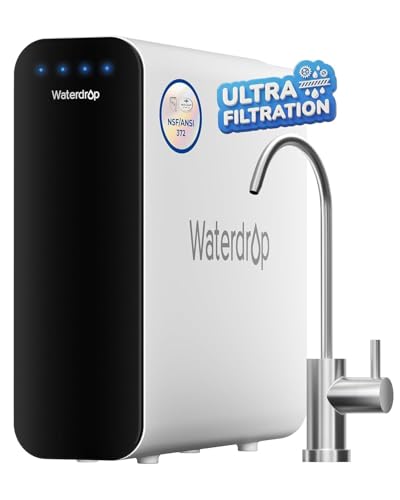
Waterdrop TSU 0.01 Micron Ultra Filtration

Aquasure Fortitude V2 30 Micron Pleated Filter

PUREPLUS 2-Stage Whole House System Clear Housing

PUREPLUS 2-Stage Whole House Iron Filter

Waterdrop TSA 8 Layer Under Sink Filter
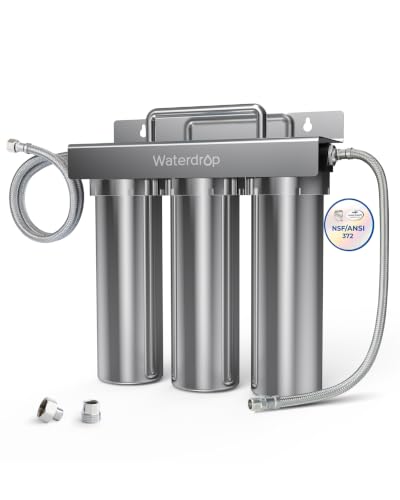
Waterdrop TST-UF 0.01μm Stainless Steel Filter
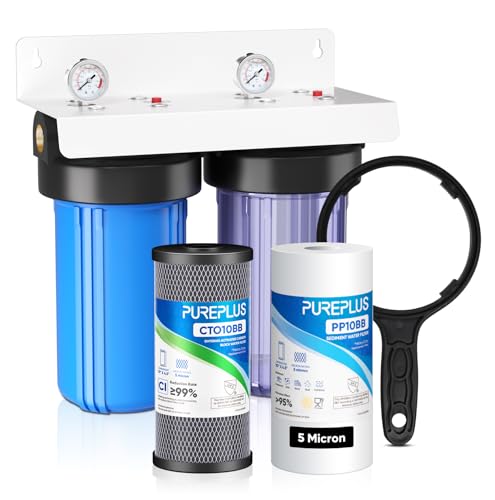
PUREPLUS 5 Micron Whole House Filter

PUREPLUS 2-Stage Whole House Universal Housing

PUREPLUS 2-Stage Whole House KDF Filter
VIVA21 5-Stage Under Sink RO System
Why These Options Stand Out
The Waterdrop TSU gives you a dedicated filtered-water faucet rather than routing water through your existing tap. Its three-stage ultrafiltration design uses a 0.01-micron membrane, meaning pores small enough to strain very fine particles while retaining dissolved minerals and total dissolved solids.
For a busy kitchen that fills bottles, rinses produce, and makes coffee throughout the day, that focused setup can feel more practical than treating every fixture. You will need room beneath the sink and a countertop opening for the supplied faucet, so this suits a kitchen renovation or a sink with an unused hole.
Positive Points
- Three stages separate sediment and finer filtration duties.
- The dedicated faucet keeps filtered water available without altering your main tap.
- No wastewater stream means less plumbing complexity than a reverse-osmosis system.
- Retained dissolved minerals suit households that do not want demineralized water.
Things To Consider
- Installation requires a separate faucet hole in the countertop or sink deck.
- It is intended for cold municipal water, not hot-water lines or well water.
Feature Snapshot
Who It Suits Best
You will get the most from this system in a municipal-water kitchen where a dedicated drinking-water faucet makes sense.
Where Another Pick Suits Better
Waterdrop TST-UF 0.01μm Stainless Steel Filter suits you better when drilling a countertop is not an option.
Large visible debris needs a different approach from drinking-water polishing, and the Aquasure Fortitude V2 is built for that earlier job. A 30-micron pleated sediment filter catches larger grit, including sand, silt, rust flakes, and scale, before those particles reach downstream equipment.
The pleats increase surface area, which gives trapped debris more room than a flat media layer. For homes with sediment-prone water, you may find its washable construction easier to live with than repeatedly replacing disposable first-stage cartridges.
Points In Its Favor
- Thirty-micron filtration targets larger plumbing debris.
- Pleated media provides added debris-holding surface.
- Washable construction supports routine reuse between replacements.
Worth Noting
- Thirty microns is too coarse for chlorine taste, odor, or dissolved solids.
- Owners commonly need to rinse accumulated sediment more often in sandy-water areas.
- You need a compatible whole-house filter housing before installation.
Made For
You will benefit most from this filter as a prefilter where visible sediment is stressing plumbing or later filtration stages.
Consider Something Else When
PUREPLUS 5 Micron Whole House Filter fits municipal-water homes that also want carbon filtration for chlorine-related taste and odor.
PUREPLUS takes treatment beyond a single drinking-water tap by placing two large housings at your home’s incoming line. The first uses grooved polypropylene sediment media, while the second uses KDF carbon, a filtration medium designed to address chlorine, odor, rust, and selected metals.
Compared with the Aquasure Fortitude V2, this is a complete two-stage system rather than a standalone coarse prefilter. Clear housings and external pressure gauges give you useful visual clues about cartridge condition, though whole-house plumbing work remains more involved than an under-sink install.
A Few Strong Suits
- Two stages combine particulate capture with carbon-based filtration.
- Clear housings let you inspect sediment buildup before opening the system.
- Pressure gauges help you notice flow changes across the housings.
- Large 10 by 4.5 inch cartridges suit higher-demand household water use.
- One-inch ports support a whole-home installation layout.
Trade Offs
- You need accessible space near the main incoming water line.
- Cartridge changes require shutting off water and opening both housings.
Core Details
Right Fit For
You will appreciate this setup in a family home needing sediment and chlorine-focused treatment at every faucet.
Not Your Match When
Waterdrop TSA 8 Layer Under Sink Filter makes more sense for you when only kitchen drinking water needs attention.
Iron and manganese call for more targeted media than the broad household approach of the previous PUREPLUS system. This version pairs an RFN iron cartridge with a coconut-shell carbon block, so the first stage focuses on mineral staining particles and the second stage focuses on chlorine-related taste and odor.
Blue housings make this a less visual setup than Item 3’s clear housings, but the included gauges still help you follow pressure changes. The honest read is that it suits a home with a known iron or manganese concern, not a household choosing filtration only for better-tasting city water.
Notable Upsides
- RFN media targets iron, manganese, sand, rust, and sediment.
- Coconut-shell carbon block handles chlorine-related taste and odor concerns.
- Two large housings support treatment for multiple fixtures.
- Pressure gauges offer a practical signal for maintenance timing.
Minor Gripes
- Blue housings do not provide a direct view of sediment accumulation.
Best Suited To
You will get the strongest fit in a whole-home setup where iron or manganese is already a documented concern.
Look Elsewhere When
PUREPLUS 2-Stage Whole House KDF Filter suits you more when chlorine, odor, rust, and selected metals are your broader priorities.
The Waterdrop TSA takes a more discreet route than the TSU because it connects directly to a compatible existing faucet. That means filtered cold water comes from the tap you already use, avoiding a second faucet and the countertop work that comes with it.
Its three-stage, eight-layer arrangement is intended for standard municipal water and does not lower total dissolved solids. In most kitchens, that is a sensible trade-off for households that want filtration without the added plumbing and storage demands of a tank-based reverse-osmosis system.
Strengths Worth Knowing
- Direct faucet connection keeps the sink deck visually uncluttered.
- Three stages provide layered filtration inside one under-sink unit.
- Retained dissolved minerals suit households avoiding RO-style demineralization.
- Compatible 1/2-inch and 3/8-inch female NPT connections cover many standard faucets.
Room For Improvement
- Quick-connect faucet hardware may need an additional adapter.
- It is not intended for hot-water plumbing or untreated well water.
- Filter replacement still requires enough clearance beneath the cabinet.
Quick Facts
Who Will Love This
You will enjoy this option in a standard municipal-water kitchen where a separate faucet would feel unnecessary.
A Better Fit Elsewhere
Waterdrop TSU 0.01 Micron Ultra Filtration suits you better when a dedicated filtered-water faucet is preferred.
No-drill installation is the central reason to consider the Waterdrop TST-UF. Like the Waterdrop TSA, it connects to a compatible existing faucet, but its stainless-steel enclosure gives the under-sink unit a more substantial exterior than a typical plastic filter body.
The 0.01-micron ultrafiltration membrane focuses on fine particulate filtration while leaving total dissolved solids in the water. Renters and homeowners protecting a finished stone countertop may find that direct-faucet format especially appealing, provided their cold-water connection matches the required fittings.
Where It Delivers
- No separate faucet hole helps preserve countertop and sink surfaces.
- Stainless-steel construction suits an exposed or frequently accessed cabinet area.
- Three-stage filtration brings fine ultrafiltration to the existing faucet.
- No wastewater avoids adding a drain-line connection.
- It retains total dissolved solids instead of using reverse osmosis.
Points To Note
- You need a standard cold-water municipal supply for the intended setup.
- Quick-connect faucets may require an adapter arrangement.
Built With In Mind
You will find this especially useful in a finished kitchen where avoiding countertop drilling matters as much as filtration.
Another Choice May Suit
VIVA21 5-Stage Under Sink RO System suits you better when reducing dissolved solids is a central drinking-water goal.
For municipal-water households, this PUREPLUS system follows a familiar and practical sequence: a 5-micron sediment cartridge first, followed by a 5-micron activated-carbon block. A micron is one-millionth of a meter, and the 5-micron rating is fine enough to catch smaller sediment than the 30-micron Aquasure prefilter.
That pairing addresses particles before carbon filtration, helping preserve the carbon stage for taste and odor duties. Clear 10 by 4.5 inch housings and pressure gauges make routine ownership less of a guessing exercise, although the main-line installation still deserves careful planning.
What Pays Off
- Five-micron sediment filtration targets fine visible particles.
- Activated carbon focuses on chlorine-related taste and odor.
- Clear housings allow a quick visual cartridge check.
Softer Spots
- This version is tailored to municipal water rather than specialized iron treatment.
- You need enough service clearance below the housings for cartridge changes.
- Pressure gauges require occasional checking rather than automatic alerts.
- Whole-house plumbing may call for experienced installation support.
Feature Rundown
The Right Fit
You will get a sensible whole-home setup here for city water with sediment, chlorine taste, or odor concerns.
Reach For A Different Pick When
PUREPLUS 2-Stage Whole House Iron Filter fits you more closely where iron and manganese need dedicated attention.
This PUREPLUS option keeps the whole-house formula straightforward: two universal 10 by 4.5 inch housings, sediment filtration first, and carbon block filtration second. Its external gauges give you a clearer maintenance reference than a basic housing set with no pressure monitoring.
It overlaps heavily with the PUREPLUS 5 Micron Whole House Filter, though its appeal is the universal-housing format and supplied sediment and carbon cartridges. For a standard home water line, that uncomplicated service path may be enough, especially where cartridge compatibility matters over specialty media.
Everyday Perks
- Universal 10 by 4.5 inch housings support a common large-cartridge format.
- Sediment and carbon block cartridges divide filtration responsibilities.
- External gauges provide a visible maintenance reference.
- One-inch inlet and outlet ports support whole-home plumbing layouts.
Small Caveats
- It does not target iron and manganese as directly as the RFN-equipped PUREPLUS system.
Whose Shelf It Belongs On
You will appreciate this option in a conventional whole-house installation where common cartridge sizing is a priority.
Where A Sibling Pick Shines
PUREPLUS 2-Stage Whole House System Clear Housing suits you better for KDF carbon media and visible clear housings.
The PUREPLUS KDF version combines a grooved polypropylene sediment cartridge with KDF carbon media in a two-stage main-line system. Its three-density sediment structure works from 10 microns at the outer layer through 7 microns to 5 microns inside, which spreads captured debris through the media rather than collecting it only at the surface.
That makes it a more involved filtration approach than the sediment-and-carbon layout in Item 8. You may find the staged sediment design worthwhile in homes where rust and particulate matter arrive alongside chlorine taste or odor concerns.
The Case For It
- Grooved sediment media uses three filtration density layers.
- KDF carbon addresses chlorine, odor, rust, and selected heavy metals.
- Pressure gauges support maintenance monitoring across both stages.
- Large housing format suits household-wide water use.
- One-inch ports fit a main incoming water line.
Areas To Watch
- Opaque housing makes cartridge condition less visible than Item 3’s clear design.
- Replacement work needs shutoff access and room beneath the filter bracket.
- It is not the targeted iron-and-manganese approach offered by Item 4.
Perfect Match For
You will benefit most from this configuration where sediment, rust, chlorine, and odor are overlapping household concerns.
Swap It Out When
PUREPLUS 5 Micron Whole House Filter suits your needs better for a straightforward sediment-and-activated-carbon municipal-water setup.
VIVA21 moves beyond particle filtration with a five-stage reverse-osmosis system. Reverse osmosis pushes water through a semipermeable membrane, reducing dissolved solids along with selected contaminants that a standard ultrafiltration system leaves in place.
Unlike the Waterdrop under-sink models, this kit includes a storage tank, dedicated faucet, and leak detector. That fuller setup gives you a more focused drinking-water station, though it asks for more cabinet room, a drain connection, and regular attention to several filter stages.
Why It Works Well
- Five filtration stages include sediment, carbon, RO membrane, and post-carbon treatment.
- RO filtration reduces dissolved solids, unlike the Waterdrop ultrafiltration models.
- A storage tank holds filtered water for dispensing.
- The kit includes a dedicated faucet and leak detector.
Honest Caveats
- The tank and multiple components need more under-sink space than direct-faucet filters.
- Installation requires a drain connection for the RO process.
Important Details
Who Should Grab It
You will get the strongest fit from this system when lower dissolved solids matter more than minimal cabinet use.
Skip It When
Waterdrop TST-UF 0.01μm Stainless Steel Filter suits you more where no-drill installation and no wastewater are priorities.
What Matters Before Choosing Water Filters For Home
Start With Your Water Source
Municipal water often leads you toward sediment and carbon filtration for particles, chlorine-related taste, and odor. Well water may need a source-specific plan, especially where iron, manganese, or heavy sediment is present. A household water report helps you match media to an actual issue rather than installing a broad system that misses the concern.
Choose Whole-Home or Point-Of-Use Coverage
Whole-house systems sit at the main line, so treated water reaches bathrooms, laundry appliances, kitchen fixtures, and outdoor taps. Under-sink systems reserve filtration for the drinking-water tap, which uses less hardware and takes less installation work. Your daily routine decides the better layout: shower and laundry concerns point toward main-line filtration, while coffee and cooking needs often point beneath the kitchen sink.
Check Installation Space First
Measure cabinet clearance before choosing a tank-based RO setup or a larger under-sink filter body. Main-line housings need room underneath for cartridge removal, plus nearby shutoff valves and secure mounting. A dedicated faucet system may also need an available sink opening or countertop drilling.
Understand What Each Technology Leaves Behind
Sediment media catches physical particles, while carbon media handles taste and odor concerns associated with chlorine. Ultrafiltration catches very fine particles but does not reduce total dissolved solids. Reverse osmosis takes on dissolved solids too, but requires a tank or drain arrangement and has more components to maintain.
Details That Shape Long-Term Ownership
Common Shopping Slip Ups
You can avoid mismatched filtration by separating visible sediment, chlorine taste, iron staining, and dissolved-solids concerns before choosing. A coarse 30-micron prefilter cannot replace a fine drinking-water filter, while an RO system may add more installation than your kitchen needs.
Where The Extra Money Goes
Higher-tier systems often add multiple treatment stages, larger housings, stronger enclosures, pressure gauges, tanks, or leak monitoring. The upgrade makes sense where those parts solve a real installation or water-quality need, not merely because the system has more stages.
Frequently Asked Questions
What Is The Difference Between Whole-House And Under-Sink Filtration?
A whole-house system filters water as it enters your home. An under-sink system treats water at a single kitchen location.
Does Ultrafiltration Reduce Total Dissolved Solids?
Ultrafiltration generally targets particles rather than dissolved solids. The Waterdrop ultrafiltration systems listed here retain total dissolved solids.
Why Do Whole-House Systems Use Pressure Gauges?
Pressure gauges show changes in water pressure across the housings. A noticeable drop can suggest that cartridges are collecting debris and need attention.
What Does A Micron Rating Mean?
A micron is one-millionth of a meter. Lower micron numbers indicate finer particle filtration.
Does Reverse Osmosis Need More Space?
Yes, an RO setup commonly needs room for a tank, filters, and drain-line connections. Your cabinet should have enough clearance for future filter service too.
Closing Remarks
Your water source and installation space matter more than a long feature list. Choose a whole-house setup for broad fixture coverage, an under-sink ultrafiltration unit for streamlined kitchen use, or reverse osmosis for a dedicated lower-dissolved-solids drinking-water station. The right system should fit your plumbing, your household routine, and the concerns you actually want to address.
