

Summer travel gets uncomfortable fast when your RV traps heat after a long drive or sits in direct sun at a campground. The right cooling choice depends on your available window opening, electrical setup, ventilation route, and whether you need true compressor-based air conditioning or a water-fed evaporative cooler. This list includes window-mounted, vented portable, windowless dual-hose, and evaporative options, so you can match the unit to your rig rather than forcing a poor fit.
An Overview Of The Picks

Uhome 12000 BTU Portable Air Conditioner w/Heater, White
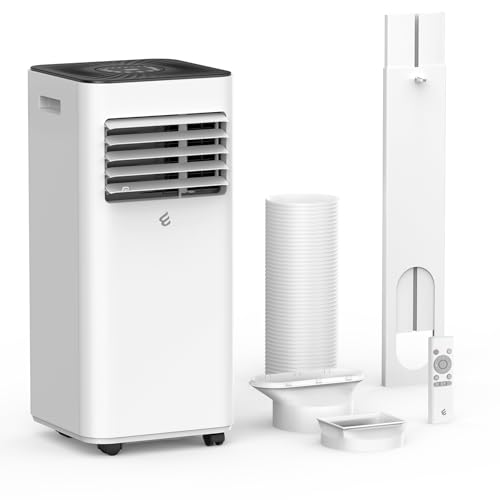
Air Future 10,000 BTU Portable AC with Remote

ACHAZEL WiFi 8,000 BTU Window Air Conditioner
FO-KOKO Dual Hose 6800 BTU Portable Camping AC, Ash Gray
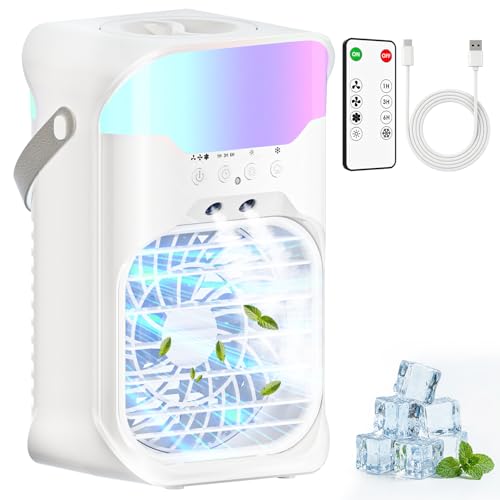
YAFVPIZUT Dual Nozzle Mini Air Conditioner, 1600ML Tank

Laluztop Evaporative Air Cooler, 2.5Gal Tank

HOMCOM 8000 BTU Portable Air Conditioner, Black
A Closer Look At Each Pick
For an RV used beyond peak summer, Uhome’s cooling, heating, dehumidifying, and fan modes make a practical case. Its 12,000 BTU rating, where BTU measures heat-moving capacity, suits larger enclosed spaces better than the smaller 8,000 BTU options below.
The included remote and window kit help you set it up as a vented portable unit rather than a fixed window-mounted model. You may find the larger capacity especially useful in a motorhome living area, though the exhaust hose still needs a secure route outdoors.
Notable Gains
- 12,000 BTU cooling capacity suits roomier RV living zones.
- Heating mode supports shoulder-season campground stays.
- Dehumidifier mode helps manage sticky indoor air after rain.
- Self-evaporating operation can reduce routine water-tray attention.
- Remote control lets you adjust settings from the bunk or dinette.
Things To Consider
- The supplied window kit needs careful sealing around unusual RV window shapes.
- Owners commonly need a dedicated storage spot for the hose and panels between trips.
Key Specs
Who It Suits Best
You’ll get the most from this Uhome model in a larger RV that needs cooling plus occasional warmth during spring or fall travel.
Where Another Pick Suits Better
ACHAZEL WiFi 8,000 BTU Window Air Conditioner suits you better when your RV has a compatible window opening and you want to avoid storing a floor unit.
Air Future lands between Uhome’s higher-capacity design and HOMCOM’s smaller 8,000 BTU portable unit. The 10,000 BTU output and stated 450-square-foot coverage give you useful capacity for a parked fifth wheel or a longer travel trailer.
Cooling, dehumidification, and air-circulation modes cover the main warm-weather jobs without adding a heater. The honest read is that its window kit matters as much as its capacity, since portable compressor air conditioners must exhaust heat outside to work as intended.
Well-Handled Touches
- 10,000 BTU output offers more reach than the HOMCOM unit.
- Remote operation is handy from a raised RV bed.
- Timer scheduling can avoid leaving the unit running longer than needed.
Worth Noting
- You’ll need to measure the RV window before relying on the included panel kit.
- Routine filter care and hose storage add small tasks between trips.
- Heating is not listed, unlike the Uhome model.
Made For
You’ll appreciate Air Future in a medium-to-large RV used mainly through warm, humid travel months.
Consider Something Else When
Reach for FO-KOKO Dual Hose 6800 BTU Portable Camping AC when your van or tent needs a more travel-specific dual-hose arrangement.
ACHAZEL is the direct window-mounted choice here, a meaningful difference from the floor-standing portable units. It offers 8,000 BTU cooling for spaces up to 350 square feet, which lines up well with many compact trailers and truck campers.
WiFi control works through the SmartLife-SmartHome app, letting you adjust settings remotely once your RV has a stable internet connection. That convenience is nice, but your window dimensions and support structure deserve attention before installation.
A Favorable Mix
- Window-mounted format preserves more interior floor area.
- App and remote controls give you two ways to manage cooling.
- Washable filter supports lower-waste ongoing upkeep.
- Manual air-direction adjustment lets you aim airflow toward the bed or seating area.
Trade Offs
- Many RV windows are not shaped or built like standard residential window openings.
- The washable filter needs regular rinsing and complete drying before reinstalling.
Feature Snapshot
Right Fit For
You’ll benefit most from ACHAZEL when your RV has a confirmed compatible window opening and you value floor-space savings.
Not Your Match When
Uhome 12000 BTU Portable Air Conditioner w/Heater, White is more suitable for you when heating capability belongs on your travel checklist.
FO-KOKO targets mobile, small-space use more directly than Air Future or Uhome. Its dual-hose layout separates intake and exhaust air, which can reduce the negative-pressure effect that single-hose portable units create inside a tightly closed RV.
The 6,800 BTU rating is more modest, yet that can be enough for a van, small camper, tent, or compact sleeping zone. You may prefer this focused design where a standard window kit is impractical and exterior vent routing can be planned carefully.
Advantages To Know
- Dual hoses suit enclosed mobile spaces with limited air volume.
- Heating, cooling, fan, and additional listed modes broaden seasonal use.
- 550W power rating can help you assess generator or shore-power planning.
- Ash gray housing fits naturally in utility-focused camping setups.
- Windowless positioning gives you more placement flexibility.
- Smaller capacity makes more sense for a van than a 450-square-foot claim.
Minor Gripes
- Two hoses take more time to position, secure, and pack away.
Quick Facts
Best Suited To
You’ll find FO-KOKO most useful in a camper van, tent, or small RV sleeping area with an outdoor hose path.
Look Elsewhere When
Air Future 10,000 BTU Portable AC with Remote fits you better for a larger RV interior that needs greater stated coverage.
YAFVPIZUT belongs in a different category from the compressor models above. This is an evaporative mini cooler, meaning it moves air across water to create a cooler-feeling breeze, rather than pumping indoor heat outdoors through an exhaust hose.
Its dual nozzles, three speeds, remote, timer, and 70-degree adjustable airflow make it a handy personal companion at the dinette or beside a bunk. In dry conditions, you may find it useful for close-range comfort, but it will not cool an entire RV like FO-KOKO or ACHAZEL.
Where It Excels
- No window hose or permanent installation is required.
- Dual nozzles direct airflow toward your immediate seating area.
Room For Improvement
- Its water-based operation is less suited to humid campground weather.
- The 1600ML tank needs refilling as water is used.
- Regular tank cleaning matters to avoid stale water during storage.
- It is a personal cooler, not a full-room compressor AC.
Who Will Love This
You’ll get the right result from YAFVPIZUT as a compact bedside or desk cooler in a dry-climate RV.
A Better Fit Elsewhere
HOMCOM 8000 BTU Portable Air Conditioner, Black suits you better when you need full-room cooling with outdoor exhaust venting.
Laluztop takes the evaporative route at a larger scale than the YAFVPIZUT mini unit. Its 2.5-gallon reservoir supports longer operation before refilling, making it more realistic for daytime use in a parked camper with dry outside air.
Three speed settings and a seven-hour timer keep operation uncomplicated. The catch is climate: evaporative cooling works by adding moisture to the air, so it is generally far more useful in low-humidity regions than near humid lakes or coastal campgrounds.
What It Does Well
- 2.5-gallon tank reduces the frequency of water refills.
- Windowless operation avoids hose-panel fitting concerns.
- Three speeds let you use gentler airflow in a compact sleeping area.
- Seven-hour timer helps you schedule evening airflow.
Points To Note
- High humidity limits the cooling effect compared with compressor-based units.
- Water tank and cooling pad cleaning should become part of your trip-end routine.
Feature Rundown
Built With In Mind
You’ll benefit from Laluztop in a dry-region RV where easy, hose-free airflow matters more than full compressor cooling.
Skip It When
ACHAZEL WiFi 8,000 BTU Window Air Conditioner makes more sense for you in humid conditions and a compatible installed window space.
HOMCOM offers a straightforward middle ground for a small trailer or compact motorhome. Its 8,000 BTU capacity is rated for up to 344 square feet, placing it close to ACHAZEL’s cooling range but in a portable, floor-standing format.
Cooling, dehumidifying, fan, and sleep functions cover the core daily needs, while the remote and 24-hour timer add convenience. For most compact RV interiors, that is enough, though the included window installation kit still needs a firm seal to keep warm outside air from returning.
Practical Advantages
- Four modes handle cooling, moisture removal, airflow, and overnight operation.
- 8,000 BTU capacity is appropriately scaled for smaller RV zones.
- Remote and 24-hour timer reduce repeated manual adjustments.
- Window kit is included for vented portable setup.
- Black finish can blend into darker RV furnishings and utility areas.
Softer Spots
- It has less stated coverage than Uhome and Air Future.
- Portable units occupy floor space during travel days and need secure storage.
- Owners commonly need to inspect the exhaust connection after moving the RV.
Details At A Glance
The Right Fit
You’ll find HOMCOM well suited to a small travel trailer or motorhome that needs conventional portable cooling without heating.
Another Choice May Suit
YAFVPIZUT Dual Nozzle Mini Air Conditioner, 1600ML Tank suits you better for close-range airflow where a full exhaust setup is not workable.
What Matters Before Choosing RV Cooling Equipment
Match Capacity to Your Actual Interior
A large BTU number is not automatically the right call for your RV. Consider the insulated living area, window exposure, ceiling height, and how often doors open during the day. Compact trailers often suit an 8,000 BTU unit, while larger open layouts may need the capacity offered by Uhome or Air Future.
Confirm the Venting Route
Compressor portable units need an exhaust route outdoors, usually through a window panel. Measure the window opening, check the available space around it, and plan how the hose will avoid kinks. A fixed window unit also needs a window frame strong enough to hold it safely.
Separate Evaporative Coolers From ACs
An evaporative cooler uses water and airflow, while a compressor AC transfers heat out of the RV. YAFVPIZUT and Laluztop avoid window hoses, but their effect depends heavily on dry ambient air. Humid destinations call for a vented compressor unit instead.
Think About Storage and Daily Upkeep
Portable compressor units need a place to ride securely between campsites. Evaporative models need drained, cleaned water tanks before storage, while washable filters need periodic cleaning. A setup you can maintain easily is usually the setup you’ll keep using.
Small Details That Shape RV Comfort
Common Shopping Slip Ups
A frequent mistake is treating all portable coolers as full-room air conditioners. Check whether the unit needs an exhaust hose, uses water, and matches your RV’s actual interior size before choosing.
Where The Extra Money Goes
Higher-tier options often add heating modes, dual-hose layouts, app controls, larger cooling capacity, or more operating modes. Those additions make sense for longer trips, larger interiors, and changing seasonal conditions.
Frequently Asked Questions
Can you install a window air conditioner in an RV?
You can use a window unit only with a compatible opening and adequate structural support. Measure the window carefully and confirm that the installation will not interfere with normal RV operation.
Do portable RV air conditioners need a window?
Compressor portable units need a route to exhaust heat outdoors. A window panel is common, though some camping-focused models use alternative hose routing.
Are evaporative coolers useful in an RV?
Evaporative coolers can help with personal airflow in dry climates. They are less effective in humid weather because they add moisture to the air.
What BTU size works for a small RV?
An 8,000 BTU unit can suit many compact trailers and motorhomes. Larger, sun-exposed, or open-plan interiors may need more cooling capacity.
Can you run an RV air conditioner overnight?
You can use timer and sleep settings to manage nighttime operation. Your electrical supply and the unit’s required power draw need to match before extended use.
Closing Remarks
Your RV layout and travel climate matter more than a long feature list. Choose ACHAZEL for a compatible window installation, Uhome for heating and cooling flexibility, or FO-KOKO for mobile dual-hose use. For close-range dry-climate airflow, the water-fed options have a place too.
