

A window unit can make your bedroom, office, dorm, or living area far more comfortable during warm weather without taking up floor space. Your right fit starts with room size, because too little cooling capacity leaves you waiting while too much can cycle on and off too quickly. You’ll also want controls that match your routine, from a basic dial to remote and WiFi access.
Your Options, Compared

GE 6,000 BTU Electronic Window Air Conditioner 250 sq ft White

Midea 8,000 BTU Smart Inverter Window Unit with Heat 350 Sq. Ft.

LG 5,000 BTU Window Air Conditioner LW5023
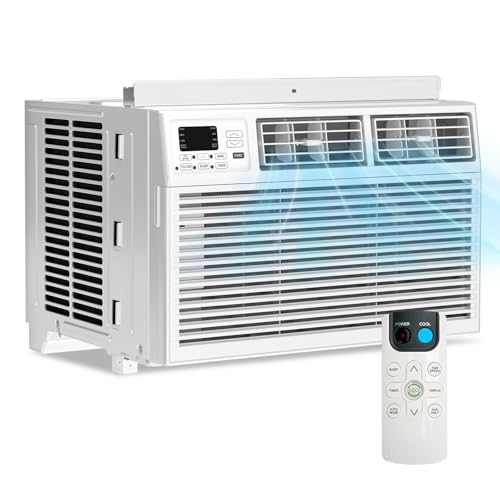
Electactic 8,000 BTU Window Air Conditioner 350 Sq. Ft.
LG 6,000 BTU WiFi Window Air Conditioner LW6024RSMX
LG 5,000 BTU Window Air Conditioner Remote LW5025R

Midea 12,000 BTU Window Air Conditioner with Heat 550 Sq Ft
Meet The Standout Selections
Your daily bedroom or home-office routine gets useful attention here through electronic controls, a remote, and a 24-hour timer. You can set a shutoff schedule before sleep, rather than letting cooling run through an empty room.
At 6,000 BTU, you get cooling capacity intended for spaces up to 250 square feet. For your enclosed bedroom or compact apartment living area, that capacity may feel like the sensible middle ground between LG’s 5,000 BTU options and the larger 8,000 BTU units below.
The Case For It
- You get remote adjustments from your bed or desk.
- You can use the 24-hour timer to align cooling with your workday or sleep schedule.
- You get an energy-saver mode for lighter-demand periods.
- You receive an installation kit, which can reduce your setup shopping list.
Things To Consider
- Your room should stay near the stated 250-square-foot capacity for the most suitable fit.
- You’ll need to remove and clean the air filter regularly to keep airflow from feeling restricted.
Key Specs
Who It Suits Best
You’ll benefit most in a bedroom, dorm room, or home office close to 250 square feet where scheduled cooling matters.
Where Another Pick Suits Better
You’ll get more coverage from the Midea 8,000 BTU Smart Inverter Window Unit with Heat 350 Sq. Ft. for a larger main room.
Your medium room gets more flexibility here than with GE’s cooling-only 6,000 BTU model. An inverter uses variable compressor operation rather than only full-power cycling, which can suit your household’s changing comfort needs.
You get cooling, dehumidification, and supplemental heat in a unit sized for up to 350 square feet. Your heat function works only above 41°F outdoor temperature, so you’ll want a different heating approach during colder spells.
The Helpful Details
- You get 8,000 BTU capacity for a larger bedroom or moderate living room.
- You can reduce excess room moisture through the dehumidifying function.
- You get supplemental heat for milder seasonal weather.
- You can adjust settings with electronic controls or the included remote.
- You get inverter operation for a more adaptable operating approach.
Worth Noting
- Your heat mode does not operate below 41°F outside.
- You may find installation more demanding than with a smaller 5,000 BTU unit because of the added capacity.
- You’ll want periodic filter cleaning as part of regular upkeep.
Feature Snapshot
Made For
You’ll get the most from this unit in a roughly 350-square-foot room where cooling, moisture reduction, and mild-weather heat all matter.
Consider Something Else When
You’ll prefer the GE 6,000 BTU Electronic Window Air Conditioner 250 sq ft White for a smaller room and a more focused cooling setup.
Your smallest rooms rarely need complicated controls, and the LW5023 keeps the approach direct with mechanical operation. You turn physical controls rather than relying on a remote, app, or digital display.
You get 5,000 BTU cooling for rooms up to 150 square feet, making this a sensible match for your dorm, small bedroom, or tucked-away office. Compared with the GE, you give up timer convenience but gain a simpler control layout.
What Works In Its Favor
- You get capacity sized for a small room rather than paying for unused output.
- You can choose between two cooling speeds and two fan speeds.
- You can direct airflow in two directions to better suit your furniture layout.
Trade Offs
- You do not get remote operation for adjustments from across the room.
- Your 150-square-foot coverage makes it unsuitable for open living areas.
- You’ll need to wash the filter routinely, especially in your dustier spaces.
- You may prefer electronic controls during nighttime use.
Right Fit For
You’ll appreciate this model in a compact, enclosed room where you prefer uncomplicated knobs and modest cooling capacity.
Not Your Match When
You’ll be better served by the LG 5,000 BTU Window Air Conditioner Remote LW5025R when remote control matters in your small room.
Your larger bedroom, office, or living room can use the added output of 8,000 BTU cooling. Like the Midea 8,000 BTU model, you get room coverage up to 350 square feet, but your focus here stays on cooling and dehumidifying rather than heat.
You can select three fan speeds and use the remote or 24-hour timer to make daily adjustments less hands-on. For your humid summer setup, the dehumidification setting can be a helpful addition.
The Upside
- You get coverage designed for rooms up to 350 square feet.
- You can choose among three fan speeds for a more tailored airflow level.
- You can schedule operation with a 24-hour timer around your routine.
- You get cooling and dehumidification functions in one window-mounted unit.
- You can make changes from across your room with the remote.
- You receive an installation-focused design for a more straightforward setup.
Minor Gripes
- You do not get the supplemental heat function offered by the Midea 8,000 BTU Smart Inverter Window Unit with Heat 350 Sq. Ft.
- You’ll want to confirm your window opening before installation.
Quick Facts
Best Suited To
You’ll benefit most in a medium room where you want a remote, timer, three fan speeds, and dehumidification.
Look Elsewhere When
You’ll want the Midea 12,000 BTU Window Air Conditioner with Heat 550 Sq Ft for a larger shared room with seasonal heat needs.
Your connected home setup gets a practical benefit through built-in WiFi and LG ThinQ app control. You can change settings from your phone before returning to your bedroom or office, which can feel more useful than a remote during your commute home.
At 6,000 BTU for up to 250 square feet, you get the same broad room-size target as the GE pick, with more connected control options. The honest read is that your WiFi setup adds convenience, not extra cooling capacity.
Strong Points
- You can adjust settings through the LG ThinQ app away from the room.
- You get remote control for quick bedside or desk-side changes.
- You can wash the filter rather than replace it after routine cleaning.
- You get a 250-square-foot room target suited to small bedrooms and offices.
Room For Improvement
- You’ll need a reliable home WiFi connection to get the most from app control.
- You may find the extra connected features unnecessary in a rarely used guest room.
- You still need regular filter cleaning to maintain air movement.
Who Will Love This
You’ll get the most value from this option in a small connected home where phone-based temperature adjustments fit your schedule.
A Better Fit Elsewhere
You’ll prefer the GE 6,000 BTU Electronic Window Air Conditioner 250 sq ft White for comparable coverage with a simpler control approach.
Your compact room gets the same 5,000 BTU and 150-square-foot target as the LG LW5023, but with electronic buttons and a remote. You can make temperature changes from bed without walking to the window, a small upgrade that matters during nighttime use.
You also get auto-restart, which returns operation after a power interruption. For your dorm or small office, that feature may remove one routine annoyance without adding smart-home complexity.
Why It Works Well
- You get remote access without moving up to a larger unit.
- You can select two cooling speeds and two fan speeds.
- You can aim air through two-way deflection for a better room layout fit.
- You get auto-restart after an outage.
- You can clean the washable filter as part of regular ownership.
Points To Note
- Your coverage remains limited to rooms up to 150 square feet.
- You’ll need to keep the remote handy, especially in shared spaces.
- You may need more capacity in rooms with open doorways or strong afternoon sun.
Core Details
Built With In Mind
You’ll appreciate this unit in a small bedroom, dorm, or office where your remote and auto-restart feature add everyday convenience.
Another Choice May Suit
You’ll get a simpler dial-based experience from the LG 5,000 BTU Window Air Conditioner LW5023 for your uncomplicated small-room setup.
Your larger common room needs a different class of capacity, and 12,000 BTU covers up to 550 square feet. Compared with every smaller unit here, you get a more appropriate option for your large living room, open studio, or shared space.
You get smart inverter control, cooling, dehumidification, and supplemental heat in one unit. Your heat mode needs outdoor temperatures above 41°F, so it works better for cool transitional weather than deep winter conditions.
Practical Advantages
- You get coverage for spaces up to 550 square feet.
- You can use cooling and dehumidification during humid summer days.
- You get supplemental heat for mild outdoor temperatures.
- You can manage settings through electronic controls or the remote.
Softer Spots
- Your heat mode does not operate below 41°F outdoors.
- You’ll want help lifting and securing a larger-capacity unit during installation.
Technical Sheet
The Right Fit
You’ll benefit most in a large living room or shared open space where your 550-square-foot coverage requirement is genuine.
Reach For A Different Pick When
You’ll find the Electactic 8,000 BTU Window Air Conditioner 350 Sq. Ft. more suitable for a medium room without heat needs.
What Matters Before Choosing Window Airconditioning Units
Match BTU Output to Your Room
BTU measures cooling output, and your room size should guide your starting point. You can use 5,000 BTU for a compact space around 150 square feet, while 6,000 BTU suits rooms up to 250 square feet. Your larger living area may need 8,000 BTU or 12,000 BTU capacity, depending on its stated square footage.
Think About Your Layout
Your closed bedroom holds cooled air more easily than your open living room connected to a hallway. You may need more capacity with strong direct sun, high ceilings, or frequently opened doors. Your window opening also needs enough space for the selected unit and its included mounting parts.
Choose Controls You’ll Actually Use
Your mechanical controls suit a straightforward guest room or dorm. A remote helps from across your bedroom, while WiFi control can suit your commute and regular schedule. Your app-connected unit still needs your stable home network for that added convenience.
Plan for Ongoing Care
Your washable filter needs regular cleaning, since collected dust can restrict airflow. You should also inspect the window seal during installation, because gaps can let warm outdoor air return. Your larger-capacity unit may require a second set of hands for mounting and seasonal removal.
Details That Can Shape Your Choice
Common Shopping Slip Ups
You can avoid undersizing by measuring your room rather than guessing from your furniture. You should also avoid choosing heat functionality as your only cold-weather plan, since listed heat operation can have outdoor-temperature limits.
Where The Extra Money Goes
You often pay for expanded capacity, inverter operation, heat capability, remote access, or WiFi control. Your upgrade makes more sense when you’ll use those functions weekly, not merely once in a while.
Frequently Asked Questions
What BTU Size Fits a Small Bedroom?
You can often start with 5,000 BTU for a room up to 150 square feet. Your room’s sun exposure and open doorways can affect the fit.
Can You Use a Window Unit in a Home Office?
You can use a window unit in your home office as long as your room size matches its rated coverage. Your remote or timer can make workday adjustments easier.
What Does a Dehumidification Function Do?
You can use dehumidification to reduce excess moisture from your room air. Your room may feel more comfortable during humid weather without relying on cooling alone.
Do You Need WiFi in a Window Air Conditioner?
You do not need WiFi for normal cooling operation. You get extra phone-based control with WiFi, which can suit your regular away-from-home routine.
Can a Window Air Conditioner Provide Heat?
You can get supplemental heat from models built with that function. Your heat mode may stop working below the listed outdoor temperature threshold.
Final Verdict
Your room size should lead your decision, followed by the controls and seasonal features that fit your routine. You’ll find the GE a balanced option for smaller rooms, while the Midea 12,000 BTU model suits much larger shared spaces. Your best match is the one sized for your actual room, not just the highest output.
