

A good bedroom fan can mean the difference between tossing in damp sheets and sleeping through the night. The right one moves enough air to take the edge off a warm room, yet runs quietly enough that you stop noticing it within minutes. Plenty of fans claim to do both, but the gap between a noisy desk unit and a properly engineered bedroom model shows up the moment you hit the pillow. This list focuses on fans built for sleep: quiet motors, smooth airflow, and controls you can manage half-asleep. Whether you sleep hot, share a room with a partner, or just want a softer breeze than the box fan in the closet, there’s a match here.
An Overview Of The Picks

Comfort Zone 32-Inch Oscillating Tower Fan (Black)

Standing Fan for Bedroom 180° Omnidirectional Oscillating

Levoit Tower Fan for Bedroom 36 inch (White)
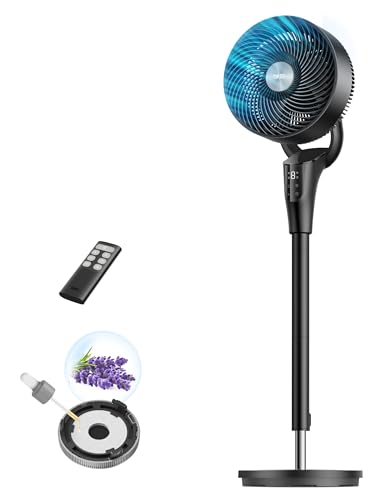
DREO 2026 Upgraded 90ft Airflow Pedestal Fan

DREO 2026 Upgraded DC Motor Pedestal Fan

DREO 2026 Upgraded 8H Timer Pedestal Fan

Honeywell TurboForce HT900 Tabletop Fan (Black)

DREO Tower Fan for Bedroom 26ft/s
More On The Choices That Made The List
For tight bedrooms where floor space is at a premium, the Comfort Zone tower fan makes sense at first glance. The 32-inch body stands slim against a wall or beside a dresser, and the bladeless front means you stop worrying about curious pets brushing against it at night. The built-in carry handle on top is a small touch, but it earns its keep when you want to move the fan between bedroom and home office.
Three speeds cover the basics without overwhelming you with options, and 90 degrees of oscillation spreads the breeze across the bed rather than aiming it at one corner. In a small to mid-size room, that’s usually enough. Owners commonly find the lowest setting gentle enough for reading, while the highest kicks in when the afternoon sun heats things up.
Features That Help
- Bladeless front panel keeps little fingers and pet paws safely out of the airflow path
- Top-mounted carry handle makes it easy to move from room to room without dragging
- Low setting runs soft enough to use during sleep without becoming a distraction
- 90-degree oscillation covers a wide arc so a single unit can serve the whole bed
Things To Consider
- Only three speeds means less fine-tuning between a whisper breeze and full power
- Plastic body can show dust on the front grille, so a quick wipe-down every couple of weeks keeps it looking fresh
Who It Suits Best
Anyone in a small bedroom or studio who wants a slim, low-fuss tower that disappears into the room.
Look Elsewhere When
Light sleepers who need near-total silence should look at the Standing Fan for Bedroom 180° Omnidirectional Oscillating instead, since it targets a lower noise floor.
Where the Comfort Zone leans on simplicity, this Becvtoz pedestal fan goes after silence as its headline feature. The 20 dB rating (a sound level roughly equivalent to soft rustling leaves) means it sits closer to a hum than a whir, which matters when the bedroom is meant for actual rest. That makes it a strong match for shift workers sleeping during the day and parents who tiptoe around a light-sleeper partner.
180 degrees of omnidirectional oscillation is the wider arc you see here, so the breeze reaches both sides of a queen or king bed without manual repositioning. Compared to the Comfort Zone tower’s bladeless front, this traditional pedestal layout pushes more air at a time, which is helpful in larger rooms where a slim tower sometimes runs out of reach. The trade-off is footprint: it does take up floor space where the tower barely casts a shadow.
Where It Delivers
- 20 dB operation targets one of the quietest noise floors in this category
- 180-degree oscillation covers more of the room than the typical 90-degree swing
- Pedestal design moves a higher volume of air, useful for larger bedrooms
Worth Noting
- Exposed blades mean a quick check that the guard is secure before running it around kids
- Taller stand profile may not suit rooms with low dressers or bunk setups
Made For
Light sleepers and shared bedrooms where any motor noise tends to wake one person up.
Consider Something Else When
Floor space is tight, in which case the Comfort Zone 32-Inch Oscillating Tower Fan fits the same room with a fraction of the footprint.
Levoit’s tower fan is the most feature-heavy bladeless option in this roundup, and the 36-inch frame makes it the tallest tower here. What sets it apart is the built-in temperature sensor, which automatically adjusts the fan speed to match the room. Set it and forget it: the fan ramps up as the room warms through the afternoon and dials back as the night cools down, without you reaching for the remote.
Five speeds and four modes (including sleep and auto) give you more granular control than the three-speed Comfort Zone. The 12-hour timer covers a full night, and 28 dB on the lowest setting keeps it library-quiet. If the previous picks felt too basic and you want a fan that thinks a little for you, this is the one to look at first.
Notable Gains
- Built-in temperature sensor adjusts output automatically as room conditions shift
- Five speeds and four modes handle everything from white-noise breeze to full cooling
- 12-hour timer covers a full sleep cycle without resetting
- Bladeless tower body keeps the front safe and easy to wipe clean
Trade Offs
- More features mean a slightly steeper learning curve for the remote and button layout
- 36-inch height may overpower a room with low ceilings or short dressers
Key Advantages
Right Fit For
Anyone who wants a set-and-forget bedroom fan that responds to temperature changes on its own.
Reach For A Different Pick When
You’d rather have a traditional pedestal that pushes more raw air, in which case the DREO 2026 Upgraded 90ft Airflow Pedestal Fan is the stronger room-filling choice.
DREO’s pedestal fan is built for bigger rooms where a tower runs out of reach. The 90ft airflow claim is unusually long for a bedroom fan, and the 38 to 42 inch adjustable height means you can aim it across a tall bed or down toward a desk without crouching. For an open-plan bedroom or a room that doubles as a home office, that reach is the main reason to choose it over a tower.
The DC motor (a brushless design that runs cooler and more efficiently than traditional AC motors) keeps the energy draw modest, and 90 degrees of oscillation sweeps the breeze across the room. The 8-hour timer is shorter than the Levoit’s 12, but it covers a typical work or sleep block. Three modes and over eight speed steps let you tune the airflow more precisely than most of the towers on this list.
Noteworthy Benefits
- 90ft airflow reach is generous for larger bedrooms or loft layouts
- Adjustable height fits both standing and seated use
- DC motor runs efficiently and tends to stay cooler during long overnight sessions
- Multiple speed steps give finer control than three-speed towers
Points To Note
- Pedestal footprint takes up more floor space than the slim tower options above
- 8-hour timer is shorter than the Levoit’s 12, so very long sleep shifts may need a manual restart
Who Should Grab It
Anyone in a larger bedroom or studio loft who needs reach and adjustable height in one unit.
Where A Sibling Pick Shines
For a tighter, bladeless bedroom with a focus on smart temperature response, the Levoit Tower Fan for Bedroom 36 inch is the more automated fit.
Sharing much of the same DNA as pick 4, this DREO pedestal leans into versatility. The 90ft reach, DC motor, and 90-degree oscillation are all here, but this variant sits in the middle of the lineup as the most flexible all-rounder. Use it in the bedroom at night, then wheel it into the living room during the day without skipping a beat.
The combination of three operating modes and more than eight speed settings covers both gentle overnight use and quick cool-downs when the sun hits a west-facing window. Compared to the Comfort Zone tower’s three fixed speeds, the granularity here is what makes the difference over time: you can land on the exact airflow level that matches the room rather than overshooting or undershooting it.
The Value In It
- Strong airflow with fine-grained speed control for dialing in comfort
- DC motor tends to draw less power over long overnight runs
- Pedestal design doubles as living-room circulation when not in the bedroom
- 8-hour timer suits standard sleep and work blocks
Minor Gripes
- Taller stand may feel oversized in a compact bedroom with low ceilings
- Setup is slightly more involved than a simple tower out of the box
The Right Fit
Shoppers who want one fan that genuinely works in the bedroom and the living room without compromise.
Skip It When
You need automatic temperature response, since the Levoit Tower Fan for Bedroom 36 inch handles that without any manual adjustment.
The third DREO pedestal in this list tilts toward customization. Eight or more speed steps give you more airflow rungs than the three-speed Comfort Zone, and the manual 105-degree vertical tilt adds a layer of direction control that most towers skip. If your bed sits high or low relative to the fan, the ability to nudge the head up or down without moving the whole unit is a quiet win.
Three modes and an 8-hour timer handle the typical bedroom routine, and the 90ft reach keeps it competitive with the other DREO pedestals. The practical upside: you can build a more specific airflow pattern, which matters if you’ve tried cheaper fans and found the breeze either too direct or too scattered.
Points In Its Favor
- Eight or more speed settings for fine-tuning airflow to the exact level you want
- Manual 105-degree vertical tilt directs air up, down, or straight ahead
- DC motor and 90ft reach match the rest of the DREO pedestal family
Soft Spots
- More speed steps mean more button presses to find the right level, especially at night
- Same pedestal footprint as the other DREO models, which won’t suit small rooms
Who Will Love This
Tinkerers who like to dial in their comfort settings rather than settle for three fixed speeds.
Swap It Out When
You want bladeless safety and smart temperature response, in which case the Levoit Tower Fan for Bedroom 36 inch takes a smarter, simpler approach.
The Honeywell TurboForce HT900 is a different animal from everything else on this list. Where the towers and pedestals try to cool the whole room, this small tabletop unit is built to aim a concentrated stream of air at one person. Sit it on a nightstand, a desk, or a dresser, and the 90-degree pivoting head lets you direct the breeze exactly where you need it.
Three speeds cover the basics, and the small footprint means it slips into spots where the other fans simply won’t fit. It’s a good secondary fan for a guest room, a college dorm, or a bedside companion when you only want to cool one half of the bed. In larger bedrooms, it’s more of a personal fan than a room cooler.
Good Reasons To Consider
- Compact body fits on a nightstand, shelf, or small desk without crowding the space
- 90-degree pivoting head aims the airflow exactly where you want it
- Three speeds are simple to operate, even half-asleep
Honest Caveats
- Exposed blades require the same caution as any traditional fan around kids and pets
- Small fan head means it’s a personal cooler, not a whole-room solution
Key Attributes
Best Suited To
Anyone who wants a personal fan on a nightstand or desk rather than a full-room cooling unit.
Not Your Match When
You need to cool an entire bedroom, in which case the DREO 2026 Upgraded 90ft Airflow Pedestal Fan moves enough air to fill the whole space.
Rounding out the list is a DREO tower that pairs a slim body with a longer-than-expected reach. The 26 ft/s airflow velocity and 33ft reach put it a step above smaller towers, which means it can handle a slightly bigger bedroom without running out of steam. For a studio apartment or dorm room where one fan has to do real work, the size-to-performance ratio is the main draw.
Like the Levoit, it carries the bladeless tower form factor, so the front is safe to touch and easy to wipe down. The 8-hour timer is shorter than the Levoit’s 12, but it covers a standard sleep block. 90 degrees of oscillation is the same arc as the Comfort Zone, but the higher airflow velocity pushes the breeze further across the room.
Strong Points
- 26 ft/s airflow velocity is brisk for a slim tower
- 33ft reach handles a studio or larger bedroom better than most towers
- Bladeless front keeps the surface easy to clean and safe around pets
- Compact footprint fits beside a dresser or in a corner
A Few Limitations
- 8-hour timer is shorter than the Levoit’s 12, so very long sleep shifts may need a manual restart
- Higher velocity can feel stronger than expected on the top setting, which may be too much for very light sleepers
Perfect Match For
Studio apartments, dorms, and small bedrooms that need a slim tower with real airflow behind it.
A Better Fit Elsewhere
For a quieter sleep experience at the lowest settings, the Levoit Tower Fan for Bedroom 36 inch runs softer and lasts longer on its timer.
What To Weigh Before Picking A Bedroom Fan
Noise level is the single biggest factor for bedroom use. Anything under 30 dB on the lowest setting is generally sleep-friendly, while pedestal fans with traditional motors often sit higher. A bladeless tower like the Levoit or DREO tower tends to run quieter than a pedestal, though the Becvtoz pedestal here closes that gap.
Airflow reach matters more than raw power. A fan that pushes a focused stream 30 feet does more for a large bedroom than a fan that stirs the air in a tight circle. Look at the rated reach or velocity, not just the number of speeds, since more speeds don’t always mean more cooling.
Form factor decides how the fan fits your space. Towers like the Comfort Zone and DREO take up almost no floor space, pedestals need a clear circle for the base, and tabletops like the Honeywell need a flat surface within arm’s reach. Measure where you plan to put the fan before choosing the style.
Timer length and smart modes help overnight. A 12-hour timer covers a full sleep cycle without reset, while auto modes (like the Levoit’s temperature sensor) reduce how often you need to touch the remote. These features matter more for people who don’t want to think about the fan once the lights are off.
Key Considerations Across These Picks
Pitfalls Shoppers Hit
Chasing the highest CFM or airflow number can backfire in a small bedroom, where too much air creates a wind-tunnel effect that disturbs sleep instead of helping it. Match the fan to the room size first, then the noise level, then the extras.
Ignoring the timer length is a common miss. A 4 or 6-hour timer sounds fine until you actually sleep past it and wake up to a still, warm room. For overnight use, an 8 or 12-hour timer is worth prioritizing.
What The Higher Tier Buys
Spending up on a tower like the Levoit gets you a temperature sensor, multiple modes, and a 12-hour timer, which together remove most of the nightly adjustment you’d otherwise do. A cheaper tower still cools, but it asks more of you to keep it dialed in.
Premium pedestals like the DREO line add a DC motor and adjustable height, which show up as lower long-term power use and the ability to share the fan between bedroom and living room. The upgrade pays off most for anyone moving the fan between rooms or running it for long stretches.
Frequently Asked Questions
What noise level is best for a bedroom fan?
Aim for under 30 dB on the lowest setting. The Levoit and DREO towers hit this range, and the Becvtoz pedestal targets around 20 dB, which is closer to a soft hum than a whir.
Are bladeless fans safer for bedrooms?
Bladeless towers remove the exposed spinning blades, which is reassuring around kids and pets. Traditional pedestals like the Becvtoz and DREO models still work fine, but check that the front guard is secure before leaving them running unattended.
How many fan speeds do you really need?
Three speeds cover most people’s needs. More steps (like the DREO pedestals’ eight settings) help you fine-tune the breeze, but they add complexity to the remote.
Do bedroom fans help with sleep beyond cooling?
Many light sleepers rely on consistent white noise from a fan to mask outside sounds. Quieter fans produce less of that masking effect, so a slightly louder unit can sometimes help if traffic or neighbors are the bigger issue than the temperature.
Can a bedroom fan replace air conditioning?
Fans move air, they don’t cool it, so they work best as a supplement to AC or as the primary cooling in mild climates. In genuinely hot rooms, pairing a fan with a window unit or portable AC gets better results than either alone.
