

A still, sticky screened porch is the kind of space that should be enjoyed year after year, yet most homes end up with a fan that hums too loud, wobbles in the breeze, or just doesn’t move enough air. Outdoor-rated ceiling fans solve a different set of problems than indoor ones: they handle humidity, resist corrosion, and push air across a wider footprint without making the room feel like a wind tunnel. The picks below cover everything from extra-large 65-inch models for sprawling covered patios to compact 20-inch caged fans built for tight gazebos, so you can match the fan to the porch you actually have.
A Closer Look At The Lineup

Fanbulous 65 Inch Walnut Ceiling Fan with 3CCT Lights and Remote

Depuley 52 Inch Ceiling Fan Without Light, 3 Plastic Blades

Depuley 52-inch Ceiling Fan with Light, White and Wood Grain Blades

Crazypai 42 Inch Modern Low Profile Ceiling Fan with Light and Remote

Crazypai 52 Inch Ceiling Fan with Light, DC Reversible Motor
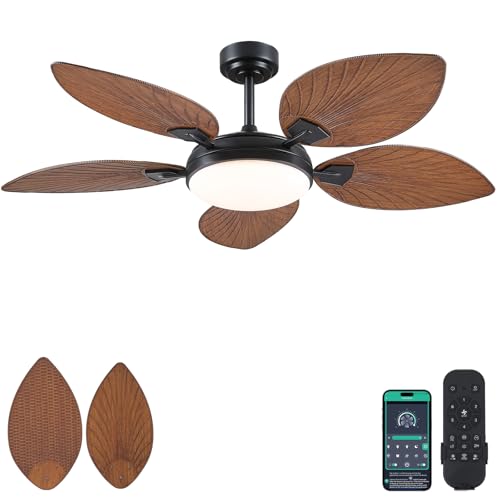
PHORUS 52 Inch Tropical Outdoor Palm Leaf Ceiling Fan with Lights

Fanbulous 20 Inch Outdoor Ceiling Fan with Light, Waterproof Caged Gazebo Fan

Fanbulous 20 Inch Outdoor RGB Ceiling Fan with Light, Waterproof Gazebo Fan
More Details On Our Top Picks
The Fanbulous 65-inch is built for porches that swallow smaller fans whole. A 65-inch diameter means it pushes air across roughly a 20-by-20-foot footprint, so a long wraparound veranda or a great room with cathedral ceilings finally gets the circulation it needs.
Each blade is dual-sided, finished dark walnut on one face and a lighter wood tone on the other, which gives you a quick way to shift the look between farmhouse warm and modern clean. The integrated LED panel supports 3CCT (3 correlated color temperature, meaning warm, neutral, and cool white in one fixture), so the same fan works for a candlelit dinner and a card game under cool light.
Everyday Advantages
- Massive blade sweep keeps air moving across oversized covered patios without obvious dead zones
- Reversible dual-finish blades let you match rustic, transitional, or contemporary decor in a single install
- 3CCT LED light kit shifts color temperature from warm to daylight with a remote, so you skip a separate fixture
- Wide remote handles speed, light, and direction without leaving your chair
Worth Noting
- At 65 inches, blade clearance from walls and screens becomes a real planning step, and overhanging foliage can clip the rotation
- This fan is built for covered spaces, so direct rain exposure is not part of the design
Feature Snapshot
Right Fit For
Homeowners with a sprawling covered porch or great room who need serious airflow and want the fan and light in one fixture.
Consider Something Else When
Choose the Crazypai 42 Inch Low Profile instead if your porch ceiling sits low or you need a flush mount that hugs the joists.
If you already have wall sconces or string lights covering the lighting on your screened porch, the Depuley 52-inch three-blade fan keeps the visual profile clean. The three-blade propeller look mimics a coastal ceiling fan and reads as a deliberate design choice rather than a stripped-down fixture.
Three plastic blades keep weight low and resist moisture better than MDF or solid wood, which matters in humid porch environments. The 52-inch span is a versatile middle ground, large enough to push air across a medium patio yet not so large that it overwhelms a smaller screened-in room.
Positive Takeaways
- Three-blade propeller design looks intentional and uncluttered in a minimalist or coastal setting
- Plastic blades handle porch humidity without warping the way wood blades sometimes do
- 52-inch sweep works well in medium porches where 65 inches would dominate
Trade Offs
- No integrated light means you rely on existing fixtures, sconces, or string lights for evening use
- Plastic blades can occasionally develop a faint wobble if mounting hardware loosens over time, so a seasonal check helps
Built With In Mind
Minimalists, coastal-style renovators, and anyone whose porch already has dedicated lighting from sconces or pendants.
Look Elsewhere When
Step up to the Fanbulous 65-inch model if you need both serious airflow and built-in lighting in a single fixture.
The Depuley 52-inch is the in-betweener, sized for typical porches and bedrooms, with the reversible dual-sided blade trick (white on one face, wood grain on the other) that lets one fan cover two decor moods. The reversible motor pushes air down in summer and pulls it up in winter, redistributing ceiling heat to save on the heating bill.
What sets it apart from the no-light Depuley above is the integrated dimmable LED with 3CCT. You can dial the color temperature from a warm 2700K to a brighter daylight tone and dim the whole fixture from the remote, which makes it a strong do-it-all pick for a screened-in living room that doubles as a four-season hangout.
What Helps Most
- Reversible motor supports year-round use, useful in climates with cold winters
- Dimmable 3CCT LED gives you full control over brightness and color temperature
- Dual-finish blades keep the fan flexible across remodeled and brand-new spaces
- Six-speed remote lets you tune airflow precisely rather than just low-medium-high
Some Limits To Know
- Five-blade design uses slightly more energy to spin than a three-blade propeller, though the difference is small in real use
- The integrated LED is not user-replaceable, so when the driver eventually fails the whole light kit is the repair path
Quick Facts
Whose Shelf It Belongs On
Porch owners who use the space year-round and want a fan that handles both summer cooling and winter heat redistribution.
Reach For A Different Pick When
The PHORUS 52-inch Tropical Palm Leaf fan is the better fit if you want statement-making blades and a stronger design moment than a reversible white-and-wood look.
The Crazypai 42-inch is the answer to low porch ceilings where a standard downrod fan would hang at head height. A flush mount (also called a hugger, meaning the motor sits close to the ceiling with no downrod) keeps the profile tight, while the 42-inch diameter still moves a respectable amount of air in smaller rooms.
It also runs on a DC motor, which is significantly more efficient than traditional AC motors, runs cooler, and is generally quieter at the lower speed settings. For a bedroom-style screened-in porch where you can hear the crickets outside, that quiet operation is the real reason to choose it over a louder AC model.
Bright Spots
- Flush mount fits ceilings under 8 feet without intruding into headroom
- DC motor keeps energy draw down and noise low across the speed range
- Nickel finish on one blade side reads modern, natural wood on the other warms up the look
- Six-speed remote gives finer airflow control than the typical three-speed setup
Honest Caveats
- 42-inch sweep covers smaller porches well but is not enough for a wide, open great room
- Smaller fans tend to need higher speeds to match the airflow of larger fans, so the quiet advantage softens at top speed
Feature Rundown
Who Should Grab It
Owners of low-ceiling screened porches and small bedrooms who care more about quiet operation than brute airflow.
Swap It Out When
The Depuley 52-inch without light is a cleaner choice if your porch already has separate lighting and you want more airflow than a 42-inch can deliver.
The Crazypai 52-inch takes everything the 42-inch model does well and stretches it to a more versatile 52-inch sweep. The dual-sided blades again give you a white or natural wood look from the same install, and the dimmable 3CCT LED takes care of the lighting without a second fixture.
The reversible DC motor is the headline feature. In summer it spins counterclockwise to push air down, and in winter it reverses to pull cool air up and push warm ceiling air back down along the walls, so the same fixture that cools the porch in July helps redistribute heat in January.
Strong Points
- DC reversible motor supports both summer cooling and winter heat redistribution
- 52-inch span suits average-size porches without dwarfing the room
- Dimmable 3CCT LED shifts between warm, neutral, and cool light
- DC efficiency trims long-term energy use compared to traditional AC fans
Points To Note
- Five-blade design carries a touch more visual weight than a three-blade propeller
- As with most integrated LED fixtures, the driver is the wear part over a long service life
Feature Overview
Perfect Match For
Homeowners who use the porch year-round and want a quiet, efficient fan that handles both July evenings and chilly October mornings.
A Better Fit Elsewhere
The Fanbulous 20-inch caged gazebo fan is the better pick if you need a compact, weather-ready fan for an open-air pergola rather than an enclosed screened room.
The PHORUS palm leaf fan is the most design-forward pick on this list. Five leaf-shaped blades bring a tropical, resort-style feel to a covered patio, and the angled blade pitch is tuned to push strong, refreshing airflow in a way straight-blade fans sometimes cannot match.
It pairs with both remote and app control, so you can adjust speeds, light, and timer from your phone or the included handheld. The integrated light plus a smart app makes it a conversation piece, not just a utility fan, which is why it lands well in a porch designed for entertaining.
Points In Its Favor
- Statement leaf-shaped blades become a focal point in a tropical or coastal-themed porch
- App and remote dual control adds flexibility for users who prefer phone-based operation
- Angled blades push strong airflow despite the decorative shape
- 52-inch sweep suits a medium-to-large covered patio
Small Caveats
- Decorative blades gather dust in the leaf-shaped grooves more than flat blades, so cleaning takes a couple extra minutes
- The tropical look commits you to a specific design direction, which limits flexibility if you redecorate the porch later
Best Suited To
Porches styled as tropical, coastal, or resort-inspired retreats where the fan is meant to be seen, not hidden.
Where A Sibling Pick Shines
The Depuley 52-inch with reversible blades is the calmer, more flexible choice if you want a fan that disappears into the room rather than announcing itself.
The Fanbulous 20-inch caged fan is built for tighter spaces where a 52-inch propeller would never fit. The caged design protects fingers and clothing, which matters in a gazebo or pergola where people are walking, reaching, and standing close to the fixture.
Seven ABS plastic blades (ABS, or acrylonitrile butadiene styrene, is a tough, weather-resistant plastic) give the airflow a unique feel compared to standard three- or five-blade fans, more of a gentle wash than a focused stream. The waterproof rating and weather-resistant housing are designed for outdoor exposure, which sets this fan apart from the indoor-leaning picks earlier in the list.
Advantages To Know
- Compact 20-inch footprint fits small gazebos, pergolas, and covered hot tub areas
- Caged housing protects against accidental contact, a real plus at head height in tight spaces
- Weather-resistant design handles humidity and outdoor exposure better than indoor-rated fans
- Six-speed remote and sleep timer simplify evening use
Some Limits To Know
- 20-inch sweep moves less air than any 42-inch or 52-inch pick, so it suits small zones rather than large patios
- App control requires Bluetooth, so you stay within range of the fan rather than controlling it from inside the house
Who Will Love This
Owners of small gazebos, hot tub pergolas, and tight covered patios who need a compact fan that handles real outdoor exposure.
Not Your Match When
The Fanbulous 65-inch is the right call for a wide, open great room where a 20-inch fan would barely register.
The Fanbulous RGB version takes the same compact caged platform and adds RGB color-changing lighting (RGB stands for red, green, blue, the three base colors that mix to produce a wide range of hues). For porches that double as evening entertaining spaces, the ability to shift from warm white to soft blue or a party-ready color is a different category of feature from a standard dimmable LED.
Underneath the light show, the fan hardware mirrors the previous Fanbulous 20-inch: seven ABS blades, weather-resistant housing, and a 20-inch caged frame. The remote and Bluetooth app both manage airflow and lighting, so you can leave the fan running and shift the mood without stepping outside.
Useful Touches
- RGB lighting turns the fan into a mood piece for evening entertaining
- Compact 20-inch caged frame fits tight pergolas and small gazebos
- Weather-resistant housing handles outdoor exposure with a sealed light kit
- Two- and four-hour sleep timers support overnight use without leaving it on all night
Points To Keep In Mind
- RGB color features are mostly aesthetic, so the practical lighting on this fan is no stronger than a standard dimmable model
- 20-inch airflow is mild compared to any of the 42- to 65-inch picks above, so it works best in smaller defined zones
Quick Technical Notes
Made For
Porch and gazebo owners who use the space for evening entertaining and want color-changing light built into the same fixture as the fan.
Skip It When
Pick the Crazypai 52-inch DC model if you want strong airflow and standard warm-to-cool lighting without the RGB extras.
Matching Fan Size, Mount, and Motor To Your Porch
A ceiling fan for a screened porch lives in a different environment than a bedroom or kitchen fixture, and a few details matter more outdoors than they do inside. Humidity swings, occasional gusts of wind, and exposure to dust and pollen all affect how a fan performs over time, so the right match comes down to the size of the space, the height of the ceiling, and how much weather the fan will see.
The first detail is blade span. A 20-inch caged fan handles a hot tub pergola or small gazebo, while a 42-inch fan suits a compact screened-in porch with low ceilings. A 52-inch fan covers the most common residential porch sizes, and a 65-inch fan is the right call only when the porch is large enough that a smaller fan would leave obvious dead zones. For most porches in the 12-by-16 to 16-by-20 range, 52 inches hits the sweet spot.
The second detail is mounting style. Flush mount (also called hugger) fans sit close to the ceiling, which is essential on porches under 8 feet where a downrod would put blades at head height. Standard downrod mounts work on porches with 9-foot or higher ceilings and tend to move air more efficiently because the fan sits at the optimal height for circulation. Damp-rated fans (rated for moisture but not direct rain) are appropriate for fully enclosed screened porches, while wet-rated fans handle open pergolas and gazebos that see real weather.
The third detail is motor type. AC motors (alternating current, the standard household motor type) are affordable and reliable, but DC motors (direct current, which uses electronic controls to vary speed) run quieter, use less energy, and offer more speed steps. If the porch sits near a bedroom window or you entertain with conversation, a DC motor’s quietness is worth the premium. Reversible motors, which spin in both directions, add winter value by redistributing warm ceiling air, useful in colder climates with a four-season porch.
The fourth detail is blade material. Plastic and ABS blades resist humidity better than MDF (medium-density fiberboard, an engineered wood product) or solid wood, which can warp over years of moisture cycling. Wood blades look great indoors but require more care in a damp porch environment, and metal blades work well in modern or industrial design schemes but can corrode without proper finishing.
Common Shopping Slip Ups
Porch fan shopping goes wrong in predictable ways, and most of them are easy to avoid with a quick measurement before checking out. The most common mistake is buying a fan that is too small for the space, then adding a second fan later, which costs more and clutters the ceiling. Measure the longest dimension of the porch, and err on the larger size if the porch has an open layout that flows into another seating area.
The second slip is choosing a fan without checking the mounting hardware. Some fans include a short downrod that works on 8-foot ceilings, while others assume a 9- or 10-foot install. A mismatched downrod either forces a flush mount that hurts airflow or leaves the fan hanging too low to walk under.
The third issue is buying an indoor-rated fan for a damp porch. Indoor fans corrode faster in humidity, and the motor bearings wear out sooner when exposed to moisture cycling. Look for a damp-rated or wet-rated label on the listing, and match the rating to how exposed the porch actually is.
Where The Extra Money Goes
Higher-tier porch fans cost more for a few clear reasons. DC motors and integrated LED light kits are the two features that drive up the price most, and both deliver real value over time. A DC motor’s efficiency cuts energy use, and the reversible function pays off in winter. Integrated LED lighting removes the cost and complexity of a separate fixture, and a dimmable 3CCT LED replaces both warm and daylight bulbs in one panel.
Premium materials and finishes also explain part of the price. Better blade balancing, sealed bearings, and corrosion-resistant hardware all extend the service life of an outdoor fan, especially in coastal or humid climates. The honest read is that a more expensive porch fan tends to last noticeably longer in tough conditions, so the upgrade is worth considering for any porch that sees real weather.
Frequently Asked Questions
What size ceiling fan works best for a screened porch? A 52-inch fan covers most standard porches, while 42 inches suits small or low-ceiling rooms. Larger porches over 20 feet in any direction benefit from 60- to 65-inch fans.
Can a regular indoor ceiling fan be used in a screened porch? A damp-rated or wet-rated fan is the safer choice, since porch humidity and temperature swings wear out indoor fan motors faster. Indoor fans may work briefly but typically have a shorter service life outdoors.
How far should a ceiling fan hang in a screened porch? Blades should sit at least 7 feet above the floor for safety, and roughly 8 to 9 feet for best airflow. Flush mount fans are designed for ceilings under 8 feet, while downrod mounts work on taller ceilings.
Are DC motor fans really quieter than AC motor fans? In most cases, yes. DC motors use electronic controls to ramp speed smoothly, so they produce less hum at low and medium speeds. At top speed, the difference narrows considerably.
How do you clean a ceiling fan on a screened porch? A microfiber duster or a damp cloth along each blade, top and bottom, handles routine buildup. For ABS or plastic blades, a mild soap solution works well. For wood blades, a dry dusting followed by a light wood polish keeps the finish from drying out.
