

A shop ceiling fan does more than move air. It keeps solder fumes from hanging in your face, helps sawdust settle faster, and takes the edge off a summer afternoon when the door is open and the bench grinder is running. The right size and motor matter more in a workspace than in a living room, because tall ceilings, metal roofing, and dust all change the math. This lineup covers eight fans that handle shop duty well, from oversized HVLS (high-volume, low-speed) models for warehouse-scale spaces to compact indoor-outdoor units that work over a two-car garage workshop. Each pick below was chosen for a specific kind of shop and a specific kind of owner, so the shortlist stays practical rather than aspirational.
A Quick View Of The Lineup

Parrot Uncle 100 Inch HVLS Ceiling Fan with Lights and Remote

Parrot Uncle 60 Inch Industrial Ceiling Fan with Lights and Remote

Parrot Uncle 72 Inch Farmhouse Windmill Ceiling Fan with Lights

Fanbulous 65 Inch Walnut Ceiling Fan with 3CCT Lights

Conciseer 72 Inch Modern Ceiling Fan with 6CCT Light and Remote
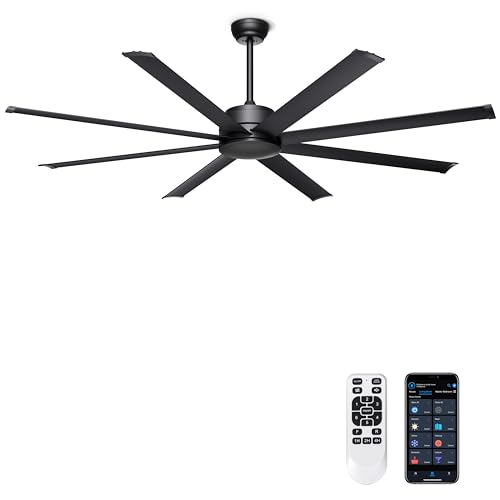
Ohniyou 72 Inch Black Industrial Ceiling Fan for Shops and Garages
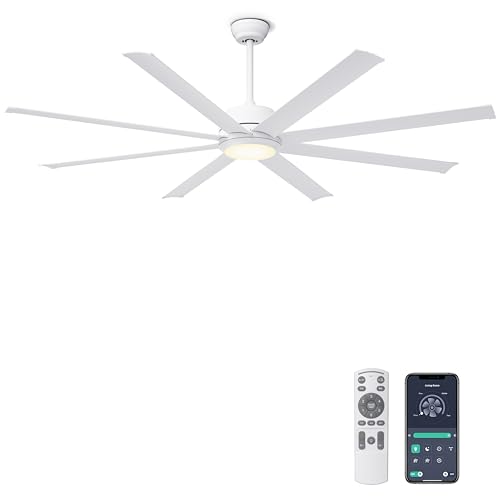
Ohniyou 72 Inch White Industrial Ceiling Fan with Light

BvenuBigLite 72 Inch 8 Blade Outdoor Ceiling Fan with App Control
Inside Each Recommended Option
A 100-inch wingspan sounds dramatic until you stand under one in a shop with 18-foot ceilings and a tin roof that holds heat like an oven. The eight aluminum blades turn slowly at up to 70 RPM, pushing a column of air downward without the choppy whir of a small high-speed fan. For woodworkers with long duct runs, welders dealing with fume extraction, or anyone running a barn-style workshop, the size is the point.
Reversible direction matters in a four-season shop too. Summer gets the downdraft, while winter flips the motor to push warm air off the ceiling and back down the walls. Compared to the smaller 60-inch Parrot Uncle that follows this one, the 100-inch version trades ceiling clearance for raw air-moving power, so you want to measure overhead space before committing.
Real Benefits
- Eight aluminum blades move large air volumes at low RPM, which feels quieter than a smaller fan running flat out.
- Reversible motor supports year-round use, so the same fixture handles summer cooling and winter heat redistribution.
- Built-in light and remote cut down on the need for a separate fixture in a tall shop ceiling.
- HVLS design suits spaces from roughly 400 to 1,200 square feet, covering most serious shop footprints.
Points To Note
- 100-inch diameter needs serious ceiling height and a properly rated mounting point, so retrofit installations can be involved.
- Aluminum blades wipe clean easily, but in a dusty shop they tend to show buildup between cleanings.
Key Attributes
Who Will Love This
Owners running warehouse-scale shops, barns, or any open commercial-style space with high ceilings and a single large air volume to manage.
Skip It When
You have a standard 8 or 9-foot garage ceiling, in which case the Fanbulous 65 Inch Walnut Ceiling Fan with 3CCT Lights will fit and clear doors much more comfortably.
Not every shop has the ceiling height for a 100-inch HVLS unit, and that’s where a 60-inch industrial fan earns its keep. The Parrot Uncle 60 Inch Industrial Ceiling Fan with Lights and Remote runs shorter blade sweeps and clears standard garage door tracks without scraping, which is a real concern when the door opens 12 times a day. The integrated light and remote keep the fixture count low, leaving the ceiling open for a hoist, a hose reel, or whatever else the shop needs.
Where the 100-inch model above is about moving air across a warehouse, this one is about solving a two-car garage workshop. You lose some raw airflow, but you gain clearance and a much easier install. For someone retrofitting an existing shop rather than building one, that trade is usually worth making.
Practical Pluses
- 60-inch span fits typical 8 to 10-foot garage ceilings without interfering with doors or lifts.
- Industrial styling with integrated light reduces the number of fixtures hanging overhead.
- Remote control avoids hardwiring a wall switch in a shop where the breaker panel is far from the workbench.
Honest Caveats
- Smaller blade sweep means you may need two of these in a shop over 400 square feet for even coverage.
- Industrial finishes tend to show dust in woodworking environments, so plan on occasional wiping.
- Light output is functional rather than task-bright, so detailed bench work still wants a dedicated lamp.
Made For
Garage workshop owners who need a single fan to handle a two- or three-car bay without a major install project.
Reach For A Different Pick When
You have a tall open commercial space, in which case the Parrot Uncle 100 Inch HVLS Ceiling Fan with Lights and Remote will outperform a 60-inch unit on the same mount.
A farmhouse windmill fan sounds like a style statement until you realize nine composite wood blades can also push serious air. The Parrot Uncle 72 Inch Farmhouse Windmill Ceiling Fan with Lights pairs a matte black metal body with light gray composite blades, which gives the shop a softer look than bare industrial steel. The 40W DC motor (a direct-current motor that uses less electricity than traditional AC units) keeps sound down and energy use modest, which matters in a shop that runs the fan most of the day.
Six speed settings and a reversible direction put real tuning in your hands. The reversible airflow function is the unsung hero: it lets the same fan push warm air back down from the ceiling in winter, so a wood stove or a propane heater works harder instead of stratifying heat above your head. Compared to the heavier industrial Ohniyou models further down, this one leans warmer and more lived-in.
Real-World Strengths
- 40W DC motor runs quietly enough for a shop where you also need to hear the radio or a phone call.
- Six speed settings plus reversible direction handle summer cooling and winter heat redistribution.
- Windmill silhouette softens the look of a working shop without losing airflow.
- Composite blades resist warping in humidity swings better than solid wood in some installations.
Less Ideal Details
- Composite wood blades can show sawdust in dark contrast against the matte black body.
- 72-inch span still needs decent ceiling height, so very low garage ceilings are a stretch.
Best Suited To
Studio shops and mixed-use workspaces where the fan is visible from a living area and aesthetics matter alongside airflow.
Look Elsewhere When
You want a no-frills black shop fixture, in which case the Ohniyou 72 Inch Black Industrial Ceiling Fan for Shops and Garages delivers a more utilitarian look at a similar size.
The Fanbulous 65 Inch Walnut Ceiling Fan with 3CCT Lights picks a middle path that suits a lot of home workshop owners. The 65-inch diameter covers rooms up to about 20 by 20 feet, which is a common detached garage or pole-barn footprint. Each blade is reversible, with dark walnut on one side and a lighter wood tone on the other, so you can flip the look without re-buying fixtures.
3CCT (three correlated color temperatures) means the light can shift between warm, neutral, and cool white. In a shop, cool white helps when inspecting finishes or reading small print, while warm white feels easier on the eyes at the end of the day. The trade-off against larger 72-inch industrial picks is coverage: a single 65-inch fan won’t push air across a true commercial bay the way the Ohniyou units will.
What Pays Off
- Reversible blade finish lets you change the room’s style by flipping each blade, no extra hardware needed.
- Three color temperatures cover task lighting and softer ambient use in one fixture.
- 65-inch size clears standard 8-foot ceilings with room to spare for a garage door track.
Where It May Fall Short
- Smaller air volume per minute than 72-inch industrial units, so large shops may need two fans.
- Not rated for direct rain exposure, so covered patios only.
Feature Snapshot
Whose Shelf It Belongs On
Home-shop owners with a single-bay garage who want a fan that looks more residential than industrial and still moves real air.
A Better Fit Elsewhere
You run a larger garage with two or more bays, in which case the Ohniyou 72 Inch White Industrial Ceiling Fan with Light covers more square footage from a single mount point.
The Conciseer 72 Inch Modern Ceiling Fan with 6CCT Light and Remote leans into the café-and-library end of the shop spectrum. The super-thin body sits close to the ceiling, which matters in rooms with low joists or ductwork, and the 24W LED (light-emitting diode) panel shifts between six color temperatures. For a workshop that doubles as a retail showroom or a small craft space, that kind of light control is genuinely useful rather than ornamental.
Eight blades at six speeds and a reversible DC motor round out the package. The 6CCT system is a clear step up from the Fanbulous 65-inch model’s 3CCT, so finer color tuning is on the table. Where this fan differs from the Ohniyou industrial units is in the design language: black and modern rather than steel-rugged, so it suits a polished space more than a greasy-floor machine shop.
A Few Highlights
- Six color temperatures and 24W dimmable LED cover task inspection and softer ambient use.
- Low-profile body fits tighter ceiling cavities than deeper industrial housings.
- DC motor cuts energy draw relative to older AC (alternating-current) industrial fans.
Worth Bearing In Mind
- Modern styling may not match a strictly utilitarian garage or welding shop aesthetic.
- Thin body limits how much heat the motor sheds in poorly ventilated workshops during long summer runs.
Perfect Match For
Shop owners running a small studio, café, or maker space who want strong light control alongside airflow.
Not Your Match When
You run a heavy machine or welding shop, in which case the Ohniyou 72 Inch Black Industrial Ceiling Fan for Shops and Garages is built for rougher environments.
The Ohniyou 72 Inch Black Industrial Ceiling Fan for Shops and Garages skips the light kit on purpose. In a working garage or machine shop, you usually already have task lighting from shop fixtures or a track-light setup, and adding a fan-mounted light often just creates glare off metal surfaces. Eight aluminum-alloy blades and a DC motor handle the airflow, while the rust- and fade-resistant housing shrugs off the kind of conditions that make prettier fans tired after a season.
Remote and app control give you speed and direction without a wall switch run, which is helpful when the shop layout changes. Compared to the Conciseer 72-inch unit above, this one trades the integrated 6CCT light for a tougher, no-nonsense shell. For owners whose priority is moving air across a real work area, that trade usually makes sense.
What Helps Most
- Aluminum-alloy construction resists rust and fade in humid or semi-outdoor shop environments.
- Dual control (remote plus app) works well in shops where wall switch placement is awkward.
- No-light design avoids glare on metal workbenches and polished surfaces.
Honest Caveats
- No integrated light means the shop still needs separate lighting fixtures.
- App control depends on your phone and Wi-Fi reliability, so the remote is worth keeping handy as a backup.
Built With In Mind
Owners running real garage or machine shops who care more about air movement and durability than built-in lighting.
Swap It Out When
You need both airflow and a usable overhead light, in which case the Ohniyou 72 Inch White Industrial Ceiling Fan with Light covers both jobs in one mount.
The Ohniyou 72 Inch White Industrial Ceiling Fan with Light is the same shop-grade 72-inch platform as the black version, but it adds a built-in light and a white finish that brightens up rooms with pale ceilings. The integrated light matters in covered patios and barn-style shops where you want a single fixture instead of running a separate circuit. Rated for spaces from about 18 by 18 up to 25 by 25 feet, it covers a typical two- to three-car footprint with one mount.
Eight aluminum-alloy blades push up to 6,724 CFM (cubic feet per minute, the standard airflow measurement for ceiling fans), which is a serious air volume for an industrial-grade residential unit. The white finish reads cleaner in spaces that double as covered outdoor entertaining areas. The trade-off versus the black version is style: white shows dust and grime faster in woodworking environments.
Useful Highlights
- Built-in light cuts down on the need for a separate fixture in a covered patio or pole-barn shop.
- Aluminum-alloy blades stand up to humidity in covered outdoor settings.
- White finish reflects more light back into the room from pale ceilings.
Practical Considerations
- White housing shows sawdust and shop grime more visibly than the black Ohniyou version.
- Needs a covered installation, so direct rain exposure is off the table.
Technical Reference
Right Fit For
Owners with a covered patio workshop, a barn-style shop with light ceilings, or anyone wanting one fixture to handle airflow and general lighting.
Consider Something Else When
You run a darker garage where dust on a white housing would be a constant cleanup, in which case the Ohniyou 72 Inch Black Industrial Ceiling Fan for Shops and Garages hides shop grime better.
The BvenuBigLite 72 Inch 8 Blade Outdoor Ceiling Fan with App Control closes out the list with a tech-forward take on shop airflow. Dual-finish blades let you choose between black and a rustic walnut look, so the fan can either blend into a darker shop or warm up a finished one. The reversible 6-speed DC motor and app control handle the smart side, while eight blades and a 72-inch span do the air-moving work.
App control is the genuine upgrade here. Setting schedules, reversing direction from a phone, and integrating with voice assistants turns the fan into something that responds to the way you actually use the shop. Compared to the Ohniyou 72-inch models above, this one skips a light kit in favor of app polish, so it suits owners who already have shop lighting sorted.
Strong Points
- App control adds scheduling and remote direction changes that wall switches can’t match.
- Reversible blade finish offers a style change without buying new blades.
- Reversible DC motor handles both seasonal airflow directions on the same fixture.
Things To Weigh
- No built-in light means you still need separate shop lighting.
- App features add setup steps versus a simple remote-only fan like the Parrot Uncle 60-inch model.
Feature Card
Who Should Grab It
Shop owners who already lean on smart home gear and want their ceiling fan to fit the same ecosystem.
Where Another Pick Suits Better
You want a simpler remote-only fan with no app to configure, in which case the Parrot Uncle 60 Inch Industrial Ceiling Fan with Lights and Remote keeps things straightforward.
What Matters Most Before Choosing Ceiling Fans For Shop
Sizing The Fan To The Space
Blade span is the single biggest call. A 60-inch fan works in a one- or two-car garage with standard 8-foot ceilings, while 72-inch fans suit larger two- to three-car shops or pole-barn layouts. The Parrot Uncle 100-inch HVLS unit is for genuinely big volumes, like warehouse shops and barns with tall ceilings. Measure both ceiling height and floor area before deciding, because a fan that is too small ends up running at full speed all day and still leaves dead zones, while a fan that is too big wastes energy and crowds the space.
Motor Type And Reversible Direction
DC motors (direct-current) use less electricity than older AC (alternating-current) designs, and they tend to run quieter. Reversible direction is a real shop feature too. In summer, the downdraft cools the work area. In winter, flipping the motor pushes warm air off the ceiling and back down the walls, which makes a wood stove or a torpedo heater work less. Almost every fan on this list is reversible, so plan to use that switch in colder months.
Material And Shop Environment
Aluminum-alloy blades resist rust and handle humidity swings in covered patios and barns. Composite wood blades look warmer but collect sawdust in darker contrast against black housings. For a strict woodworking shop, dark-finish fans tend to hide shop grime better. For a clean retail or craft space, lighter finishes and dual-sided blade options give more style flexibility.
Light Or No Light
Some shop owners already have plenty of overhead lighting, and a fan-mounted light just adds glare. Others, especially in pole-barn shops, want a single fixture that handles both jobs. Picks like the Ohniyou black 72-inch skip the light on purpose, while the Ohniyou white version and the Parrot Uncle units include one. Decide based on what is already wired overhead.
Key Considerations Across These Picks
Common Shopping Slip Ups
The most common error is buying a fan that is too small for the room. A 52-inch residential fan in a three-car garage will run at full speed forever and never move enough air. Measure the room’s square footage and ceiling height first, then match the fan to those numbers. The second mistake is ignoring ceiling obstructions. Garage door tracks, beams, light fixtures, and hose reels all take up real space, and a 72-inch fan will not mount where you wanted if any of those get in the way. Walk the room with a tape measure before you order.
What The Higher Tier Buys
Stepping up to a 100-inch HVLS fan or an industrial 72-inch unit adds real airflow, not just decoration. Higher-tier models use better motor components, more durable blade materials, and reversible direction as standard. The upgrade pays off when the shop runs warm in summer, when fumes or dust need constant clearing, or when the ceiling height is too tall for a smaller fan to do the job. For a one-bay hobby shop that sees weekend use, a mid-tier 60- or 65-inch fan is plenty. For a daily-use workshop, the bigger units earn their keep quickly.
Frequently Asked Questions
How big should a ceiling fan be for a shop?
Blade span should match the floor area. A 60-inch fan covers roughly a one- to two-car garage, 65 to 72 inches handles two- to three-car shops, and 100-inch HVLS units are for warehouse-scale or barn-style spaces with tall ceilings.
Are shop ceiling fans safe to install over a workbench?
Yes, as long as the blades clear any overhead obstructions and the mounting point is rated for the fan’s weight. Standard ceiling boxes in residential construction often need to be swapped for fan-rated boxes that hold the motor securely.
Can a shop ceiling fan be used outdoors?
Only if the listing says it is rated for outdoor or covered outdoor use. Covered patios and porches are usually fine, but direct rain exposure will shorten the life of fans that are not designed for it.
Do reversible ceiling fans really help in winter?
Yes. Flipping the motor to updraft pushes warm air off the ceiling and back down the walls, which makes any heating source work less. In a shop with a wood stove or torpedo heater, that change alone can drop heating costs noticeably.
How often should shop ceiling fans be cleaned?
For a woodshop, wiping blades every few weeks keeps sawdust from building up. In a metal shop or a garage, monthly is usually enough. Aluminum blades are easier to wipe down than composite wood, which can stain if the finish is incompatible with some cleaners.
