

Popcorn ceilings aren’t anyone’s favorite surface. They collect cobwebs, swallow paint differently than flat drywall, and punish you the moment you try to roll over them. The right product depends on what you’re actually trying to do: refresh a tired ceiling, hide a water stain, patch a chunk that fell off, or sand the whole texture down and start fresh. This list covers paints, primers, texture sprays, and one sander that earns its spot because removing popcorn is half the battle in some homes.
The Choices Worth Comparing

DAP Popcorn Ceiling Quick Repair Spray, 16 Oz

DAP 2n1 Popcorn Wall & Ceiling Spray, 20 Oz

Protmex 1000W Popcorn Ceiling Sander with Dust Collection
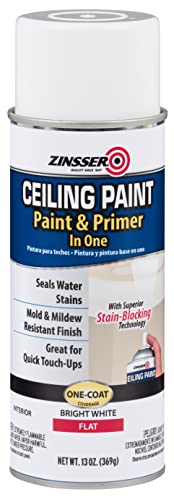
Zinsser Ceiling Acrylic Paint & Primer Spray, 13 oz

KILZ Stainblocking Ceiling Paint, 1 Gallon

Homax 4070 Popcorn Ceiling Texture Aerosol, 16 oz

Zinsser 03688 Covers Up Ceiling Paint, 13 oz

Masterchem KILZ Up Shot Sealer, 10 oz
More On The Choices That Made The List
Small popcorn repairs don’t need a full redo. A water-based aerosol like this DAP can is the tool for the job when a basketball ding, a leaky pipe repair, or a rewire has left a fist-sized scar on the ceiling. Compared to the DAP 2n1 in the next slot, this formula is built for spot work, not whole-room texture recreation.
You shake the can for a full minute once the mixing ball starts rattling, then press the indentation at the actuator base to spray. In practice, that means short bursts from about 12 to 18 inches away, building up the texture in overlapping passes so the patch doesn’t look flat against the surrounding popcorn.
Where It Excels
- Applies white, so you can leave it as-is or paint over it later
- Paintable in roughly 30 minutes with no separate primer needed
- Low-odor water-based formula, which matters in occupied rooms
- Cleanup is just soap and water before the can clogs
- Straw nozzle lets you aim into corners and tight edges without masking everything
Worth Noting
- Shake time is longer than most aerosols, so plan a minute of arm workout before each patch
- Texture is a general popcorn profile, so matching very old or specialty textures may take practice
Feature Snapshot
Who It Suits Best
Renters and homeowners patching a few chips in a popcorn ceiling who want a fast, paintable fix without rolling out a full texture job.
Skip It When
You need a wide fan of texture across an entire ceiling, where the DAP 2n1 Popcorn Wall & Ceiling Spray with its adjustable nozzle is the better fit.
Whole-room texture recreation is where this DAP can earns its keep. The Aim Tech nozzle rotates upward so you can hit a ceiling at almost any angle without lying on your back. The trade-off versus the smaller 16 oz DAP quick repair is capacity: this 20 oz can is built for the job that takes an hour, not the patch that takes 30 seconds.
It works on drywall, stucco, and plaster, so you can knock out a popcorn patch and then move to a wall scratch without swapping cans. You may find the wider fan means a little more masking around the area, but the gain in coverage speed is worth the extra drop cloth for most rooms.
A Favorable Mix
- Rotating Aim Tech nozzle reaches overhead angles without a ladder shuffle
- Wide fan pattern covers broader areas in fewer passes
- Applies white and is paintable in about 30 minutes
- Water-based, low-odor formula that cleans up with water
Trade Offs
- Heavier 20 oz can can fatigue your wrist during a long session
- Wider spray means more masking tape and plastic for nearby walls
- Not designed for hairline touch-ups where the Homax 4070 in slot 6 is more precise
Feature Rundown
Made For
Homeowners retexturing an entire popcorn ceiling after a repair or a partial scrape, who want a single can that covers walls and ceilings without switching tools.
Look Elsewhere When
You just need to cover one small water stain, where the Zinsser 03688 Covers Up in slot 7 is faster and flatter.
Sometimes painting over popcorn isn’t the goal. Plenty of homeowners want it gone, and that’s why this sander earns a slot among the paints on this list. The 1000W motor, six speeds from 800 to 2200 RPM, and integrated dust collection make the messy business of scraping a textured ceiling a one-person job rather than a weekend-long dust storm.
The foldable, extendable handle reaches overhead without forcing you onto a scaffold, and the LED work light around the sanding head helps you see the texture as it disappears. The 15 included discs are a meaningful starter kit for one full room. If you live in a pre-1980s home with possible asbestos in the texture, professional testing comes first, since no sander can solve that safety question.
Strong Points
- Six variable speeds give you control across delicate patches and stubborn texture
- Built-in vacuum port keeps dust inside the collection system rather than on your furniture
- Extendable handle removes the need for ladders on standard 8-foot ceilings
- LED light improves visibility of remaining texture in dim rooms
- 15 sanding discs included so the project can start the day the tool arrives
A Few Limitations
- Heavier than a pole sander, so arm fatigue sets in during long sessions
- Vacuum hose can tug at the tool and pull the disc off line if your shop vac has weak suction
Quick Facts
Right Fit For
Homeowners scraping popcorn texture off before applying a flat or smooth ceiling paint, who want dust control built into the tool rather than added later.
Where Another Pick Suits Better
You’re not removing texture, just refreshing it, in which case the KILZ Stainblocking Ceiling Paint in slot 5 handles full-room roll-on work without the sanding step.
Acrylic means the binder is a water-friendly plastic that dries fast and stays flexible, which is exactly what you want on a popcorn ceiling where the texture moves slightly with humidity. This Zinsser is a paint and primer in one, so it both seals the surface and blocks the stain in a single aerosol pass.
It shines for spot priming before a full ceiling coat, and for the 5 to 10 square feet around a water stain you don’t want bleeding through your new white. Where the roll-on KILZ in slot 5 is built for whole rooms, this can is built for the corners and the spots a roller would have to fight the texture to reach.
Positive Takeaways
- Stain-blocking formula locks down water marks before topcoat
- Paint and primer in one saves a step in small repair areas
- 13 oz can is manageable overhead without much wrist fatigue
- Dries fast for follow-up paint the same day
Small Caveats
- Aerosol output can be thin over popcorn, so two light coats usually beats one heavy pass
- Not a substitute for a full room primer on raw or very porous texture
Technical Highlights
Best Suited To
Shoppers handling small stain touch-ups before repainting, who want a quick-drying primer in aerosol form for tight ceiling areas.
Not Your Match When
You’re repainting a full ceiling, where KILZ Stainblocking Ceiling Paint in slot 5 is the more cost-effective roll-on route.
When a whole popcorn ceiling needs a refresh, a roll-on formula gives you the coverage and the stain-blocking in one trip up the ladder. The pink-to-white indicator is the standout trick: the paint goes on pink so you can see missed spots, then dries to a clean white as the color shifts within about an hour.
It’s an interior ceiling paint designed to roll over texture and seal stains in one or two coats, depending on how dark the marks are. You may find that heavily soiled areas need a second pass, which the 1-gallon size accommodates. Soap and water cleanup means no mineral spirits on the brushes afterward.
Useful Strengths
- Pink-to-white indicator shows wet coverage so you never miss a patch
- Stain-blocking formula seals water marks and soot without a separate primer step
- 1-gallon size covers a typical bedroom or living room ceiling in one go
- Dries to the touch in about an hour for same-day recoat
Points To Keep In Mind
- Thick consistency loads up on the roller, so expect a little more effort to spread than flat wall paint
- Heavy stains may need two coats for full hiding, which uses paint faster than the label suggests
Whose Shelf It Belongs On
Homeowners repainting a full popcorn ceiling in one or two rooms who want the indicator to catch missed spots and a built-in primer to skip the extra step.
Reach For A Different Pick When
You have a single small stain, where the Masterchem KILZ Up Shot Sealer in slot 8 is the targeted aerosol alternative.
Popcorn texture made before the 1980s often used small polystyrene chips, the bumpy white crumbs that look like packing peanuts embedded in paint. Matching that look with a generic spray is tricky, which is why Homax 4070 still has a following. The formula is tuned to blend with that classic polystyrene chip pattern, and the vertical spray tip lets you aim straight up without flipping the can on its side.
It’s a water-based aerosol, so cleanup is simple and the odor stays low indoors. It comes in a 16 oz can, which is enough for a couple of mid-sized patches in most homes. For ceilings that have been painted over multiple times, you may need to lightly sand the surrounding texture so the new material bonds cleanly.
The Upside
- Specifically matched to polystyrene chip popcorn texture common in older homes
- Vertical spray tip makes overhead application ergonomic
- Water-based formula cleans up with water and stays low-odor
- 16 oz can is enough for several smaller patch jobs
Honest Caveats
- Texture match is most accurate on classic polystyrene chip ceilings, less so on modern aggregated blends
- Spray tip can clog if the can sits for months between uses, so shake well each time
Who Should Grab It
Owners of older homes with original polystyrene chip popcorn who need a patch that visually disappears into the surrounding texture.
Swap It Out When
You need to paint over the entire ceiling afterwards and want a paint-and-texture workflow, in which case the KILZ Stainblocking Ceiling Paint in slot 5 is the broader choice.
Zinsser’s Covers Up is a stain-sealing ceiling paint in an upright aerosol, which is the form factor most people want when they’re staring at a brown water mark directly overhead. The vertical spray design means you hold the can like a flashlight, point up, and pull the trigger without the propellant sputtering as the can tilts past 45 degrees.
It covers water stains, smoke damage, and color bleed through a sealing layer that dries flat white, so it works as both spot paint and stain blocker. The 13 oz can is sized for occasional touch-ups rather than a full room. For very dark stains, a second light coat is usually needed to fully hide the discoloration.
Benefits That Matter
- Vertical spray design fires correctly even when held at full overhead angle
- Stain-sealing formula locks down water marks in one or two passes
- Dries flat white so it blends with most ceiling finishes
- Compact 13 oz can is easy to store between small repair jobs
Practical Considerations
- Limited to spot work, not a substitute for full-room paint like the KILZ in slot 5
- Very dark stains may need two coats for full hiding, which uses the can faster than expected
Feature Card
Who Will Love This
People who occasionally notice a ceiling stain and want a single-can solution that sprays straight up and seals the mark in one motion.
Consider Something Else When
Your ceiling needs a uniform refresh, where KILZ Stainblocking Ceiling Paint in slot 5 covers a full room in a single bucket.
The Up Shot Sealer is the smallest and most targeted option on this list, and that’s the point. It’s a 10 oz aerosol built specifically to fire straight up, sealing a stain or priming a spot on the ceiling without you bending your wrist past its limit or wearing a stripe of paint down your arm.
Where the Zinsser 03688 in slot 7 doubles as paint and sealer in a 13 oz can, the Up Shot is a more focused sealer for very small areas. It’s the kind of can you tuck into a utility drawer and pull out the next time a pipe fitting drips overnight. Compared to rolling primer on a popcorn ceiling, this format keeps the texture intact instead of packing it flat.
Useful Touches
- Up-shot design fires correctly when the can is held vertically overhead
- 10 oz can is small enough to store alongside other aerosol supplies
- Seals targeted stains so they don’t bleed through topcoat paint
- Quicker setup than masking and rolling primer on a popcorn surface
Where It May Fall Short
- 10 oz is the smallest can here, so it’s not the right pick for more than a couple of small spots
- Not a finishing paint, so a topcoat is required for color uniformity
Perfect Match For
Homeowners who keep a small sealer on hand for the next ceiling stain and want a can that sprays straight up without propellant hiss.
A Better Fit Elsewhere
You’re tackling a large stained area across multiple spots, where Zinsser 03688 Covers Up Ceiling Paint in slot 7 gives you a larger can for the same kind of work.
Picking The Right Approach For Your Ceiling
Texture, primer, and paint all behave differently on a popcorn surface. The right product depends on whether you need to add texture, refresh color, or block a stain that’s already worked its way through.
Surface Condition Sets The Starting Point
Before anything else, look at what the ceiling is actually doing. Water stains, flaking texture, and visible patches each point to a different tool. A sealer-style aerosol works for one small stain. A full gallon of stain-blocking ceiling paint fits a full room refresh. A texture spray is the answer when chunks of popcorn have come loose and need to be rebuilt before paint.
Format Matters On A Ceiling
Overhead work punishes your wrist, so the can design is more important than the formula alone. Vertical-spray and adjustable-angle nozzles let you keep a neutral wrist position, which is why cans like the Zinsser 03688 Covers Up and the DAP 2n1 stand out. Roll-on formulas cover more area per minute but require more ladder work and care not to flatten the texture with too much pressure.
Coverage And Stain Hiding Walk Together
Popcorn ceiling paint that blocks stains saves you a priming step, and a primer that doubles as paint saves a finish coat. Look for a product that does both when you can, but remember that heavily soiled ceilings may still need two passes even with the best stain-blocking formula on this list.
Key Considerations Across These Picks
Common Shopping Slip Ups
Treating stain-blocking and texture as the same job is a frequent misstep. They aren’t: one seals discoloration, the other rebuilds a bumpy surface. Buying the wrong one leaves you either with a flat spot in your popcorn or a stain bleeding through fresh paint. Test for asbestos in homes built before the 1980s before any sanding or scraping, since no product on this list addresses that safety question. Skipping the indicator trick on the KILZ gallon is another miss, since the pink-to-white shift is what makes it easy to see missed areas on a bumpy ceiling.
Why Top Tier Costs More
Higher-tier ceiling paints carry stain blockers that work in a single pass, faster dry times for same-day recoat, and ergonomic can designs that hold up under extended overhead work. The extra cost usually shows up as a thicker formula, a more reliable nozzle, and fewer coats to cover a stubborn stain. For one small repair, a budget can is enough. For a full room or a recurring stain problem, the upgrade pays for itself in time saved and fewer follow-up trips up the ladder.
Frequently Asked Questions
Do I need to prime a popcorn ceiling before painting?
A stain-blocking ceiling paint like the KILZ in slot 5 combines primer and finish in one coat. For raw patches or heavy stains, a dedicated primer pass first gives the topcoat a uniform base and helps the texture hold its shape.
Can I roll paint over a popcorn ceiling without flattening the texture?
Yes, with a thick-nap roller and light pressure. The texture will compress slightly under the roller but generally bounces back as the paint dries. A spray application is the safer choice if you want the texture to stay completely untouched.
What paint finish works best on popcorn ceilings?
Flat or matte finishes hide surface irregularities and the small shadows that popcorn casts. Satin and semi-gloss highlight every bump and tend to show roller marks, so they aren’t a great match for textured surfaces.
How long does popcorn ceiling paint take to dry between coats?
Most interior ceiling paints dry to the touch in about an hour, with a recoat window of roughly two hours. Heavy stain-blockers may need longer, and humidity or poor ventilation can push the timeline further out.
Is it better to remove popcorn texture or paint over it?
Removal makes sense when the texture is damaged, contains suspect material, or you want a modern flat look. Painting is faster, cheaper, and works well when the existing texture is intact and you just want a fresh white or color refresh.
