

A pedestal fan earns its place by moving serious air without taking up your whole living room, garage, or workshop floor. The trick is matching the right size, build, and noise level to where you actually plan to use it. This roundup breaks down eight pedestal fans across home, bedroom, and heavy-duty industrial use cases, so you can find the right balance of airflow, footprint, and durability for your space.
The Lineup, Simplified

EZ-Chill 16″ Oscillating Pedestal Fan, 3-Speed, Adjustable Height

iLiving ILG8P30-72 30-Inch Commercial Pedestal Fan, 7261 CFM

BILT HARD 8900 CFM 30″ High-Velocity Industrial Pedestal Fan

Maxx Air Industrial 30″ Pedestal Fan, Adjustable Height

Holmes 16″ Copper Digital Metal Stand Fan with Remote
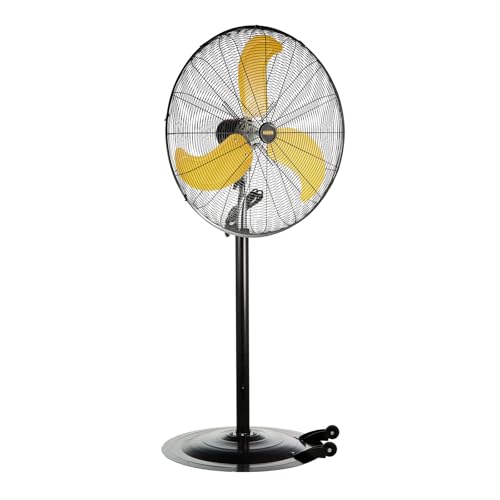
HiCFM 30″ Pedestal Standing Fan, 8300 CFM, UL Listed
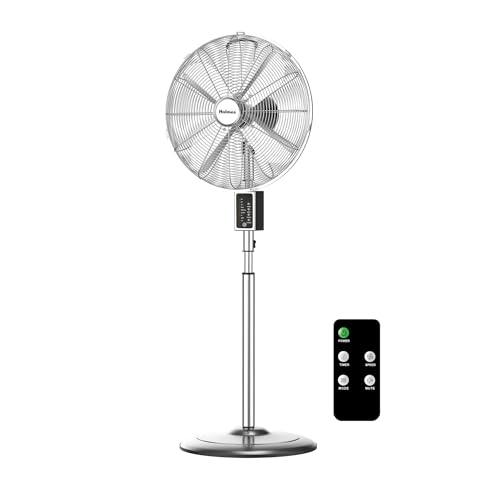
Holmes 16″ Digital Metal Stand Fan with Remote Control
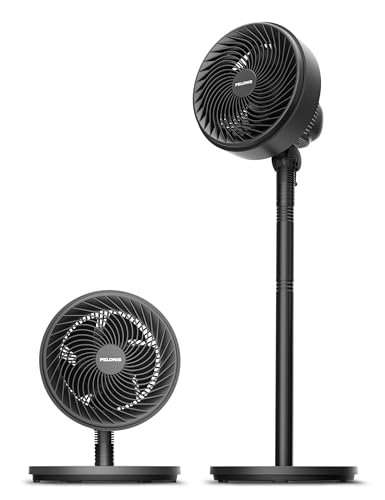
PELONIS 7-Inch Air Circulator Fan, 5 Airfoil Blades
More Details On Our Top Picks
For a typical apartment or family room, the EZ-Chill 16″ hits a comfortable middle ground. Its 90-degree oscillating head sweeps air across the space without you needing to constantly reposition the unit, and the adjustable height plus tilt head make it easy to direct that breeze where you want it.
Three speed settings cover most of what you need day to day, from a soft background airflow to a stronger stream on a hot afternoon. Compared to the heavier 30-inch industrial picks in this list, this EZ-Chill is the kind of fan you leave out in the living room and forget about.
Noteworthy Benefits
- Wide 90-degree oscillation spreads air across a room without manual adjustment.
- Adjustable height and tilt head make it easy to aim airflow at a couch, bed, or desk.
- Three speed options cover light background airflow and stronger cooling.
- Compact 16-inch blade size fits well in apartments and smaller living spaces.
Things To Consider
- Not designed for large open spaces or commercial environments.
- Plastic components may not hold up as well as all-metal builds in heavy daily use.
- Grille cleaning can take a few extra minutes thanks to the tighter spoke pattern.
Who It Suits Best
Anyone cooling a standard living room, bedroom, or home office who wants simple controls and decent oscillation without paying industrial prices.
Where Another Pick Suits Better
For open-plan shops or large garages, the BILT HARD 30″ Industrial Pedestal Fan moves considerably more air at speed.
The iLiving ILG8P30-72 is built for spaces where a household fan would be overwhelmed. A 30-inch aluminum propeller sits inside a heavy-duty steel housing with powder-coated wire guards, and at 7,261 CFM it pushes serious air across workshops, loading docks, and home gyms.
It runs on standard 115V power and is listed to UL and cUL safety standards. For a home garage or a small commercial space, this is a sensible step up from the smaller 16-inch units higher in this list, and it sits comfortably beside other industrial models on the market.
Real Benefits
- 7,261 CFM output handles large shop floors and warehouse aisles.
- Aluminum propeller and steel housing stand up to demanding environments.
- Powder-coated wire guards meet OSHA-compliant spacing standards.
- UL and cUL listed for verified electrical safety.
Worth Noting
- Full-size industrial frame needs a dedicated corner of floor space.
- Higher speed settings are loud, which is typical for this output class.
Key Specs
Made For
Workshop owners, garage tinkerers, and small business operators who need sustained airflow across a wide area.
Consider Something Else When
For a quieter industrial experience, the HiCFM 30″ Pedestal Standing Fan uses a noise-reduction motor design.
The BILT HARD 30″ is one of the higher-output fans on this list, peaking at 8,900 CFM on its top speed. The three-speed motor paired with metal aluminum blades and an adjustable height range of roughly 65 to 77 inches gives you both reach and serious throw distance.
An oscillating control lets the head sweep side to side across a wide shop area, which is useful when you want airflow without aiming it at one fixed spot. If your space feels underpowered with the EZ-Chill from earlier, this is the obvious jump in output.
Positive Points
- 8,900 CFM on the highest setting handles demanding commercial spaces.
- Three speed tiers (6,900 / 8,000 / 8,900 CFM) give flexibility for different room sizes.
- Metal aluminum blades balance weight and durability.
- 65 to 77 inch height adjustment covers a wide range of standing work zones.
Honest Caveats
- Top speed is loud, as expected for high-velocity output.
- Large footprint requires a stable spot on a flat floor.
Feature Snapshot
Right Fit For
Commercial shops, auto bays, and serious home workshops that need maximum airflow on hot summer days.
Look Elsewhere When
If noise is a real concern, the HiCFM 30″ Pedestal Standing Fan offers a quieter industrial alternative.
The Maxx Air 30″ sits in a similar class to the iLiving and BILT HARD options, and it leans into durability. Designed for warehouses, factories, and large commercial spaces, the unit focuses on high-velocity air circulation and an adjustable height that adapts to varied floor plans.
Compared to the smaller bedroom fans in this roundup, the build feels noticeably heavier. You will want a stable spot to park it, but the trade-off is consistent performance in environments where household fans tend to stall out.
A Few Strong Suits
- 30-inch blade delivers high-velocity circulation for large open spaces.
- Durable construction suited to warehouse and factory conditions.
- Adjustable height fits different workstation and floor layouts.
- Commercial focus means fewer compromises on sustained runtime.
Points To Keep In Mind
- Industrial weight makes repositioning a two-hand job.
- High speeds produce noticeable noise in enclosed areas.
Who Should Grab It
Shop owners, warehouse managers, and serious DIYers running larger floor spaces.
Swap It Out When
For a lighter industrial option with quieter operation, the HiCFM 30″ Pedestal Standing Fan is worth a look.
The Holmes 16″ Copper Digital fan leans into style as much as function. A copper-accented metal body gives it a more designed look than most basic pedestal fans, and the included remote is genuinely useful when the unit is parked across the room.
Three speed settings and 75-degree oscillation cover the cooling basics. An adjustable tilt head rounds it out for a bit of directional control, making this a comfortable fit for modern living spaces where appearance matters as much as airflow.
Positive Takeaways
- Copper-toned metal finish stands out in styled rooms.
- Remote control removes the need to walk over for speed changes.
- 75-degree oscillation sweeps air across a wider area.
- Adjustable tilt head lets you aim the breeze where you sit.
Trade Offs
- Remote batteries add a small ongoing maintenance item.
- Smaller 16-inch blade is best for medium and smaller rooms.
Feature Rundown
Built With In Mind
Homeowners and renters who want a fan that looks intentional in a styled room rather than purely utilitarian.
Another Choice May Suit
For a similar metal build with a more traditional chrome look, the Holmes 16″ Digital Metal Stand Fan is a sibling option.
The HiCFM 30″ tries to solve a common complaint about industrial pedestal fans: noise. It uses a 1/3 HP motor paired with noise-reduction engineering that the brand claims runs about 30% quieter than comparable units, all while delivering 8,300 CFM at 1,150 RPM on high.
An 80-degree oscillation arc covers a wide swath of the room, and the unit carries UL safety listing. For workshops and garages that double as living-adjacent spaces, this quieter industrial profile is a thoughtful middle ground.
Strengths Worth Knowing
- Noise-reduction design runs more quietly than typical industrial fans.
- 8,300 CFM output handles large shops and warehouse spaces.
- 80-degree oscillation sweeps air across wide work areas.
- UL listed for verified electrical safety.
Points To Note
- Still industrial in size and weight, not a discreet home fan.
- Lower settings reduce airflow noticeably, which may frustrate users wanting finer control.
Best Suited To
Shop owners and serious DIYers who want industrial output with less of the usual roar.
A Better Fit Elsewhere
For pure maximum airflow without noise considerations, the BILT HARD 30″ Industrial Pedestal Fan pushes higher CFM at the top end.
The Holmes 16″ Digital Metal fan is the chrome-finished cousin to the copper model earlier in this list. A durable all-metal construction runs from grille to base, and the digital controls add a slightly more modern interface than traditional dial fans.
Three speed settings, remote operation, and 75-degree oscillation cover the practical bases. For a bedroom or home office where you want both function and a clean industrial look, this hits a nice balance.
Notable Gains
- All-metal chrome construction feels more durable than plastic alternatives.
- Digital controls offer a clean, modern interface.
- Remote operation makes adjustments easy from bed or a desk.
- 75-degree oscillation distributes air across the room.
Practical Considerations
- Chrome finish shows fingerprints and needs occasional wiping.
- Remote control adds another small item to keep track of.
Whose Shelf It Belongs On
Anyone furnishing a bedroom, study, or home office who values a metal build and a polished look over a purely utilitarian design.
Not Your Match When
For a warmer copper-tone aesthetic, the Holmes 16″ Copper Digital Metal Stand Fan offers a similar feature set with a different finish.
The PELONIS 7″ is the smallest fan in this roundup, and it knows exactly what it is. Built as a personal air circulator for bedrooms, offices, and small spaces, it pairs a 5-blade airfoil design with dual 75-degree and 90-degree oscillation modes for more nuanced coverage than a basic 16-inch fan.
At a claimed 30 dB on lower settings, it is built to disappear into a room. Four height options also let you convert it between tabletop and short-stand use, which is genuinely useful for small desks and nightstands.
Points In Its Favor
- 5-blade airfoil design smooths airflow at lower noise levels.
- Combined 75 and 90 degree oscillation modes expand directional coverage.
- Four height options convert the unit between tabletop and standing use.
- Compact 7-inch footprint fits nightstands, desks, and small corners.
Soft Spots
- Not designed to cool large rooms or open floor plans.
- Smaller blade means airflow is more localized.
Feature Card
Perfect Match For
Light sleepers, apartment dwellers, and home office workers who want quiet personal airflow without a bulky industrial frame.
Reach For A Different Pick When
For whole-room cooling in a standard living room, the EZ-Chill 16″ Oscillating Pedestal Fan is the better step up.
What To Weigh Before Choosing Your Pedestal Fan
Match the Fan to the Room, Not the Other Way Around
The single biggest decision is room size. A 7-inch personal circulator like the PELONIS is comfortable at a desk or bedside, but it will struggle in an open living room. A 30-inch industrial unit will overpower a bedroom but feel exactly right in a garage. CFM, or cubic feet per minute, is the spec that tells you how much air a fan moves, and higher numbers suit larger spaces. Look for ratings above 5,000 CFM for serious shop use, and consider anything around 500 to 1,000 CFM more appropriate for personal or bedroom cooling.
Build Quality Sets the Long-Term Tone
All-metal construction in the grille, blades, and housing will outlast plastic alternatives, especially in dusty or greasy environments like workshops. For living spaces, a metal finish (like the Holmes copper or chrome models) also resists yellowing and scuffs better than plastic. In an industrial setting, OSHA-compliant grille spacing is worth checking for safety, and UL or cUL listings indicate the unit has passed recognized electrical safety tests.
Features That Actually Matter Day to Day
Oscillation arc width changes how much area a fan covers, and adjustable height and tilt determine how well you can aim that airflow. Remotes and digital controls are convenient but introduce batteries and small parts to maintain. For industrial models, the number of usable speed settings matters because low-end output often feels either too weak or barely different from medium. Quieter engineering, like the noise-reduction motor in the HiCFM 30″, is a real upgrade for shared spaces.
Think About Where It Will Live
A pedestal fan’s footprint and weight affect how often you actually move it. Industrial 30-inch units are stable but heavy, so a semi-permanent spot makes sense. Smaller fans with tabletop-to-stand height conversions, like the PELONIS, are easier to relocate between rooms. Cord length and outlet proximity also matter more than people expect, especially in older homes where outlets tend to live along the baseboard rather than in the middle of the floor.
Key Considerations Across These Picks
Pitfalls Shoppers Hit
A common mistake is picking by blade size alone, without checking CFM and noise output. Two 30-inch fans can behave very differently, and a louder model at the same CFM may feel less usable in a home-adjacent space. Another trap is overlooking oscillation arc: a narrow 60-degree sweep leaves dead zones in a wide room, while an 80-degree or wider arc covers more usable area. Finally, ignoring height range can mean the fan blows over your head instead of across you, especially if the shortest setting is taller than expected.
Where The Extra Money Goes
Premium pedestal fans tend to invest in motor quality, blade balance, and housing materials. Industrial-grade motors sustain high RPMs longer without overheating, and well-balanced metal blades reduce wobble and noise at top speed. The higher tier also tends to add useful details: noise-reduction engineering in the HiCFM, OSHA-compliant grilles in the iLiving, and refined oscillation mechanisms in the Holmes digital models. The upgrade pays off most in heavy daily use, in shared living spaces where noise matters, and in any environment where fan failure is more than a minor inconvenience.
Frequently Asked Questions
What size pedestal fan do you need for a large room?
A 30-inch industrial pedestal fan with a high CFM rating (above 5,000) is usually the right call for large living areas, open-plan spaces, and workshops. For standard bedrooms and smaller living rooms, a 16-inch household fan with decent oscillation tends to be sufficient.
Are pedestal fans louder than tower fans?
Generally yes, because pedestal fans typically move more air through exposed blades. However, models with noise-reduction engineering, like the HiCFM 30″, can narrow that gap. Tower fans tend to win on absolute quietness, but pedestal fans usually win on raw airflow and throw distance.
Can pedestal fans be used in a bedroom overnight?
Yes, especially compact and low-noise models like the PELONIS 7″, which is rated around 30 dB on lower settings. For shared bedrooms, choosing a fan with a remote and a sleep or breeze mode helps reduce disturbances during the night.
How do you clean a pedestal fan safely?
Most pedestal fans allow you to unscrew the front grille after the unit is unplugged. Wipe the blades with a slightly damp cloth and let them dry before reassembly. For industrial models in dusty workshops, cleaning the grille and blade surfaces every few weeks helps sustain airflow and reduces motor strain.
Is a higher CFM always better?
Not necessarily. CFM is a measure of airflow volume, and in a small bedroom too much of it can feel like a wind tunnel. Match CFM to room size: a few hundred to around 1,000 CFM is comfortable for personal use, while 5,000 CFM and up is suited to large or commercial spaces.
