

Your household routine shapes the right filtration setup. A countertop gravity unit suits renters and emergency-minded homes, while a whole-house setup changes the water used at showers, laundry fixtures, and kitchen taps. Your goal may be better-tasting drinking water, lower sediment at fixtures, or a system that fits under a crowded sink. These seven options cover those different paths without treating every home like it has the same plumbing or space.
The Main Contenders

Purewell 2.25G Gravity Water Filter System, 3-Stage 0.01μm

Aquasana Whole House Water Filter System 1M Gal UV WH-1000-CS-UVS-B

PRO+AQUA Elite GEN2 PRO-100-E 3-Stage Whole House System

Express Water Whole House Water Filter System
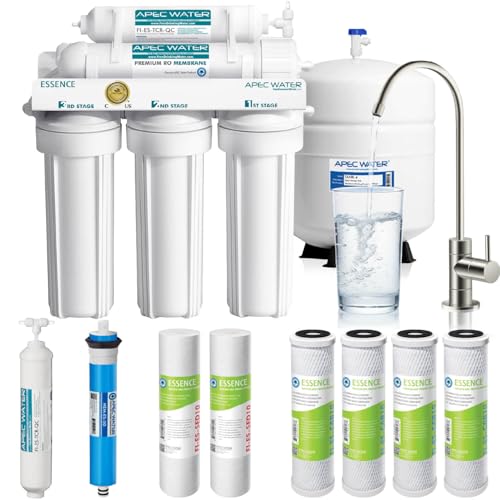
APEC Water ROES-50X 5-Stage RO System

DREO Reverse Osmosis Countertop System, 3:1 Pure to Drain
What Each Pick Brings To The Table
Your countertop stays independent of plumbing with this 2.25-gallon stainless steel gravity system. Gravity filtration means water moves through the filters using its own weight, so your setup needs no electrical outlet or faucet connection.
The built-in water-level window is the practical detail here, since you can refill before the upper chamber runs dry. In a small kitchen, you may find the stainless body more substantial than a pitcher, though the included stand helps create usable spigot clearance.
Strong Points
- The 2.25-gallon capacity keeps multiple bottles filled between refills.
- A 0.01-micron ultrafiltration membrane targets very fine particles.
- The level window avoids repeatedly lifting the lid to check supply.
Things To Consider
- Your counter needs room for both the vessel and stand.
- Owners commonly need to clean the steel chambers and spigot regularly.
Feature Snapshot
Who It Suits Best
Your rental, office nook, or compact kitchen suits this setup when plumbing changes are off the table.
Where Another Pick Suits Better
Aquasana Whole House Water Filter System 1M Gal UV WH-1000-CS-UVS-B suits your home better when every fixture needs coverage.
Unlike Purewell’s countertop format, Aquasana installs at your main incoming water line for broad household coverage. Its 14.6-GPM flow rating matters in homes where showers, dishwashers, and laundry can overlap without making water delivery feel restricted.
Carbon and KDF media work alongside ultraviolet treatment and salt-free scale control. The honest read is that your installation has more moving parts, so your plumbing space and installation plan deserve attention before it arrives.
Everyday Perks
- Main-line placement reaches kitchen, bath, and utility fixtures.
- Ultraviolet treatment adds another filtration component.
- Salt-free scale control suits homes avoiding salt-based equipment.
- Its 1-million-gallon filtration capacity supports long-term household use.
Worth Noting
- You need adequate space near the main line for the system components.
- Installation commonly calls for plumbing experience or professional help.
- UV components need ongoing attention alongside filter maintenance.
Technical Sheet
Made For
Your larger household with available main-line access benefits most from this broad-coverage configuration.
Consider Something Else When
PRO+AQUA Elite GEN2 PRO-100-E 3-Stage Whole House System suits your smaller one-to-three bathroom home with simpler filtration needs.
Pressure gauges make the PRO+AQUA system especially practical for tracking your whole-house filter condition. A pressure drop can signal that a filter is becoming loaded, giving you a useful maintenance cue rather than leaving changes to guesswork.
Compared with Aquasana’s UV and scale-control package, this three-stage unit takes a more straightforward route for city or well water. Your one-to-three bathroom household may appreciate that it needs neither electricity nor a backwash cycle.
Features That Help
- Three stages address sediment, chemicals, and heavy metals.
- One-inch ports support a substantial main-line connection.
- Pressure gauges provide a visual check before filter swaps.
- No electrical connection keeps installation less involved.
- No regeneration or drainage cycle reduces routine tasks.
Trade Offs
- Your plumbing still needs enough clearance for the housings.
- Replacement intervals depend on your water conditions and usage.
- Owners commonly benefit from shutting off water and relieving pressure before servicing filters.
Right Fit For
Your small or medium home using city water or well water suits this maintenance-conscious whole-house option.
Not Your Match When
APEC Water ROES-50X 5-Stage RO System suits your household better when you only need filtered drinking water at one sink.
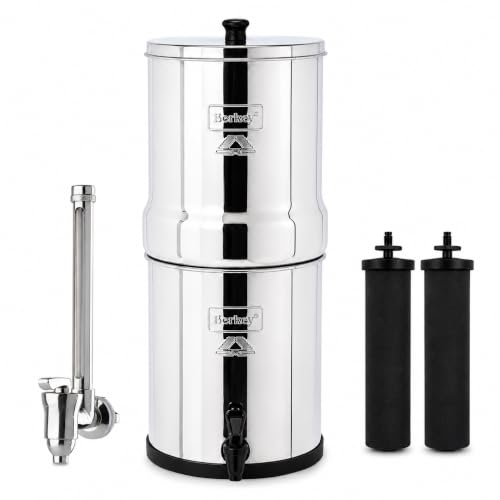
The Big Berkey keeps the same gravity-fed convenience as Purewell, with a 2.25-gallon format built around two Black Berkey Elements and a deluxe spigot. Your water source can be a kitchen tap, RV hookup, or campsite container because the system needs neither electricity nor water pressure.
That self-contained approach makes sense for flexible living arrangements. For a busy family kitchen, you may need to plan refills ahead rather than expect the continuous supply of a plumbed-in system.
Where It Delivers
- No tools or plumbing changes are required for operation.
- The 2.25-gallon reservoir supports coffee, cooking, and bottle filling.
- Its deluxe spigot makes serving from the countertop more convenient.
- RV and temporary-home setups gain useful independence from fixed plumbing.
Minor Gripes
- Your counter or travel storage needs space for a tall vessel.
- Regular chamber, spigot, and element care remains part of ownership.
Quick Facts
Best Suited To
Your RV, apartment counter, or unplugged backup setup benefits from this portable gravity format.
Look Elsewhere When
DREO Reverse Osmosis Countertop System, 3:1 Pure to Drain suits your apartment better when you want monitored countertop operation.
Express Water puts three filtration stages at the main line, aiming at household water before it reaches your faucets. Compared with the PRO+AQUA system, its focus remains similarly broad, making it a sensible route for homes concerned about sediment and chlorine reaching several fixtures.
Your kitchen, laundry area, and bathrooms can all draw from the same treated supply. Nothing flashy, but whole-house consistency is often the point for homes tired of managing separate filters at each tap.
What Stands Out
- Three filtration stages cover the water entering your household plumbing.
- Whole-home placement avoids maintaining a separate device at each fixture.
- It addresses sediment, chlorine, and listed heavy metals through its staged approach.
Room For Improvement
- Your installation needs a suitable main-water-line location.
- Filter replacement involves shutting off the system and handling full housings.
- Very specific water concerns may call for a more tailored system configuration.
- Owners commonly keep towels nearby during cartridge changes.
Who Will Love This
Your family home with several active faucets suits this central, three-stage filtration approach.
A Better Fit Elsewhere
Aquasana Whole House Water Filter System 1M Gal UV WH-1000-CS-UVS-B suits your larger home better when UV treatment and scale control matter.
Your drinking-water needs can be narrower than your whole-home needs, and APEC focuses on that single-sink job. Reverse osmosis, often shortened to RO, uses a membrane to separate dissolved material from water under pressure through five filtration stages.
The 50-gallons-per-day rating suits a kitchen that fills glasses, cooking pots, and reusable bottles throughout the day. Compared with DREO’s countertop design, you trade install-free convenience for an under-sink setup that stays out of sight.
A Few Strong Suits
- Five stages provide a dedicated filtration path for drinking-water use.
- Its 50-GPD capacity supports regular household kitchen demand.
- Extra filters help you prepare for future maintenance.
- An under-sink layout preserves counter space for food preparation.
- Listed filtration targets include chlorine, fluoride, and heavy metals.
Points To Note
- Your cabinet needs room for system components and water connections.
- Installation requires access to a cold-water line and drain connection.
Feature Rundown
Built With In Mind
Your busy kitchen with available under-sink room benefits from this dedicated RO arrangement.
Another Choice May Suit
Purewell 2.25G Gravity Water Filter System, 3-Stage 0.01μm suits your rental kitchen better when drilling or plumbing work is not practical.
DREO brings reverse osmosis to your counter without the under-sink work required by APEC Water ROES-50X 5-Stage RO System. Two autofill pitchers make the format useful for shared apartments, where a dedicated faucet may not be possible.
Its display tracks TDS, short for total dissolved solids, plus filter-life status. Your counter needs a permanent footprint, but the self-cleaning function and visible monitoring can make routine ownership feel less opaque.
The Value In It
- Install-free placement suits rentals and temporary living spaces.
- The 3:1 pure-to-drain ratio describes water output relative to drain water.
- Two autofill pitchers help keep prepared water moving in shared kitchens.
- TDS and filter-life monitoring give you status information at a glance.
Small Caveats
- Your counter must accommodate the unit and pitcher workflow.
- You still need to refill its water reservoir manually.
- Owners commonly need to keep the surrounding counter dry during refills.
Details At A Glance
The Right Fit
Your apartment, dorm-style kitchen, or shared counter suits this no-install RO option.
Reach For A Different Pick When
APEC Water ROES-50X 5-Stage RO System suits your kitchen better when you want filtration stored below the counter.
What Matters Before Choosing Water Filtering Systems For Home
Match Coverage to Your Plumbing
Your whole-house system belongs at the main water line and reaches every connected fixture. Your countertop, under-sink, and gravity options serve drinking and cooking water only, which can be enough for apartment kitchens and smaller routines. Your available cabinet space, pipe access, and willingness to arrange installation should guide this choice early.
Think About Water Use and Refill Habits
Your 2.25-gallon gravity unit works well for planned refills, while your whole-house unit runs continuously through plumbing. Your household that fills many bottles each day may prefer an RO system with a dedicated drinking-water output. Your shared kitchen may value DREO’s two pitchers more than an under-sink layout.
Read the Maintenance Commitment
Your replaceable filters need periodic attention, but the work differs sharply by format. Your gravity system needs chamber and spigot cleaning, while your whole-house housings require water shutoff and careful cartridge changes. Your pressure gauges and electronic status displays can make upkeep easier to track, though neither removes the need for replacement parts.
Consider Flow and Space Together
Your higher-flow whole-house setup matters where several fixtures run at once. Your under-sink RO system can conserve counter room but takes cabinet volume and plumbing connections. Your countertop machine avoids installation, though it becomes part of your daily workspace.
Details That Shape Long-Term Ownership
Common Shopping Slip Ups
Your common mistake is choosing a whole-house unit for a single drinking-water concern, or choosing a countertop unit for every shower and laundry fixture. Your fix is simple: identify the taps that need filtered water before choosing the format.
Where the Extra Money Goes
Your higher-tier systems often add broader capacity, higher flow, UV components, scale-control media, gauges, or monitoring displays. Your upgrade makes sense where those added parts solve a real household limitation rather than add complexity.
Frequently Asked Questions
Do whole-house filters provide water at every faucet?
Your whole-house filter connects at the incoming main line, so it can cover connected household fixtures. Your exact results depend on correct installation and your home’s plumbing layout.
Does reverse osmosis require installation?
Your under-sink RO system requires water-line and drain connections. Your countertop RO system can avoid that work, though it needs counter space and reservoir refills.
What does a 0.01-micron filter rating mean?
Your micron rating describes the size of particles a filtration membrane is designed to address. Your 0.01-micron membrane targets very fine particulate matter.
Can a gravity system work without electricity?
Your gravity system works by water moving through filters under its own weight. Your setup still needs routine refilling and cleaning.
Why do whole-house systems use pressure gauges?
Your gauges show water pressure before and after filtration. Your noticeable pressure change can help signal that filter service deserves attention.
Closing Remarks
Your right choice starts with where you use water most. Your whole-house setup makes sense for broad fixture coverage, while your under-sink, countertop, and gravity systems focus on drinking water with different space and maintenance demands. Your routine, plumbing access, and available workspace will point you toward the most comfortable fit.
